How to Reconstitute TB-500 for Research: Step-by-Step Methodology
TB-500, the synthetic analogue of the endogenous peptide Thymosin Beta-4 (Tβ4), is an active area of preclinical investigation due to its observed roles in actin sequestration, cellular migration, and angiogenesis. Researchers working with this compound must adhere to precise reconstitution and handling protocols to preserve peptide integrity and ensure reproducible experimental outcomes. This article presents a structured methodology covering analytical characterization, solvent selection, reconstitution technique, storage conditions, and laboratory safety considerations for those asking how to reconstitute TB-500 research peptide in a controlled scientific environment.
For a broader overview of TB-500’s known biological mechanisms and research applications, researchers may first wish to consult the TB-500 (Thymosin Beta-4): Research Profile and Cellular Mechanisms profile before proceeding with laboratory preparation steps.
Analytical Characterization Before Reconstitution
Before any reconstitution procedure begins, researchers should verify the identity and purity of the lyophilized TB-500 sample. Standard analytical techniques employed in peptide research include:
- High-Performance Liquid Chromatography (HPLC): Reverse-phase HPLC is widely used to assess peptide purity, typically targeting ≥98% purity for research-grade material. The chromatographic profile should present a single dominant peak with minimal shoulders or satellite peaks.
- Mass Spectrometry (MS): Electrospray ionization mass spectrometry (ESI-MS) or MALDI-TOF MS can confirm the molecular weight of TB-500 (approximately 4,963 Da for the 43-amino acid sequence) and detect any oxidation, truncation, or aggregation artifacts.
- Amino Acid Analysis (AAA): Hydrolysis followed by AAA can confirm compositional accuracy against the expected sequence.
- Certificate of Analysis (CoA) Review: All research-grade peptides should be accompanied by a CoA documenting purity percentage, molecular weight confirmation, and sterility or endotoxin data if applicable to the experimental model.
Researchers studying structurally complex peptides — such as those examining GHK-Cu copper peptide signaling pathways — will recognize that rigorous pre-reconstitution characterization is a non-negotiable step in maintaining experimental validity across peptide classes.
Solvent Selection for TB-500 Reconstitution
Recommended Solvents
Understanding how to reconstitute TB-500 research peptide correctly begins with solvent selection. TB-500 is a water-soluble peptide due to its hydrophilic amino acid composition. The following solvents are used in research settings:
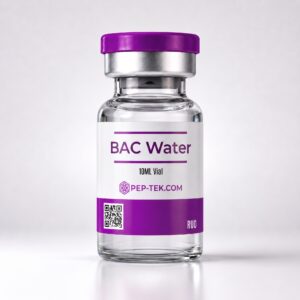
- Bacteriostatic Water (BW): Water containing 0.9% benzyl alcohol is the most commonly employed solvent in peptide research laboratories. Benzyl alcohol acts as a preservative, extending the usability window of the reconstituted solution when stored refrigerated. BW is appropriate for multi-use research vials.
- Sterile Water for Injection (SWFI): For single-use experimental preparations or when benzyl alcohol may interfere with the assay system, sterile water provides a clean, preservative-free vehicle.
- Phosphate-Buffered Saline (PBS, pH 7.4): In cell culture or in vitro applications, PBS may be preferred to maintain physiological pH and osmolarity, particularly in cytotoxicity or migration assays.
- Acetic Acid (0.1%–1%): While TB-500 does not typically require acidic co-solvents (unlike some hydrophobic peptides), dilute acetic acid may be used if solubility challenges arise, followed by dilution to physiological pH with buffer.
Solvents to Avoid
- Dimethyl sulfoxide (DMSO) is generally unnecessary for TB-500 and may denature the peptide structure at certain concentrations.
- Ethanol-based solvents can disrupt the alpha-helical secondary structure critical to TB-500’s actin-binding function [Goldstein et al., 2012].
Step-by-Step Reconstitution Protocol
The following protocol describes how to reconstitute TB-500 research peptide under standard laboratory conditions. All steps should be performed in an appropriate biosafety cabinet using aseptic technique.
Materials Required
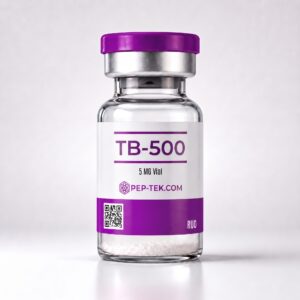
- Lyophilized TB-500 vial (research grade, verified by CoA)
- Bacteriostatic water or chosen research solvent
- Low-protein-binding syringes (1 mL)
- 18–21 gauge needles for withdrawal; 25–27 gauge for vial entry
- Alcohol swabs (70% isopropyl)
- Analytical balance (for weight verification if needed)
- Vortex mixer or gentle agitation device
Procedure
- Equilibrate the vial: Allow the sealed, lyophilized TB-500 vial to reach room temperature (approximately 20–22°C) before opening. This reduces condensation and peptide displacement upon introduction of solvent.
- Prepare the solvent: Draw the calculated volume of bacteriostatic water or research buffer into a low-protein-binding syringe. Common research concentrations range from 0.5 mg/mL to 2.0 mg/mL depending on assay requirements — researchers should calculate based on experimental design, not clinical dosing frameworks.
- Decontaminate vial septa: Wipe the rubber stopper of both the peptide vial and the solvent vial with a 70% isopropyl alcohol swab and allow to air-dry for 30 seconds.
- Introduce solvent slowly: Insert the needle at an angle and direct the solvent stream gently along the interior glass wall of the vial — do not inject directly onto the lyophilized cake. This minimizes shear-induced aggregation and foaming, which can degrade peptide structure [Carpenter et al., 1997].
- Gentle agitation: Once solvent is added, gently swirl or roll the vial between palms for 30–60 seconds. Do not vortex vigorously. TB-500 should dissolve completely into a clear, colorless solution. Cloudiness may indicate aggregation or contamination and should be investigated before experimental use.
- Visual inspection: Examine reconstituted solution under light for particulates, discoloration, or turbidity. Any abnormality should prompt discarding of the preparation.
- Label and document: Record the reconstitution date, solvent used, concentration, and responsible researcher in the laboratory notebook and on the vial.
Storage Conditions for Reconstituted TB-500
Proper storage is essential for maintaining peptide stability after reconstitution. Researchers studying how to reconstitute TB-500 research peptide must also understand post-reconstitution degradation kinetics:
- Lyophilized (dry powder): Store at -20°C in a desiccated environment, protected from light. Under these conditions, lyophilized TB-500 may retain stability for 24 months or longer when sealed [Manning et al., 2010].
- Reconstituted in bacteriostatic water: Refrigerate at 2–8°C. Research practice suggests use within 28–30 days, with stability dependent on the number of freeze-thaw cycles and handling conditions.
- Aliquoting: For experiments requiring repeated access, researchers should prepare single-use aliquots immediately after reconstitution and store at -80°C. This eliminates repeated freeze-thaw cycling, which is a known source of peptide degradation and aggregation [Kreilgaard et al., 1998].
- Avoid: Storage at room temperature beyond 4–6 hours, exposure to direct light, and repeated temperature fluctuations.
These principles are broadly applicable across research peptides. Investigators working with tissue-repair-associated sequences such as BPC-157 will find that analogous cold-chain storage and aliquoting protocols are standard practice across the preclinical peptide research field.
Laboratory Handling and Safety Considerations
TB-500 is handled as a research chemical under standard laboratory safety guidelines. Researchers should observe the following:
- Personal Protective Equipment (PPE): Nitrile gloves, lab coat, and eye protection should be worn during all handling procedures.
- Biosafety Cabinet (BSC): Reconstitution and aliquoting should be performed in a Class II BSC to maintain sterility and protect the researcher from aerosol exposure during syringe procedures.
- Sharps disposal: All needles and syringes used in preparation must be disposed of in approved sharps containers per institutional biosafety policy.
- SDS compliance: While TB-500 is not classified as a hazardous chemical, researchers should consult the supplier’s Safety Data Sheet and comply with institutional chemical hygiene plans.
- Low-protein-binding labware: Use of low-protein-binding tubes, syringes, and storage vessels is recommended to prevent adsorption losses, which can affect solution concentration and experimental consistency [Zheng et al., 2009].
Researchers interested in comparative methodology across structurally distinct peptide classes — including neuropeptides such as those reviewed in the Semax ACTH-derived neuropeptide research profile — should note that while reconstitution solvents may vary, the core principles of aseptic technique, cold-chain storage, and low-protein-binding labware apply broadly.
Concentration Calculations for Research Applications
Accurate concentration preparation is fundamental to reproducible research. The standard formula for peptide reconstitution is:
Volume of Solvent (mL) = Mass of Peptide (mg) ÷ Target Concentration (mg/mL)
For example, a 5 mg lyophilized TB-500 vial reconstituted with 2.5 mL of bacteriostatic water yields a 2.0 mg/mL working stock. Researchers should verify actual yield gravimetrically where precision is required, as lyophilized peptide vials may contain minor variance from stated fill weight. All concentration decisions should be made in the context of in vitro assay requirements, animal model experimental design, or other approved research frameworks — not clinical dosing models.
Research Context
TB-500 and its parent molecule Thymosin Beta-4 have been subjects of ongoing preclinical investigation, with researchers observing roles in actin dynamics, wound healing models, angiogenesis assays, and inflammatory pathway modulation [Goldstein et al., 2012; Sosne et al., 2007]. Correctly understanding how to reconstitute TB-500 research peptide is foundational to generating valid, reproducible data in these investigational contexts.
Disclaimer: All content in this article is intended strictly for scientific research and educational purposes. TB-500 and all compounds described herein are research chemicals not approved for human or animal consumption, therapeutic use, or clinical application. PepTek supplies research-grade peptides exclusively for in vitro, analytical, and preclinical laboratory research conducted by qualified scientific personnel. Nothing in this article constitutes medical advice, treatment guidance, or dosing instruction of any kind. Researchers are responsible for complying with all applicable institutional, local, and national regulations governing research compound use.