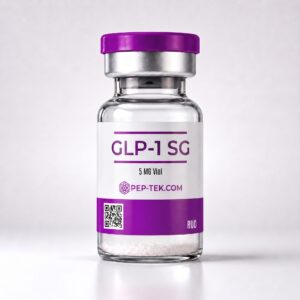
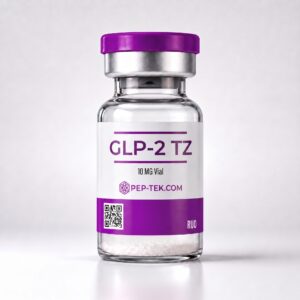
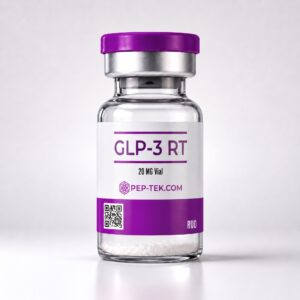
Available from PepTek
An overview of GLP-1, GIP, and glucagon receptor agonist peptides as weight management research compounds, covering shared mechanisms, receptor biology, and the evolving preclinical and clinical research landscape.
The field of metabolic peptide research has undergone a substantial transformation over the past two decades. A growing body of preclinical and clinical investigation has focused on incretin-based peptides and their receptor targets as tools for understanding the biological regulation of energy homeostasis, appetite signaling, and glucose metabolism. This weight loss peptide research compounds overview explores the mechanistic foundations shared across GLP-1, GIP, and glucagon receptor agonists, the structural diversity within this compound class, and why these molecules have become central subjects in contemporary metabolic science.
For researchers investigating energy balance pathways, these peptide classes offer a compelling model system. Their layered receptor pharmacology, hormonal crosstalk, and downstream signaling cascades make them uniquely informative tools in both in vitro and animal model research settings.
Incretins are gut-derived hormones released in response to nutrient ingestion. The two primary incretins studied in metabolic research are glucagon-like peptide-1 (GLP-1) and glucose-dependent insulinotropic polypeptide (GIP). Both are released from enteroendocrine cells of the small intestine and act on cognate G-protein-coupled receptors (GPCRs) expressed in pancreatic beta cells, the central nervous system, adipose tissue, and elsewhere.
GLP-1 is derived from the proglucagon gene and is processed primarily in intestinal L-cells. In research models, GLP-1 receptor activation has been associated with enhanced glucose-stimulated insulin secretion, suppression of glucagon release, delayed gastric emptying, and centrally mediated reductions in food intake [Drucker et al., 2006]. GIP, processed in K-cells of the proximal intestine, similarly potentiates insulin secretion and has been shown in preclinical research to modulate adipogenesis and lipid metabolism [Nauck & Meier, 2018].
Glucagon, the third major hormone in this axis, is secreted by pancreatic alpha cells and classically opposes insulin by promoting hepatic glucose output. However, research has revealed that glucagon receptor agonism in supraphysiological or combinatorial contexts may contribute to increased energy expenditure and reduced hepatic lipid accumulation, making it a compelling target in multi-agonist compound design [Day et al., 2009].
GLP-1 receptor agonists (GLP-1 RAs) are among the most extensively studied peptide classes in metabolic research. These compounds are typically engineered analogues of native GLP-1, modified to resist rapid degradation by dipeptidyl peptidase-4 (DPP-4) and extend circulatory half-life. Research models employing GLP-1 RAs have consistently demonstrated reductions in food intake, body weight, and adiposity in diet-induced obesity (DIO) animal models.
Semaglutide represents one of the most studied GLP-1 receptor agonists in recent research literature. Its fatty acid side chain confers albumin binding that extends its half-life significantly compared to earlier analogues. Researchers working with this compound class can explore detailed receptor pharmacology in PepTek’s dedicated article on Semaglutide: GLP-1 Receptor Agonist Research and Mechanism of Action.
A significant evolution in this weight loss peptide research compounds overview involves the development of dual-agonist molecules designed to simultaneously activate GLP-1 and GIP receptors. The rationale is rooted in evidence that GIP receptor activation may potentiate GLP-1-mediated effects while offering complementary metabolic benefits through distinct downstream pathways.
Tirzepatide is a structurally notable dual agonist based on a GIP peptide backbone with GLP-1 receptor activity incorporated through sequence engineering. Preclinical studies in rodent models demonstrated significantly greater reductions in body weight and improvements in insulin sensitivity compared to selective GLP-1 receptor agonists alone [Frias et al., 2021]. Researchers interested in the mechanistic distinctions of this compound class can refer to PepTek’s profile on Tirzepatide: GLP-1/GIP Dual Agonist Research Profile.
The frontier of this research class involves peptides designed to co-activate three receptors simultaneously: GLP-1R, GIPR, and the glucagon receptor (GCGR). The inclusion of glucagon receptor agonism is hypothesized to drive thermogenic activity and increase basal metabolic rate in preclinical models, effects not fully captured by incretin mono- or dual-agonism alone.
Retatrutide is the most prominent example of this triple-agonist architecture currently under investigation. Early-phase research has explored its metabolic effects in animal models and early human trials, with observations suggesting substantial effects on adiposity markers and energy metabolism. PepTek’s dedicated research profile on Retatrutide: Triple GIP/GLP-1/Glucagon Agonist Research Overview provides a comprehensive examination of its receptor pharmacology and study findings.
Despite structural and receptor-selectivity differences, GLP-1, GIP, and glucagon receptor agonists share a number of overlapping mechanistic themes relevant to researchers conducting this weight loss peptide research compounds overview.
Weight management peptide research does not exist in isolation. Metabolic regulation is deeply interconnected with cellular energy status, redox balance, and hormonal networks that span multiple peptide and coenzyme families. Researchers studying metabolic peptides may also find relevant mechanistic parallels in the study of growth hormone secretagogues, which influence body composition through distinct neuroendocrine pathways. PepTek’s overview of the CJC-1295 + Ipamorelin Blend: Research Overview of Synergistic Mechanisms provides context for how GHRH and GHRP receptor co-activation influences metabolic parameters in preclinical models.
Similarly, understanding cellular energy metabolism at the coenzyme level can complement incretin receptor research. The relationship between NAD+ bioavailability and metabolic signaling, reviewed in PepTek’s article on NAD+: Coenzyme Research Profile and Cellular Metabolism Studies, offers a biochemical framework relevant to investigators examining downstream effectors of energy homeostasis.
A key challenge in this compound class is the structural engineering required to produce stable, receptor-selective, or multi-selective peptides from endogenous hormone scaffolds. Native GLP-1 has a plasma half-life of less than two minutes due to DPP-4 cleavage and renal clearance. Research analogues address this through fatty acid conjugation, amino acid substitution at the DPP-4 cleavage site, and incorporation of non-natural amino acids.
Multi-agonist peptides such as tirzepatide and retatrutide require careful balance of receptor activation potency across targets. Researchers have used molecular modeling, receptor binding assays, and in vitro functional studies to map agonist bias — the tendency of a ligand to preferentially activate certain downstream pathways over others — as a tool for optimizing compound profiles [Finan et al., 2015].
This structural complexity makes GLP-1/GIP/glucagon agonist peptides particularly rich subjects for research into GPCR pharmacology, ligand design, and structure-activity relationships, independent of their metabolic effects.
This article is intended exclusively for scientific research and educational purposes. The compounds discussed — including GLP-1 receptor agonists, GIP receptor agonists, glucagon receptor agonists, and multi-agonist peptides — are research compounds supplied by PepTek for use in authorized laboratory and preclinical research settings only. This weight loss peptide research compounds overview does not constitute medical advice, does not endorse any therapeutic application, and is not intended to guide human or animal use of any compound described herein.
All cited findings derive from peer-reviewed preclinical or clinical research literature. Researchers are responsible for compliance with all applicable institutional, national, and international regulations governing the use of research compounds. No compound discussed on this platform has been evaluated, approved, or recommended by PepTek for use outside of controlled research environments.