Available from PepTek
An overview of tissue repair peptide research compounds, covering shared mechanisms, key molecules like BPC-157 and TB-500, and the current preclinical research landscape.
Among the most actively investigated classes of research compounds in modern peptide science are those demonstrating measurable effects on tissue repair, cellular regeneration, and recovery signaling pathways. Tissue repair peptide research compounds represent a broad and mechanistically diverse category, unified by their observed capacity to modulate processes such as angiogenesis, extracellular matrix remodeling, inflammation regulation, and stem cell recruitment. This overview examines the shared biochemical frameworks, key individual compounds, and current preclinical research landscape within this category.
Tissue repair peptides are short-chain amino acid sequences — either endogenously derived or synthetically engineered — that have demonstrated, in preclinical and in vitro models, the ability to interact with biological signaling cascades responsible for wound healing, cellular proliferation, and structural tissue restoration. Unlike broader pharmacological agents, these peptides typically act through highly specific receptor-mediated or gene-regulatory mechanisms, making them subjects of considerable interest in regenerative biology research.
The category encompasses peptides of varying origin: some are fragments of naturally occurring proteins (such as thymosin derivatives), others are synthetic sequences designed to mimic or amplify endogenous repair signals (such as body protection compound analogues), and still others are copper-binding tripeptides found naturally in human plasma. Despite their structural diversity, tissue repair peptide research compounds share a functional orientation toward modulating the wound-healing cascade and cellular survival pathways.
A recurring mechanism observed across multiple tissue repair peptide research compounds is the upregulation of vascular endothelial growth factor (VEGF) and related angiogenic signaling molecules. Preclinical studies suggest that peptides such as BPC-157 promote neovascularization through VEGF pathway activation, facilitating oxygen and nutrient delivery to injured tissue [Sikiric et al., 2018]. Similarly, copper-binding peptides have been shown in vitro to stimulate angiogenic gene expression, supporting vascular network formation in wound models.
Researchers studying BPC-157’s research profile and mechanism of action have documented this peptide’s interactions with the nitric oxide system, which plays a central role in vasodilation and endothelial function — a finding that has generated considerable interest in regenerative biology contexts.
Another shared feature among tissue repair peptide research compounds is their influence on actin polymerization and cytoskeletal organization. TB-500, the synthetic analogue of Thymosin Beta-4, is particularly well-studied in this regard. Thymosin Beta-4 sequesters G-actin monomers, regulating the dynamics of actin filament assembly that govern cell motility — a prerequisite for effective wound closure and tissue infiltration by repair-competent cells [Goldstein et al., 2012].
For a detailed examination of this compound’s cellular mechanisms, researchers may consult the TB-500 (Thymosin Beta-4) research profile and cellular mechanisms article, which explores actin-binding interactions and associated downstream signaling observed in preclinical models.
Collagen deposition and extracellular matrix (ECM) remodeling are fundamental to structural tissue restoration. Several peptides in this category, most notably GHK-Cu (glycine-histidine-lysine copper complex), have been extensively studied for their capacity to upregulate collagen and glycosaminoglycan synthesis in fibroblast cell cultures. Research has also identified GHK-Cu’s role in activating matrix metalloproteinases (MMPs), enzymes critical for the controlled degradation and remodeling of scar tissue [Pickart et al., 2015].
The GHK-Cu copper peptide research profile and signaling pathways article provides an in-depth examination of the gene regulatory networks this compound appears to engage, including pathways associated with anti-inflammatory responses and antioxidant upregulation — the latter of which connects meaningfully to redox-sensitive repair signaling explored in glutathione tripeptide antioxidant research and redox signaling.
Some tissue repair peptide research compounds operate at a more systemic level by influencing growth hormone (GH) and insulin-like growth factor-1 (IGF-1) axes, which are broadly implicated in protein synthesis, cellular proliferation, and tissue maintenance. Growth hormone secretagogues such as Ipamorelin have been studied in animal models for their potential to elevate GH pulses, with downstream implications for lean tissue preservation and recovery signaling. Researchers investigating these upstream mechanisms may find the Ipamorelin selective GHRP research profile relevant as a foundational reference for how GH-axis modulation intersects with tissue-level repair processes.
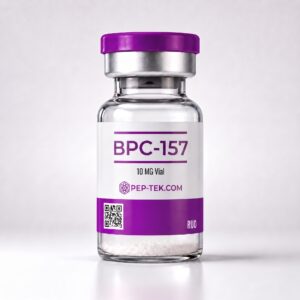
BPC-157 is a synthetic pentadecapeptide derived from a protective gastric protein. It is among the most studied tissue repair peptide research compounds, with a substantial body of rodent model data demonstrating accelerated healing of tendon, muscle, ligament, and gastrointestinal tissue under experimental injury conditions. Its multi-pathway activity — spanning nitric oxide modulation, VEGF signaling, and GABAergic system interactions — makes it a particularly versatile subject for regenerative research [Sikiric et al., 2018].
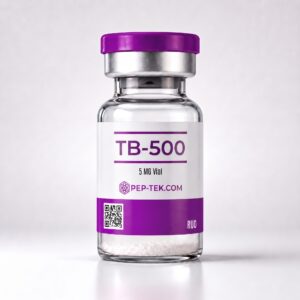
TB-500 is a synthetic peptide fragment corresponding to the active region of Thymosin Beta-4. Its principal mechanism involves actin sequestration, which regulates cell migration, a process central to wound healing. Animal model studies have also indicated TB-500’s involvement in cardiomyocyte survival signaling and hair follicle stem cell activation, suggesting research relevance beyond musculoskeletal repair contexts [Goldstein et al., 2012].
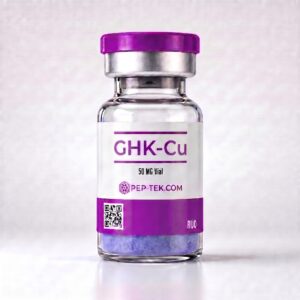
GHK-Cu is a naturally occurring tripeptide-copper complex found in human plasma, saliva, and urine. In vitro and animal model research has identified its activity across more than 4,000 human genes, many of which relate to tissue remodeling, inflammation control, and antioxidant defense. Its dual action as both a collagen synthesis stimulator and an MMP activator positions it as a subject of interest in wound biology and skin tissue research [Pickart et al., 2015].
Beyond the three primary compounds above, the tissue repair peptide research landscape includes additional molecules with more indirect but mechanistically relevant roles. Researchers have investigated the potential influence of metabolic peptides on systemic environments that affect tissue homeostasis, and the role of cellular energy substrates — such as those examined in NAD+ coenzyme research and cellular metabolism studies — in supporting energy-dependent repair processes at the cellular level.
The majority of evidence supporting tissue repair peptide research compounds originates from in vitro cell culture systems and small animal models, primarily rodents. While this body of work is substantial in volume, researchers and institutions working in this space consistently note the importance of translating these findings through rigorous controlled studies before conclusions can be extrapolated beyond model systems.
Current research directions in this category include: identifying precise receptor binding profiles for individual compounds, characterizing dose-response relationships in standardized animal injury models, evaluating compound stability and bioavailability under various experimental delivery conditions, and exploring potential synergistic interactions between peptides operating through complementary mechanisms [Sikiric et al., 2021].
The intersection of tissue repair peptides with broader peptide science — including neuroprotective compounds, metabolic peptides, and growth hormone axis modulators — reflects an increasingly systems-oriented approach to preclinical research, where cellular recovery is understood as a multi-pathway, multi-system process rather than an isolated biochemical event [Pickart and Margolina, 2018].
Tissue repair peptide research compounds constitute a scientifically compelling and rapidly evolving area of preclinical investigation. The mechanistic diversity within this category — spanning angiogenesis, cytoskeletal regulation, ECM remodeling, and systemic growth factor modulation — provides researchers with a rich array of molecular tools for studying fundamental biological processes associated with repair and regeneration.
All compounds described in this article are intended exclusively for laboratory research and preclinical study purposes. None of the compounds discussed are approved for human or animal consumption, and nothing in this article should be interpreted as medical advice, therapeutic guidance, or clinical dosing instruction. All findings referenced herein derive from in vitro experiments, cell culture systems, or animal model studies, and have not been validated for human application. Researchers should consult current literature and relevant institutional guidelines when designing studies involving these compounds.