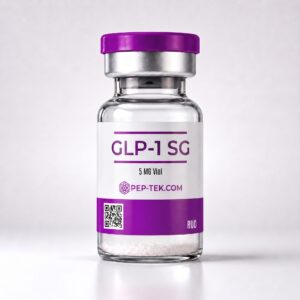
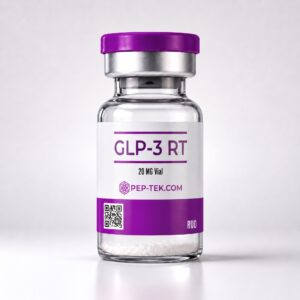
Available from PepTek
A research comparison of semaglutide vs retatrutide GLP-1 research, examining structural differences, receptor targeting, and how investigators select between single and triple agonist peptides.
The evolving landscape of incretin-based peptide research has produced a spectrum of compounds ranging from highly selective receptor agonists to sophisticated multi-receptor targeting molecules. Among the most studied in preclinical and clinical research settings are semaglutide, a selective GLP-1 receptor agonist, and retatrutide, a novel triple agonist targeting GIP, GLP-1, and glucagon receptors simultaneously. Understanding the structural and mechanistic distinctions between these two compounds is essential for researchers designing studies in metabolic biology, energy homeostasis, and related fields. This article examines the semaglutide vs retatrutide GLP-1 research landscape, providing a structured comparison to guide investigator decision-making.
Semaglutide is a 34-amino acid peptide analogue of native glucagon-like peptide-1 (GLP-1), sharing approximately 94% sequence homology with endogenous GLP-1(7-37). Its key structural modification involves substitution of alanine at position 8 with alpha-aminoisobutyric acid (Aib), which confers resistance to dipeptidyl peptidase-4 (DPP-4) degradation. Additionally, semaglutide carries a C-18 fatty diacid chain attached via a hydrophilic linker to lysine at position 26, enabling reversible albumin binding and dramatically extending its plasma half-life to approximately one week in research models [Lau et al., 2015]. This extended half-life makes it a compelling tool for studying prolonged GLP-1 receptor engagement in animal models.
For a detailed structural breakdown, researchers may consult the PepTek profile on Semaglutide: GLP-1 Receptor Agonist Research and Mechanism of Action.
Retatrutide (LY3437943) represents a structurally distinct peptide engineered to engage three separate incretin and glucagon-related receptors: the glucose-dependent insulinotropic polypeptide receptor (GIPR), the GLP-1 receptor (GLP-1R), and the glucagon receptor (GCGR). The molecule is based on a modified glucagon backbone and incorporates a C20 fatty acid chain for albumin binding, similarly extending its half-life to approximately five to seven days in preclinical models. Critically, retatrutide’s sequence is designed to achieve balanced yet potent agonism at all three receptors, a significant engineering challenge compared to the single-target design of semaglutide [Coskun et al., 2022].
Researchers interested in the mechanistic profile of retatrutide can explore the PepTek article on Retatrutide: Triple GIP/GLP-1/Glucagon Agonist Research Overview.
Both semaglutide and retatrutide activate the GLP-1 receptor, a class B G protein-coupled receptor (GPCR) that signals primarily through the Gs/cAMP/PKA pathway. In pancreatic beta cells, GLP-1R activation stimulates glucose-dependent insulin secretion, inhibits glucagon release, and promotes beta cell survival signaling in vitro. In central nervous system models, GLP-1R engagement in hypothalamic and brainstem regions has been associated with reduced food intake and altered energy balance signaling [Drucker, 2018]. In the context of semaglutide vs retatrutide GLP-1 research, both compounds activate this shared pathway, though retatrutide’s GLP-1R activity is balanced against simultaneous GIPR and GCGR engagement.
Retatrutide shares its GIPR agonism with the dual agonist tirzepatide, though retatrutide adds glucagon receptor activity on top of this. GIPR activation has been shown in animal studies to augment GLP-1R-mediated insulin secretion and may contribute to adipose tissue remodeling through direct receptor expression in fat depots [Samms et al., 2021]. Semaglutide, as a selective GLP-1R agonist, does not engage the GIPR, representing a fundamental mechanistic divergence. Researchers studying the incremental contribution of GIP receptor co-agonism often use semaglutide as a comparator arm in preclinical study designs. For context on how GLP-1/GIP dual agonism differs from pure GLP-1 agonism, the PepTek article on Tirzepatide: GLP-1/GIP Dual Agonist Research Profile provides relevant background on dual receptor biology.
The inclusion of glucagon receptor agonism is what most sharply distinguishes retatrutide from both semaglutide and tirzepatide in semaglutide vs retatrutide GLP-1 research comparisons. Glucagon receptor activation promotes hepatic glucose output and lipolysis—effects that appear counterproductive in isolation—but in the context of concurrent GLP-1R and GIPR co-agonism, researchers have hypothesized that hepatic GCGR stimulation may drive increased energy expenditure and enhanced lipid oxidation without the hyperglycemic consequences seen with isolated glucagon administration [Jall et al., 2017]. Animal model studies have indicated that this triple receptor engagement produces additive effects on body weight reduction and hepatic lipid content compared to dual or single agonism.
In diet-induced obese (DIO) rodent models, researchers have observed that retatrutide produced significantly greater reductions in body weight compared to GLP-1 selective agonists used as controls, with some preclinical data suggesting near-complete normalization of adiposity over extended study periods [Coskun et al., 2022]. Semaglutide, while consistently demonstrating robust reductions in food intake and body weight in animal models, appears to reach a plateau effect not observed with the triple agonist. Phase 2 clinical trial data published in 2023 similarly observed dose-dependent weight reduction with retatrutide exceeding that reported in comparable semaglutide studies, though direct head-to-head clinical trials have not yet been published [Jastreboff et al., 2023].
Researchers examining metabolic efficiency and cellular energy status in these models may find complementary insights in the PepTek article on NAD+: Coenzyme Research Profile and Cellular Metabolism Studies, which explores upstream metabolic signaling relevant to energy homeostasis research.
Both compounds have demonstrated effects on hepatic lipid accumulation in preclinical models, with retatrutide’s glucagon receptor component hypothesized to provide additional hepatic benefit through GCGR-mediated upregulation of fatty acid oxidation pathways. In non-alcoholic steatohepatitis (NASH) rodent models, triple agonism has produced more pronounced reductions in liver fat fraction compared to GLP-1 selective compounds, making retatrutide of particular interest to researchers focused on hepatic lipid biology.
For investigators evaluating semaglutide vs retatrutide GLP-1 research in their experimental designs, compound selection should be driven by the mechanistic questions under investigation. Semaglutide is appropriate when researchers wish to isolate pure GLP-1R biology, establish a mechanistic baseline, or study GLP-1R-mediated effects without the confounding influence of GIPR or GCGR co-activation. Retatrutide is more suitable when the research question involves the additive or synergistic contributions of triple receptor engagement, hepatic energy metabolism, or broader metabolic phenotyping in models of obesity and lipid dysregulation.
Both compounds offer extended half-lives suitable for once-weekly dosing regimens in animal studies, reducing the frequency of experimental interventions. Semaglutide’s albumin-binding mechanism is well-characterized and its pharmacokinetics are extensively documented in the literature, providing a robust reference framework. Retatrutide’s pharmacokinetics, while similar in design, introduce additional complexity given the need to maintain balanced activity across three receptor systems, and researchers should account for potential receptor desensitization dynamics unique to triple agonism when designing study timelines.
It is worth noting that the semaglutide vs retatrutide GLP-1 research comparison exists within a broader peptide research ecosystem. Growth hormone-related peptides such as those described in the PepTek article on Tesamorelin: GHRH Analogue Research Profile and Studied Effects operate through entirely distinct neuroendocrine axes, yet researchers studying body composition and lipid metabolism may find value in examining how GLP-1-axis compounds and growth hormone axis compounds interact at the systemic level in animal models.
The comparison of semaglutide and retatrutide illustrates the trajectory of incretin peptide research from single-target selectivity toward engineered multi-receptor pharmacology. As researchers continue to explore the distinct and overlapping contributions of GLP-1R, GIPR, and GCGR signaling, both compounds serve as important tools for dissecting metabolic biology in preclinical settings. The growing body of evidence in semaglutide vs retatrutide GLP-1 research underscores the value of structural precision in peptide design and the mechanistic consequences of expanding receptor engagement profiles.
Research Use Disclaimer: All information presented in this article is intended strictly for scientific research and educational purposes. Semaglutide, retatrutide, and all compounds referenced herein are research compounds available exclusively for in vitro and preclinical animal model investigation. They are not intended for human or animal consumption, are not approved for therapeutic use, and should not be interpreted as having any clinical, medical, or health-related application. PepTek supplies research-grade compounds solely to qualified researchers operating within appropriate institutional and regulatory frameworks.