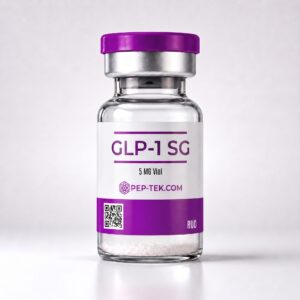
Available from PepTek
A research methodology guide covering semaglutide peptide stability, storage conditions, reconstitution protocols, and analytical handling techniques for laboratory use only.
Semaglutide is a GLP-1 receptor agonist peptide that has attracted considerable interest in metabolic and endocrinological research contexts. As with all research-grade peptides, maintaining semaglutide peptide stability storage research best practices is essential for ensuring that experimental data reflects the compound’s true biochemical properties rather than artifacts of degradation or improper handling. This methodology article outlines the analytical techniques, storage conditions, reconstitution procedures, and laboratory handling protocols that researchers should consider when working with semaglutide in preclinical and in vitro settings.
For a foundational overview of semaglutide’s mechanism of action and receptor binding characteristics, researchers may refer to the PepTek profile on Semaglutide: GLP-1 Receptor Agonist Research and Mechanism of Action.
Semaglutide is a 34-amino acid peptide analogue of human GLP-1, modified at position 8 (Aib substitution) to resist DPP-4 enzymatic cleavage, and conjugated at position 26 via a linker to a C18 fatty diacid moiety that facilitates albumin binding and extends plasma half-life in animal models [Lau et al., 2015]. This lipidation is central to the compound’s in vivo pharmacokinetic profile but also introduces unique stability considerations in research settings.
The fatty acid side chain increases the molecule’s amphiphilic character, which can promote aggregation at interfaces (e.g., glass vials, pipette tips, and syringe walls) under suboptimal conditions. Furthermore, the peptide backbone remains susceptible to hydrolysis and oxidative degradation if not properly protected during storage and handling. These structural features make rigorous attention to semaglutide peptide stability storage research protocols especially important for reproducible experimental outcomes.
Research-grade semaglutide is most commonly supplied as a lyophilized powder. In this form, the compound is substantially more stable than in solution. Researchers have observed that lyophilized peptides stored under the following conditions retain high purity over extended periods [Manning et al., 2010]:
Repeated freeze-thaw cycles of reconstituted aliquots represent one of the most common sources of peptide degradation in laboratory settings. Researchers are strongly advised to prepare single-use aliquots prior to freezing reconstituted stock solutions.
Once reconstituted, semaglutide solutions should be used within 24–72 hours if stored at 4°C, or aliquoted and stored at −20°C for slightly longer durations. In vitro studies suggest that solution stability is highly pH-dependent; a mildly acidic to neutral pH range (approximately 4.0–7.4) is generally preferred based on analogous GLP-1 peptide data [Bharatam et al., 2007]. Alkaline conditions have been associated with accelerated hydrolysis of the peptide backbone in related compounds.
The choice of reconstitution solvent is a critical variable in semaglutide peptide stability storage research. Due to the amphiphilic character of semaglutide’s fatty acid conjugate, researchers have observed that the following solvents are commonly employed in peptide research settings:
Researchers working with related lipidated analogues and GLP-1 class compounds, such as those reviewed in the PepTek article on Tirzepatide: GLP-1/GIP Dual Agonist Research Profile, face similar reconstitution considerations due to shared fatty acid modification strategies.
Reversed-phase HPLC (RP-HPLC) using a C18 column remains the primary analytical tool for assessing semaglutide purity and detecting degradation products. Research laboratories should employ a UV detector at 214–220 nm (amide bond absorbance) with a gradient elution using water/acetonitrile with 0.1% trifluoroacetic acid (TFA). Purity thresholds of ≥95% are standard in research-grade peptide characterization [Mant and Hodges, 2011].
Electrospray ionization mass spectrometry (ESI-MS) or matrix-assisted laser desorption/ionization time-of-flight (MALDI-TOF) analysis provides molecular weight confirmation and can detect sequence-specific degradation, deamidation, or oxidation products. The expected molecular weight of semaglutide is approximately 4113.58 Da; deviations from this value indicate degradation or modification that may compromise experimental validity [Lau et al., 2015].
Researchers can estimate semaglutide concentration using UV absorbance at 280 nm based on the peptide’s tyrosine and phenylalanine content, though the fatty acid conjugate introduces some complexity in extinction coefficient determination. Use of a peptide-specific extinction coefficient derived from amino acid composition analysis is recommended for quantitative work.
CD spectroscopy provides information on secondary structure integrity. GLP-1 analogues adopt alpha-helical conformations upon receptor binding; CD analysis can confirm that reconstituted semaglutide retains its expected helical propensity under assay buffer conditions, serving as a functional quality indicator prior to receptor binding or cell-based studies [Adelhorst et al., 1994].
All handling of research peptides should adhere to institutional biosafety and chemical safety guidelines. Researchers should use low-protein-binding labware throughout, including low-binding pipette tips and microcentrifuge tubes, to minimize adsorptive losses particularly at low working concentrations. Semaglutide, like other lipidated peptides studied in metabolic research contexts, can adsorb significantly to standard polypropylene surfaces at concentrations below 1 µg/mL.
Researchers studying peptide oxidative stability may find value in parallel reviews of antioxidant mechanisms, such as those described in the PepTek article on Glutathione: Tripeptide Antioxidant Research and Redox Signaling, as oxidative environments represent a documented source of peptide instability in biological assay systems.
Additionally, researchers exploring the broader landscape of modified peptide analogues with distinct structural conjugation strategies—such as growth hormone secretagogues—may find methodological parallels in the PepTek overview of Retatrutide: Triple GIP/GLP-1/Glucagon Agonist Research Overview, which shares relevant considerations for multi-receptor agonist peptide handling.
Rigorous adherence to semaglutide peptide stability storage research methodology is fundamental to generating reproducible, high-quality preclinical data. The stability profiles, reconstitution procedures, and analytical verification techniques described in this article are intended to support researchers in maintaining compound integrity throughout the experimental workflow. Suboptimal storage or handling practices represent a primary confounding variable in peptide research and should be systematically controlled.
Understanding semaglutide peptide stability storage research in the context of its structural modifications—particularly its fatty acid conjugation and DPP-4-resistant backbone—enables researchers to design more reliable in vitro and animal model studies investigating GLP-1 receptor biology.
Research Use Disclaimer: All information presented in this article is intended strictly for legitimate scientific research purposes conducted by qualified researchers in appropriate laboratory settings. Semaglutide as described here is a research compound only. This content does not constitute medical advice, clinical guidance, or therapeutic recommendations. This compound is not approved, intended, or suitable for human or animal consumption, self-administration, or clinical use outside of formally approved regulatory frameworks. PepTek supplies research compounds exclusively for in vitro and preclinical research applications.