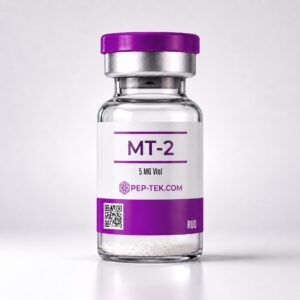
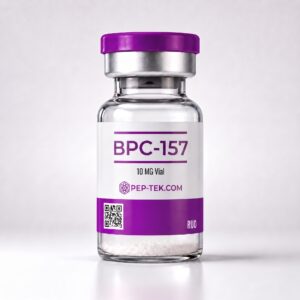
Available from PepTek
Melanotan II and BPC-157 represent two structurally and mechanistically distinct peptide classes studied for melanocortin signaling and cytoprotective pathways respectively, offering researchers complementary research tools.
The melanotan 2 vs BPC-157 peptide research comparison represents one of the most instructive contrasts in contemporary peptide science. These two compounds occupy entirely different biological niches — one engaging the melanocortin receptor system, the other demonstrating broad cytoprotective and regenerative properties in preclinical models. Understanding their structural distinctions, receptor targets, and documented research profiles enables investigators to select the appropriate tool for a given experimental question.
Disclaimer: All information presented in this article is intended strictly for research and educational purposes. Neither Melanotan II nor BPC-157 is approved for human or animal consumption. This content does not constitute medical advice, and no dosing, administration, or therapeutic guidance is implied or provided.
Melanotan II is a synthetic cyclic heptapeptide analogue of alpha-melanocyte-stimulating hormone (α-MSH), with the sequence Ac-Nle-cyclo[Asp-His-D-Phe-Arg-Trp-Lys]-NH₂. Its cyclic structure was deliberately engineered to confer greater metabolic stability and receptor selectivity compared to the linear native hormone. The incorporation of D-phenylalanine at position 7 and the lactam bridge between aspartate and lysine residues are key structural features that enhance its binding affinity for melanocortin receptors [Hadley & Dorr, 2006]. For a detailed structural and pharmacological overview, researchers may consult the Melanotan II (MT-2): Melanocortin Receptor Agonist Research Profile.
BPC-157 (Body Protection Compound-157) is a synthetic pentadecapeptide consisting of 15 amino acids: Gly-Glu-Pro-Pro-Pro-Gly-Lys-Pro-Ala-Asp-Asp-Ala-Gly-Leu-Val. It is derived from a partial sequence of human gastric juice protein and is entirely linear, lacking the cyclic architecture of MT-2. Its stability under physiological conditions — including resistance to acid degradation — has made it a widely studied subject in gastrointestinal and musculoskeletal research models [Sikiric et al., 2018]. For researchers interested in related cytoprotective peptide mechanisms, the GHK-Cu: Copper Peptide Research Profile and Signaling Pathways article provides a useful structural comparison.
MT-2 functions as a non-selective agonist at melanocortin receptors 1 through 5 (MC1R–MC5R), with particularly high affinity for MC1R and MC4R. Activation of MC1R has been studied extensively in the context of melanogenesis — researchers have observed that MC1R stimulation promotes eumelanin synthesis via upregulation of tyrosinase activity and cAMP-mediated signaling cascades [Mountjoy et al., 1992]. MC4R engagement has attracted significant attention in metabolic and neuroendocrine research, with animal model studies indicating roles in energy homeostasis and appetite regulation.
The downstream signaling of MT-2 is largely mediated through Gs-protein coupling, stimulating adenylyl cyclase and elevating intracellular cyclic AMP (cAMP) levels. This second-messenger cascade subsequently activates protein kinase A (PKA), which phosphorylates transcription factors such as CREB, influencing gene expression patterns relevant to pigmentation, metabolic signaling, and neurological function in research subjects.
BPC-157 does not operate through a single well-characterized receptor in the same fashion as MT-2. Instead, preclinical research has identified multiple overlapping pathways through which BPC-157 exerts its studied effects. In vitro studies suggest that BPC-157 modulates nitric oxide (NO) synthesis, with researchers observing both upregulation of endothelial nitric oxide synthase (eNOS) and context-dependent effects on NO bioavailability [Sikiric et al., 2014]. This is thought to underlie some of its studied angiogenic properties in wound-healing models.
Additionally, animal model studies indicate that BPC-157 influences the growth hormone receptor (GHR) signaling axis independently of circulating GH levels, and interacts with the dopaminergic and serotonergic systems in neuromodulatory research contexts. Its documented effects on tendon fibroblast proliferation, vascular integrity, and gastrointestinal mucosal repair in rodent models have made it a versatile cytoprotective research compound. Researchers investigating tissue-repair peptides may also find it useful to compare BPC-157’s mechanisms with those detailed in the TB-500 (Thymosin Beta-4): Research Profile and Cellular Mechanisms overview, as the two are frequently studied in parallel musculoskeletal research designs.
When conducting a melanotan 2 vs BPC-157 peptide research comparison, the fundamental decision criterion is the biological system under investigation. Researchers focused on receptor pharmacology, pigmentation cascades, or hypothalamic neuroendocrine axes will find MT-2’s well-characterized melanocortin receptor profile more directly applicable. Conversely, investigators studying tissue repair, gastrointestinal integrity, angiogenesis, or broad cytoprotection will generally reach for BPC-157 given its multi-pathway preclinical evidence base.
It is also worth noting that the two compounds are not inherently competitive — they address non-overlapping biological questions in most experimental contexts. Some research teams have incorporated both into multi-arm study designs to assess systemic effects alongside localized cytoprotective outcomes. This melanotan 2 vs BPC-157 peptide research comparison is therefore best framed as complementary rather than binary. Researchers interested in other peptides with broad systemic research profiles may also wish to review the BPC-157 Peptide: Research Profile and Mechanism of Action for deeper mechanistic documentation.
From a practical laboratory standpoint, MT-2’s cyclic structure confers relative resistance to enzymatic proteolysis compared to many linear peptides, though both compounds require appropriate cold-chain storage and reconstitution protocols to maintain integrity. BPC-157’s linear structure does not preclude stability — its resistance to gastric acid degradation has been documented in preclinical literature — but researchers should adhere to established handling guidelines to preserve bioactivity in experimental preparations.
For research programs examining oxidative stress as a co-variable alongside either peptide, the antioxidant signaling literature — including research on Glutathione: Tripeptide Antioxidant Research and Redox Signaling — may offer relevant mechanistic context, particularly where redox modulation intersects with tissue protection or melanocyte biology.
The melanotan 2 vs BPC-157 peptide research comparison continues to be an active area of scientific inquiry, with both compounds featuring prominently in peer-reviewed preclinical literature. MT-2 remains a canonical pharmacological tool for dissecting melanocortin receptor biology, while BPC-157 occupies an increasingly central role in cytoprotection and regenerative preclinical research. Together, they illustrate the diversity of mechanisms accessible through synthetic peptide chemistry.
Research Use Disclaimer: All compounds discussed in this article — including Melanotan II (MT-2) and BPC-157 — are intended exclusively for use in controlled laboratory research settings by qualified investigators. These compounds are not approved by the FDA or any regulatory authority for human or veterinary use. No claims of therapeutic efficacy, safety, or clinical applicability are made or implied. This article does not constitute medical advice. PepTek supplies research-grade compounds strictly for in vitro and preclinical research purposes.