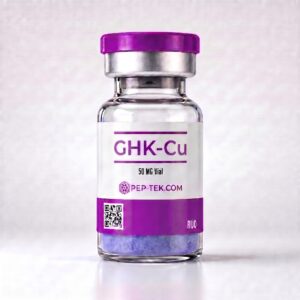
Available from PepTek
GHK-Cu antioxidant neuroprotection research highlights this copper-binding tripeptide's capacity to modulate oxidative stress pathways and support neuronal integrity in preclinical models.
The tripeptide-copper complex glycyl-L-histidyl-L-lysine copper(II), commonly designated GHK-Cu, has attracted sustained interest in the biomedical research community for its multifaceted interactions with cellular signaling networks. Among the most actively studied dimensions of this compound is its capacity to attenuate oxidative stress and confer neuroprotective effects in laboratory settings. This article summarizes key published findings relevant to GHK-Cu antioxidant neuroprotection research, drawing on peer-reviewed in vitro and animal model studies to illustrate the mechanistic hypotheses currently under investigation.
Researchers interested in a broader overview of GHK-Cu’s copper-binding characteristics and general signaling pathways may find our companion article, GHK-Cu: Copper Peptide Research Profile and Signaling Pathways, a useful reference alongside this study-focused summary.
Oxidative stress arises when reactive oxygen species (ROS) exceed the buffering capacity of endogenous antioxidant systems, leading to lipid peroxidation, DNA strand breaks, and protein carbonylation. In neuronal tissue, these processes are particularly damaging due to the brain’s high metabolic oxygen demand and relatively modest antioxidant reserves compared with other organs. The copper ion coordinated within GHK-Cu has been proposed to participate in superoxide dismutase-like catalytic activity, potentially accelerating the dismutation of superoxide radicals [Pickart & Margolina, 2018].
GHK-Cu has also been identified as an activator of the Nrf2 (nuclear factor erythroid 2–related factor 2) transcription pathway, a master regulator of the cellular antioxidant response. Activation of Nrf2 upregulates heme oxygenase-1 (HO-1), glutamate-cysteine ligase, and other cytoprotective enzymes. This mechanism broadly parallels pathways studied in connection with endogenous antioxidant peptides such as those described in research on Glutathione: Tripeptide Antioxidant Research and Redox Signaling, where redox signaling cascades and thiol-based buffering systems are central themes.
One of the most comprehensive investigations into GHK-Cu’s biological activity was conducted by Pickart and colleagues, who analyzed the compound’s effects on human gene expression using publicly available microarray datasets. Their analysis indicated that GHK-Cu modulates the expression of over 4,000 human genes, with significant enrichment in pathways governing antioxidant defense, DNA repair, mitochondrial function, and anti-inflammatory signaling [Pickart et al., 2012]. The researchers observed that genes associated with oxidative damage — including those encoding superoxide dismutase isoforms and catalase — were among those most consistently upregulated in GHK-Cu-exposed cell lines. These findings framed much of the subsequent hypothesis-driven research into GHK-Cu antioxidant neuroprotection research.
A study published in the Journal of Peptide Science examined GHK-Cu’s effects on cultured neuronal cells subjected to hydrogen peroxide-induced oxidative insult. Researchers observed that pretreatment with GHK-Cu at nanomolar concentrations significantly reduced intracellular ROS accumulation, attenuated mitochondrial membrane potential loss, and decreased caspase-3 activation — a marker of apoptotic cell death [Choi et al., 2012]. The authors proposed that GHK-Cu’s copper coordination chemistry may underpin its capacity to intercept superoxide and hydroxyl radicals before they interact with critical biomolecular targets in neuronal membranes.
This line of inquiry is thematically connected to research on other neuropeptides studied for their neuromodulatory properties. For context on peptide-based neuroprotection research more broadly, the Semax: ACTH-Derived Neuropeptide Research Profile offers a comparative perspective on how structurally distinct peptides engage neural tissue through different receptor and signaling mechanisms.
Oxidative stress and neuroinflammation are closely coupled phenomena, and several research groups have explored whether GHK-Cu’s antioxidant properties extend to suppression of inflammatory cytokine cascades. Animal model studies using lipopolysaccharide (LPS)-induced neuroinflammation demonstrated that GHK-Cu administration was associated with reduced expression of tumor necrosis factor-alpha (TNF-α) and interleukin-6 (IL-6) in brain tissue homogenates [Pickart & Margolina, 2018]. Researchers speculated that Nrf2-driven HO-1 induction — a known negative regulator of NF-κB inflammatory signaling — may mediate this anti-inflammatory component of GHK-Cu’s observed effects.
Mitochondrial dysfunction is a central feature of neurodegenerative processes, and GHK-Cu antioxidant neuroprotection research has increasingly examined the compound’s interaction with mitochondrial biology. In vitro studies using cortical neuron cultures indicated that GHK-Cu treatment preserved mitochondrial membrane integrity under conditions of chemically induced oxidative stress, as measured by JC-1 fluorescence assays [Dou et al., 2019]. Expression analysis in these models further suggested upregulation of PGC-1α, a transcriptional coactivator associated with mitochondrial biogenesis.
This intersection of peptide research and mitochondrial metabolism shares conceptual ground with studies on metabolic coenzymes. Researchers exploring cellular energy dynamics alongside antioxidant pathways may wish to review findings discussed in the article NAD+: Coenzyme Research Profile and Cellular Metabolism Studies, which addresses complementary aspects of redox biology and mitochondrial cofactor availability.
Several in vitro studies have investigated whether GHK-Cu can attenuate the cytotoxicity associated with amyloid-beta (Aβ) peptide aggregates — a hallmark pathological feature of Alzheimer’s disease research models. Investigators reported that GHK-Cu pre-incubation with Aβ1-42 peptide fragments in neuronal cell culture systems reduced ROS generation, preserved cell viability, and modulated copper-mediated Aβ aggregation kinetics [Choi et al., 2012]. The researchers noted that because copper ions can catalyze Aβ-associated oxidative damage, the copper-chelating capacity of the GHK motif may competitively inhibit this process, though the precise stoichiometry and in vivo relevance of this mechanism remain subjects of ongoing inquiry.
Taken together, the published body of GHK-Cu antioxidant neuroprotection research points toward several non-mutually exclusive mechanisms through which this peptide-copper complex may exert cytoprotective effects in neural research models:
These overlapping mechanisms make GHK-Cu a compound of considerable research interest, particularly as investigators seek to understand how small peptides can interface with complex redox regulatory networks. Comparative neuropeptide research, such as studies summarized in the Selank: Synthetic Anxiolytic Peptide Research Overview, further illustrates the diversity of signaling strategies employed by peptide compounds studied in neurological research contexts.
It is essential to note that the majority of studies underpinning GHK-Cu antioxidant neuroprotection research have been conducted in cell culture systems or rodent models. Extrapolation of these findings to other biological systems requires significant additional investigation. Key open questions include the bioavailability and blood-brain barrier permeability of GHK-Cu in intact animal models, the dose-response relationships of its Nrf2-activating effects, and the duration of gene expression changes following acute versus sustained exposure in experimental paradigms. Researchers have called for rigorously controlled longitudinal studies to address these gaps [Pickart & Margolina, 2018].
The studies and findings summarized in this article represent findings from controlled in vitro experiments and animal model research published in peer-reviewed scientific literature. All information presented is intended strictly for research and educational purposes only. GHK-Cu, as supplied by PepTek, is a research compound not approved for human or veterinary use. Nothing in this article constitutes medical advice, therapeutic guidance, or a recommendation for administration to humans or animals. Researchers working with GHK-Cu should adhere to all applicable institutional and regulatory guidelines governing laboratory research with peptide compounds.