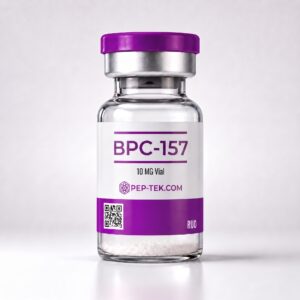
Available from PepTek
Preclinical studies on BPC-157 tendon ligament research demonstrate accelerated connective tissue repair, upregulated growth factor expression, and enhanced fibroblast activity in animal models.
Body Protection Compound-157 (BPC-157) is a synthetic pentadecapeptide derived from a protective protein isolated from gastric juice. Over the past two decades, a growing body of preclinical literature has examined its potential role in connective tissue biology, with particular emphasis on tendon and ligament repair mechanisms. BPC-157 tendon ligament research spans multiple animal model paradigms, offering investigators a rich dataset of mechanistic and morphological findings to analyze. This article summarizes key published studies, their methodologies, and the molecular pathways implicated in BPC-157’s observed effects on musculoskeletal connective tissue.
Researchers interested in the broader landscape of peptide-based tissue signaling may also find value in reviewing the BPC-157 Peptide: Research Profile and Mechanism of Action overview, which contextualizes the compound’s proposed signaling interactions across multiple tissue types.
Tendons and ligaments are dense, fibrous connective tissues composed predominantly of type I collagen, organized into hierarchical bundles by resident fibroblast populations called tenocytes and ligamentocytes. Their avascular or hypovascular nature renders them notoriously slow to recover following mechanical disruption, a property that has driven significant interest in identifying bioactive molecules capable of augmenting intrinsic repair pathways.
BPC-157, with its sequence of Gly-Glu-Pro-Pro-Pro-Gly-Lys-Pro-Ala-Asp-Asp-Ala-Gly-Leu-Val, has been reported in numerous animal model studies to modulate fibroblast migration and proliferation, upregulate growth factor receptors, and promote angiogenesis — all processes critical to connective tissue remodeling. Importantly, these findings originate exclusively from in vitro and in vivo preclinical settings and have not been validated in human clinical trials.
One of the most frequently cited lines of BPC-157 tendon ligament research involves complete Achilles tendon transection in rat models. Researchers at the University of Zagreb conducted a series of experiments in which rats received BPC-157 following surgical transection of the Achilles tendon. Histological analyses revealed significantly increased tendon-to-bone junction integrity, improved fiber alignment, and enhanced cellularity at the repair site compared to control cohorts [Pevec et al., 2010]. The investigators noted that treated animals demonstrated measurable functional recovery metrics, assessed via gait analysis, within shorter observation windows than untreated controls.
A related study by Krivic and colleagues examined the dose-response relationship of BPC-157 on healing Achilles tendons in rats, specifically analyzing the biomechanical properties of recovered tissue. Tensile strength measurements of the regenerated tendon segments indicated statistically significant improvements in the treatment groups, with histology confirming more organized collagen deposition [Krivic et al., 2006]. The authors proposed that BPC-157 may facilitate the transition from disorganized granulation tissue to mature, load-bearing tendon matrix more efficiently than untreated controls.
Complementing in vivo observations, several in vitro studies have examined BPC-157’s direct effects on tendon-derived fibroblasts. Chang and colleagues cultured human tendon fibroblasts and exposed them to varying concentrations of BPC-157, observing significant concentration-dependent increases in cell survival, proliferation, and migration — particularly under oxidative stress conditions [Chang et al., 2011]. The researchers documented upregulation of the FAK-paxillin pathway, a key intracellular signaling axis involved in cytoskeletal reorganization and cell motility. These findings provide a mechanistic framework for the accelerated tissue repopulation observed in animal models.
This cellular signaling perspective parallels investigations into other peptides with connective tissue relevance. For instance, TB-500 (Thymosin Beta-4): Research Profile and Cellular Mechanisms outlines a similarly actin-dependent migration mechanism that researchers have studied in the context of wound healing and tissue repair, offering a useful point of comparative analysis for connective tissue peptide biology.
The medial collateral ligament (MCL) has served as a primary model in BPC-157 tendon ligament research due to its relatively accessible surgical anatomy in rodent models. Cerovecki and colleagues investigated BPC-157 administration following MCL transection in rats and reported accelerated ligament healing based on biomechanical testing, gross morphology assessment, and histopathological scoring [Cerovecki et al., 2010]. The BPC-157 cohorts exhibited reduced inflammatory infiltrate, earlier fibroblastic proliferation, and more rapid vascularization of the repair zone compared to vehicle-treated controls.
Of particular note in this study was the researchers’ observation of elevated VEGF (vascular endothelial growth factor) expression within the healing ligament tissue of BPC-157-treated animals. The authors hypothesized that BPC-157 may exert a pro-angiogenic influence by upregulating VEGF receptor expression, thereby accelerating the delivery of reparative cells to the hypovascular ligament environment. This vascular remodeling component is considered mechanistically significant in explaining the morphological advantages observed.
Sikiric and colleagues — whose laboratory has produced a substantial portion of the BPC-157 preclinical literature — investigated growth factor receptor expression in tendon and ligament tissue following BPC-157 exposure in rodent models. Their findings suggested upregulation of EGF (epidermal growth factor) and specific growth hormone receptor subtypes, consistent with broader anabolic remodeling activity [Sikiric et al., 2018]. These receptor-level changes may partially account for the enhanced matrix synthesis observed histologically, though the complete upstream signaling cascade remains an active area of preclinical investigation.
Researchers studying how peptides influence anabolic tissue signaling pathways may find useful comparative context in the GHK-Cu: Copper Peptide Research Profile and Signaling Pathways article, which examines another peptide system associated with collagen synthesis modulation and extracellular matrix remodeling in preclinical settings.
Synthesizing findings across the published studies, researchers have proposed several interrelated mechanisms through which BPC-157 may exert its observed effects on tendon and ligament tissue in preclinical models:
It is worth noting that the field of peptide-based repair biology is expansive. Investigators exploring how other peptide systems influence cellular metabolism relevant to tissue anabolism may reference the NAD+: Coenzyme Research Profile and Cellular Metabolism Studies overview for context on energy-dependent repair processes at the cellular level.
Despite the consistency of preclinical findings, several limitations warrant acknowledgment. The majority of published BPC-157 tendon ligament research originates from a relatively concentrated group of research institutions, raising questions about independent replication. Additionally, rodent tendon and ligament biomechanics differ in meaningful ways from human tissue architecture, limiting direct translational inference. No peer-reviewed human clinical trial data currently exist to extend these preclinical observations to human physiology. Furthermore, most studies have utilized relatively short observation windows, leaving the long-term integrity and remodeling trajectory of BPC-157-treated tissue incompletely characterized.
Researchers are encouraged to approach the existing body of evidence as hypothesis-generating preclinical data requiring further rigorous investigation, including independent replication, larger sample sizes, and ideally, progression toward controlled clinical study design.
The studies summarized in this article represent findings from in vitro cell culture systems and in vivo animal models only. BPC-157 tendon ligament research as described herein is strictly preclinical in nature. BPC-157, as supplied by PepTek, is intended exclusively for laboratory research purposes and is not approved for human or animal consumption, therapeutic use, or clinical application of any kind. Researchers should adhere to all applicable institutional, regulatory, and ethical guidelines when working with this compound.
This article does not constitute medical advice, and no information presented here should be interpreted as endorsing or recommending BPC-157 for any health-related purpose. All referenced findings are drawn from published preclinical literature and are presented solely to inform the scientific research community.