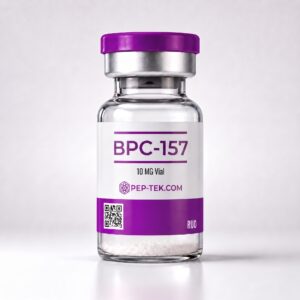
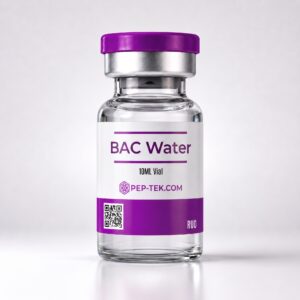
Available from PepTek
An overview of BPC-157 research protocol reconstitution, storage conditions, and experimental design methodologies drawn from published preclinical studies.
Body Protection Compound-157 (BPC-157) is a synthetic pentadecapeptide derived from a naturally occurring protein found in gastric juice. Composed of the sequence Gly-Glu-Pro-Pro-Pro-Gly-Lys-Pro-Ala-Asp-Asp-Ala-Gly-Leu-Val, BPC-157 has attracted considerable attention in preclinical research due to its apparent pleiotropic biological activity. This article summarizes typical BPC-157 research protocol reconstitution approaches, storage considerations, and experimental design frameworks as documented in peer-reviewed literature. All information presented here is intended strictly for researchers working within controlled laboratory environments.
BPC-157 carries the molecular formula C62H106N16O22 and a molecular weight of approximately 1,419.5 Da. It is typically supplied as a lyophilized white powder with a purity standard of ≥98% as verified by HPLC. Researchers have noted that BPC-157 demonstrates stability advantages over many endogenous peptides, particularly under acidic conditions, which has made it a useful research tool in gastrointestinal and connective tissue model studies [Sikiric et al., 2018].
For researchers exploring peptide signaling in tissue repair models, BPC-157 is frequently studied alongside other peptide research compounds. For example, studies examining extracellular matrix remodeling have drawn comparisons with TB-500 (Thymosin Beta-4): Research Profile and Cellular Mechanisms, which similarly features prominently in wound-healing and cytoskeletal research contexts. A broader mechanistic overview of BPC-157 itself can be found in the BPC-157 Peptide: Research Profile and Mechanism of Action article published by PepTek.
A consistent BPC-157 research protocol reconstitution approach observed across published preclinical studies involves the use of sterile bacteriostatic water (0.9% benzyl alcohol in water for injection) or sterile physiological saline (0.9% NaCl). Researchers have also employed phosphate-buffered saline (PBS) at physiological pH (7.2–7.4) when preparing solutions for cell culture applications. The choice of solvent is typically dictated by the downstream experimental model:
Researchers are advised to allow the lyophilized vial to equilibrate to room temperature before introducing solvent, minimizing thermal shock to the peptide structure. Solvent should be introduced slowly along the interior vial wall rather than directly onto the powder cake, and the vial should be gently swirled — not vortexed — to achieve complete dissolution [Vukojevic et al., 2022].
Published animal model studies have employed a wide range of BPC-157 concentrations. In rodent studies, researchers have typically prepared stock solutions ranging from 0.1 mg/mL to 1.0 mg/mL, subsequently diluted to working concentrations. The following concentration ranges reflect those documented in peer-reviewed literature:
It is essential to note that these figures are reported solely as documentation of published experimental parameters and carry no implication for human application or dosing guidance.
Proper storage is a critical component of any BPC-157 research protocol reconstitution plan. Lyophilized BPC-157 demonstrates notable stability when stored correctly. Published guidelines and manufacturer specifications consistently recommend:
Once reconstituted, BPC-157 solutions require more stringent handling. Research laboratories typically adhere to the following storage parameters for reconstituted peptide solutions:
Peptide stability research highlights that oxidative degradation is a primary concern for peptides stored in aqueous solution. Researchers studying oxidative stress pathways may find relevant methodological parallels in the literature on Glutathione: Tripeptide Antioxidant Research and Redox Signaling, where similar aqueous stability concerns are addressed in the context of thiol-containing peptide research.
In vitro BPC-157 studies have employed a variety of cell lines and primary cell preparations. Researchers have observed effects on cell migration, proliferation, and survival in fibroblast cultures, endothelial cell lines, and myocyte preparations. Standard methodology involves:
The majority of published BPC-157 research has been conducted in rat models. Experimental designs typically incorporate the following methodological standards:
Researchers studying BPC-157 have employed a broad array of analytical techniques to quantify experimental outcomes:
Researchers interested in neuropeptide experimental frameworks may find methodological context in the literature profiled in Semax: ACTH-Derived Neuropeptide Research Profile, where similar behavioral endpoint methodologies are discussed in relation to ACTH-derived peptide research.
Rigorous quality control is integral to any valid BPC-157 research protocol reconstitution and experimental workflow. Researchers sourcing BPC-157 for laboratory use should verify compound identity and purity through independent analytical documentation, including:
The experimental frameworks, concentration ranges, and methodological approaches described in this article are compiled from peer-reviewed preclinical literature and are presented exclusively to assist researchers in designing and contextualizing laboratory investigations. BPC-157 is a research compound supplied for use in controlled scientific settings only.
Disclaimer: BPC-157 is not approved by the FDA or any regulatory agency for human or veterinary therapeutic use. Nothing in this article constitutes medical advice, dosing guidance, or a recommendation for human or animal consumption. All experimental parameters referenced herein are drawn from published animal model and in vitro research. Researchers must comply with all applicable institutional, ethical, and regulatory requirements governing the use of research compounds in their jurisdiction. PepTek supplies BPC-157 strictly as a research compound for laboratory use only.