Available from PepTek
An overview of performance peptide research compounds GHRPs IGF-1 and related growth factors, examining shared mechanisms, receptor biology, and the current scientific landscape.
The study of performance peptide research compounds GHRPs IGF and related growth factor signaling pathways has emerged as one of the most active frontiers in modern peptide science. Researchers investigating endogenous growth regulation have identified a network of peptide ligands, receptors, and downstream signaling cascades that govern muscle protein synthesis, lipolysis, cellular repair, and tissue homeostasis. This category overview examines the principal compound classes, their mechanistic foundations, and the current state of preclinical and translational research.
Disclaimer: All compounds discussed in this article are research chemicals intended strictly for laboratory and scientific investigation. They are not approved for human or animal consumption, and no information herein constitutes medical advice, dosing guidance, or therapeutic recommendation.
Growth hormone (GH) secretion is governed by a dual regulatory system: growth hormone-releasing hormone (GHRH) stimulates pulsatile GH release from anterior pituitary somatotrophs, while somatostatin exerts inhibitory control. Performance peptide research compounds GHRPs IGF studies consistently return to this axis because it represents the upstream control point for a broad cascade of anabolic and metabolic signals.
Synthetic GHRH analogues have been developed to extend the in vivo half-life of native GHRH(1–44), which is rapidly cleaved by dipeptidyl peptidase IV (DPP-IV). Researchers have studied how structural modifications at specific residue positions confer DPP-IV resistance while maintaining receptor binding affinity at the GHRH receptor (GHRHR). Tesamorelin, a GHRH analogue with a trans-3-hexenoic acid modification, is among the most studied compounds in this class, with preclinical and clinical research examining its effects on GH pulsatility and downstream IGF-1 production [Falutz et al., 2010].
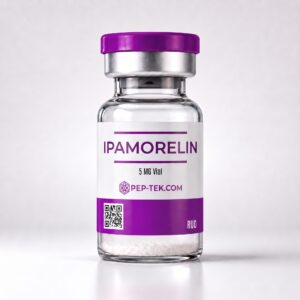
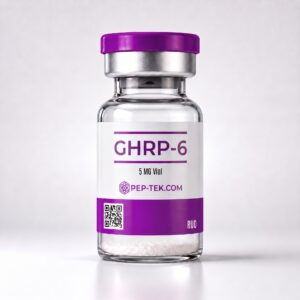
GHRPs represent a structurally distinct class that acts primarily at the ghrelin receptor (GHS-R1a) rather than the GHRHR. First identified through systematic screening of enkephalin analogues in the 1970s and 1980s [Bowers et al., 1984], GHRPs trigger GH release through a complementary and partially synergistic mechanism to GHRH. Key research compounds in this class include GHRP-2, GHRP-6, hexarelin, and ipamorelin. Ipamorelin has attracted particular research interest due to its high selectivity for GHS-R1a and its relative lack of effect on cortisol and prolactin secretion compared to earlier GHRPs, making it a useful tool compound for dissecting receptor-specific biology [Raun et al., 1998].
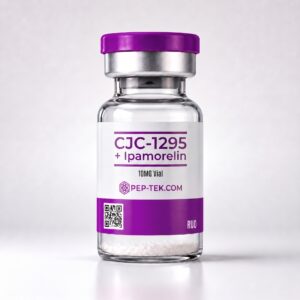
When GHRH analogues and GHRPs are combined in research models, investigators have consistently observed amplified GH pulses compared to either compound alone, a phenomenon attributed to complementary receptor activation and somatostatin suppression. Research into CJC-1295 combined with ipamorelin has explored this synergistic mechanism in detail, providing a model system for studying coordinated GH secretagogue activity.
Insulin-like growth factor 1 (IGF-1), synthesized predominantly in the liver in response to GH signaling, is a central effector molecule in performance peptide research compounds GHRPs IGF investigations. IGF-1 exerts its biological actions through the IGF-1 receptor (IGF-1R), a receptor tyrosine kinase that initiates phosphorylation cascades involving PI3K/Akt/mTOR and Ras/MAPK pathways. These downstream signals are associated with protein synthesis, cell proliferation, and survival in numerous tissue types [LeRoith et al., 2001].
Research has also examined IGF-1 isoforms, including mechano growth factor (MGF), a splice variant of the IGF-1 gene expressed locally in response to mechanical stimuli. MGF studies in rodent skeletal muscle models have suggested distinct roles in satellite cell activation compared to systemic IGF-1, though the precise signaling distinctions remain an area of active investigation.
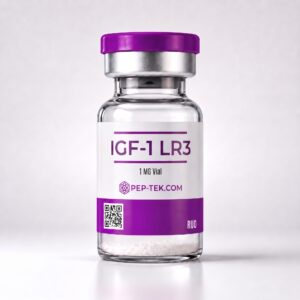
A critical variable in IGF-1 research is the family of IGF-binding proteins (IGFBPs 1–6), which modulate bioavailability, half-life, and tissue distribution of IGF-1. Researchers studying exogenous IGF-1 analogues such as Long R3 IGF-1 note that the arginine substitution at position 3 and N-terminal extension reduce IGFBP binding affinity by approximately 1000-fold, substantially altering the pharmacokinetic profile in cell culture and animal models [Francis et al., 1992]. This distinction is essential for interpreting in vitro versus in vivo experimental data.
The performance peptide research landscape extends beyond the GH/IGF-1 axis to include peptides studied for their roles in tissue repair, angiogenesis, and cytoprotection. These compounds are often co-investigated in models of exercise-induced tissue stress or injury.
Body protection compound 157 (BPC-157) is a synthetic pentadecapeptide derived from a region of human gastric juice protein. Animal model studies have examined its effects on tendon-to-bone healing, gut mucosal integrity, and nitric oxide system modulation. The BPC-157 research profile illustrates the breadth of tissue systems researchers have explored with this compound. Similarly, TB-500 (Thymosin Beta-4) has been investigated for its role in actin sequestration, cell migration, and angiogenic signaling, with studies in rodent wound healing and cardiac injury models representing a significant portion of the published literature [Goldstein et al., 2012].
GHK-Cu, the copper-complexed tripeptide glycyl-L-histidyl-L-lysine, represents a convergence of growth factor and redox research. Studies have identified GHK-Cu as a modulator of gene expression, with microarray analyses suggesting upregulation of genes involved in collagen synthesis, antioxidant defense, and tissue remodeling. Researchers studying performance peptide research compounds GHRPs IGF in the context of cellular stress often examine GHK-Cu’s signaling pathways alongside classical growth factor cascades, particularly given copper’s role in superoxide dismutase activity and mitochondrial electron transport.
Growth factor signaling does not occur in isolation from cellular energy status. Researchers have increasingly examined how NAD+ availability modulates sirtuin activity, mTOR signaling crosstalk, and the anabolic response to GH and IGF-1. The relationship between NAD+ as a coenzyme in cellular metabolism studies and growth factor responsiveness represents an emerging research theme, with SIRT1 deacetylase activity shown to influence IGF-1 signaling components in multiple experimental systems.
Performance peptide research compounds GHRPs IGF investigations span a wide methodological range, from receptor binding assays and cell-based reporter systems to rodent transgenic models and, in some cases, early-phase human pharmacokinetic studies for compounds with established safety profiles. The field broadly categorizes these compounds by primary mechanism:
Researchers selecting compounds from this category should consider receptor selectivity profiles, binding affinity data, reported half-life in relevant biological matrices, and the availability of validated assay systems for measuring downstream biomarkers such as serum IGF-1, phospho-Akt, or specific gene expression panels.
The study of performance peptide research compounds GHRPs IGF and related growth factors represents a dynamic and scientifically rigorous area of peptide biochemistry. Preclinical findings from cell culture and animal models continue to generate hypotheses about growth regulation, tissue homeostasis, and metabolic signaling that drive further mechanistic inquiry.
All compounds described in this overview are supplied by PepTek exclusively for laboratory research purposes. None of the compounds listed are approved by the FDA or any regulatory authority for human or veterinary use. No content on this page should be interpreted as medical advice, clinical guidance, or encouragement to use these substances outside of a properly supervised research context. Researchers are responsible for complying with all applicable local, national, and institutional regulations governing the procurement and use of research chemicals.