Longevity Peptide Research: NAD+, MOTS-C, and Aging Biology Overview
The biology of aging has emerged as one of the most actively investigated frontiers in modern biochemistry and molecular biology. Researchers across academic institutions and private laboratories are examining a growing class of molecules — collectively discussed under the umbrella of longevity peptide research anti-aging compounds — that appear to interface with fundamental cellular processes governing senescence, mitochondrial function, DNA repair, and proteostasis. This category overview summarizes the shared mechanistic landscape of these compounds and surveys the current state of preclinical research.
It is essential to note at the outset that all compounds discussed herein are strictly research tools. None are approved for human therapeutic use, and all observations referenced below derive from in vitro or animal model studies.
Defining the Longevity Compound Class
The term “longevity peptide” is not a formal pharmacological classification but rather a functional descriptor applied to a heterogeneous group of molecules — including short-chain peptides, coenzymes, and mitochondria-derived peptides — that researchers have associated with the modulation of aging-related biological pathways. What unites these compounds is their observed interaction with one or more of the recognized hallmarks of aging, as defined by López-Otín et al. in their landmark 2013 framework [López-Otín et al., 2013].
These hallmarks include genomic instability, telomere attrition, epigenetic alterations, loss of proteostasis, deregulated nutrient sensing, mitochondrial dysfunction, cellular senescence, stem cell exhaustion, and altered intercellular communication. Compounds under investigation in longevity peptide research anti-aging compounds contexts often address several of these pathways simultaneously, which contributes to the complexity and scientific interest surrounding them.
Key Compounds in Current Longevity Research
NAD+ and Precursor Molecules
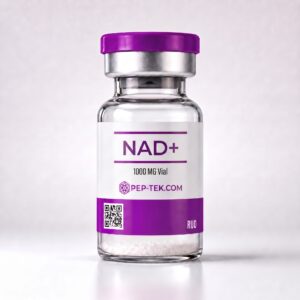
Nicotinamide adenine dinucleotide (NAD+) occupies a central position in cellular energy metabolism and serves as a critical cofactor for sirtuins — a family of NAD+-dependent deacetylases implicated in genomic stability, mitochondrial biogenesis, and stress response regulation. Preclinical data consistently demonstrate that NAD+ levels decline with age in multiple tissue types, and restoration of NAD+ pools in aged animal models has been associated with improvements in mitochondrial function and metabolic markers [Yoshino et al., 2018].
Researchers investigating this pathway often work with NAD+ directly or with biosynthetic precursors such as nicotinamide riboside (NR) and nicotinamide mononucleotide (NMN). For a detailed mechanistic profile of NAD+ as a research compound, refer to PepTek’s article on NAD+: Coenzyme Research Profile and Cellular Metabolism Studies.
MOTS-C: A Mitochondria-Derived Peptide
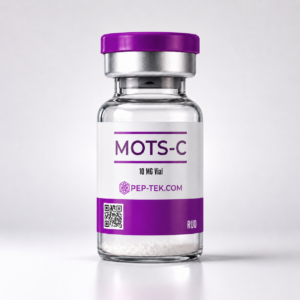
MOTS-C (mitochondrial open reading frame of the 12S rRNA-c) is a 16-amino acid peptide encoded within the mitochondrial genome — a discovery that fundamentally challenged the assumption that mitochondrial DNA encodes only components of the respiratory chain. First characterized by Lee et al. in 2015, MOTS-C has been shown in animal models to regulate metabolic homeostasis, enhance insulin sensitivity, and modulate skeletal muscle glucose uptake via AMPK activation [Lee et al., 2015].
Subsequent research has explored MOTS-C’s role in age-associated metabolic decline. Animal model studies indicate that MOTS-C levels decrease with aging and that exogenous administration in aged mice is associated with improvements in physical performance and metabolic flexibility. The peptide’s mitochondrial origin positions it as a compelling subject within longevity peptide research anti-aging compounds frameworks, particularly for researchers studying mito-nuclear communication as a driver of organismal aging.
Humanin
Also encoded within mitochondrial DNA, humanin is a 21-amino acid peptide that researchers have associated with cytoprotective effects in neuronal cell models and with modulation of IGF-1 signaling pathways. In vitro studies have demonstrated humanin’s capacity to inhibit apoptosis in response to amyloid-beta exposure, while animal studies suggest an inverse correlation between circulating humanin levels and biological age markers [Muzumdar et al., 2009]. These findings have made humanin a subject of considerable interest in aging biology research, particularly in contexts examining proteostasis and neuroprotection.
GHK-Cu: Copper-Peptide Signaling
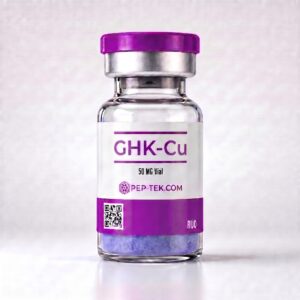
Glycyl-L-histidyl-L-lysine copper complex (GHK-Cu) is a naturally occurring tripeptide-copper complex whose plasma concentrations have been documented to decline with age. Preclinical research has implicated GHK-Cu in the upregulation of genes associated with tissue remodeling, antioxidant defense, and anti-inflammatory signaling. Researchers have identified GHK-Cu as a potential modulator of over 30 gene pathways relevant to tissue maintenance [Pickart & Margolina, 2018]. PepTek’s detailed compound profile is available in the article on GHK-Cu: Copper Peptide Research Profile and Signaling Pathways.
Glutathione and Redox Regulation in Aging
Oxidative stress — the progressive accumulation of reactive oxygen species outpacing antioxidant defenses — is one of the most extensively studied contributors to cellular aging. Glutathione, a tripeptide composed of glutamate, cysteine, and glycine, functions as the cell’s primary endogenous antioxidant and redox buffer. Research has consistently demonstrated age-associated declines in intracellular glutathione concentrations across multiple tissue types, with implications for mitochondrial integrity, protein oxidation, and inflammatory signaling.
Studies in animal models suggest that maintaining glutathione homeostasis may attenuate markers of oxidative aging. Researchers examining the intersection of redox biology and longevity will find relevant mechanistic detail in PepTek’s article on Glutathione: Tripeptide Antioxidant Research and Redox Signaling.
Shared Mechanistic Pathways
Despite structural diversity, the compounds examined under longevity peptide research anti-aging compounds categories converge on several recurring molecular themes:
- AMPK Activation: Multiple compounds, including MOTS-C, have been shown in animal models to activate AMP-activated protein kinase, a master energy sensor that regulates autophagy, mitochondrial biogenesis, and glucose metabolism.
- Sirtuin Pathway Modulation: NAD+-dependent sirtuins (SIRT1–SIRT7) serve as a downstream effector axis for several longevity-associated compounds, linking NAD+ availability to epigenetic regulation and DNA repair.
- mTOR Inhibition: Nutrient-sensing pathway modulation, particularly downregulation of mechanistic target of rapamycin (mTOR) complex 1 signaling, is associated with extended lifespan across model organisms. Several peptidic compounds appear to interface with this axis indirectly.
- Mitochondrial Quality Control: Mitophagy — the selective autophagy of dysfunctional mitochondria — is a recurring theme. Compounds that support mitochondrial membrane potential and respiratory chain efficiency are of particular interest to researchers studying aging biology.
- Redox Homeostasis: Antioxidant signaling through Nrf2/Keap1 pathways, glutathione synthesis, and superoxide dismutase regulation are frequently implicated across the longevity compound landscape.
Research Landscape and Model Systems
The majority of mechanistic findings in longevity peptide research anti-aging compounds literature derives from studies employing C. elegans, Drosophila melanogaster, and rodent models. These organisms offer tractable genetic systems and compressed lifespans that facilitate lifespan studies, though translational applicability to human biology remains an active area of scientific debate.
In vitro work in human cell lines — particularly senescent cell models and induced pluripotent stem cells — is increasingly used to complement animal data. Researchers have also begun applying multi-omics approaches, including transcriptomics, metabolomics, and epigenetic clock analyses, to better characterize how these compounds influence biological age at a systems level [Horvath & Raj, 2018].
The field benefits from substantial cross-disciplinary activity, with contributions from geroscience, mitochondrial biology, computational aging research, and structural biochemistry all informing the mechanistic picture.
Research Context
The compounds and pathways discussed in this overview represent active areas of preclinical investigation. All referenced findings derive exclusively from in vitro cell culture studies and animal model experiments. None of the compounds described in this article are approved by the FDA or any regulatory authority for human or veterinary therapeutic use. PepTek supplies these compounds strictly as research tools for use by qualified scientific investigators in laboratory settings.
This article does not constitute medical advice, dosing guidance, or a recommendation for any therapeutic application. Researchers are encouraged to consult the primary literature cited below and to comply with all applicable institutional and regulatory requirements when working with research compounds.
For researchers exploring related peptide categories, PepTek’s profiles on BPC-157 Peptide: Research Profile and Mechanism of Action and TB-500 (Thymosin Beta-4): Research Profile and Cellular Mechanisms provide additional context on peptides studied for cytoprotective and regenerative signaling in preclinical models.