The scientific study of peptides as modulators of skin biology represents one of the most active frontiers in dermatological and biochemical research. Skin peptide research anti-aging compounds have attracted sustained academic interest due to their diverse mechanisms of action, relative molecular specificity, and the accessibility of skin tissue as an experimental model. From copper-chelating tripeptides to body-protective compounds and collagen-derived fragments, researchers are investigating how small peptide sequences interact with cellular signaling pathways, extracellular matrix remodeling, and oxidative stress responses in ways that may fundamentally reshape the understanding of cutaneous aging.
What Are Skin Research Peptides?
Skin research peptides are short amino acid sequences — typically between 2 and 50 residues — that have been identified, synthesized, or derived from endogenous proteins for use in laboratory investigations. Unlike full-length proteins, these peptides are small enough to be synthesized with high purity and studied in controlled in vitro and animal model environments. Their compact size often allows them to interact with specific receptor targets, ion channels, or structural proteins with measurable precision.
Within the broader field of skin peptide research anti-aging compounds, several categories have emerged: signal peptides that modulate fibroblast activity, carrier peptides that deliver trace elements to target tissues, enzyme-inhibitor peptides that interfere with degradative processes, and neurotransmitter-inhibitor peptides that have been studied in the context of muscle contraction at the dermal level. Each category presents distinct mechanistic hypotheses and experimental methodologies for researchers.
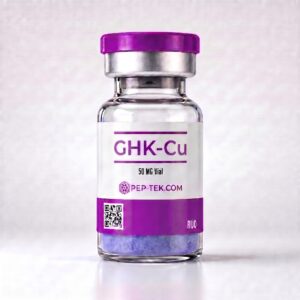
GHK-Cu: The Copper Peptide Model
Structure and Discovery
Glycyl-L-histidyl-L-lysine copper(II), commonly abbreviated as GHK-Cu, was first isolated from human plasma albumin in the early 1970s by Loren Pickart, who observed that older human plasma exhibited reduced capacity to support liver tissue survival — a property that was subsequently attributed to declining GHK concentrations [Pickart et al., 1973]. The tripeptide GHK has a high affinity for copper(II) ions, forming a stable complex that has since been studied for its apparent influence on tissue remodeling, wound repair, and gene expression regulation.
Mechanisms Under Investigation
Laboratory studies have demonstrated that GHK-Cu appears to stimulate the synthesis of collagen, glycosaminoglycans, and decorin in human fibroblast cultures [Maquart et al., 1993]. More recently, transcriptomic analyses have identified GHK as a potential modulator of a substantial number of human genes, including those associated with the ubiquitin-proteasome system and TGF-β signaling pathways [Pickart & Margolina, 2018]. Researchers have also investigated its apparent antioxidant properties, noting potential interactions with reactive oxygen species scavenging systems that are conceptually related to the redox biology explored in studies of Glutathione: Tripeptide Antioxidant Research and Redox Signaling.
For those seeking a dedicated profile of this compound, PepTek has published a detailed examination in its article on GHK-Cu: Copper Peptide Research Profile and Signaling Pathways, covering its receptor interactions and downstream signaling in depth.
BPC-157: Body Protection Compound Research
Origins and Composition
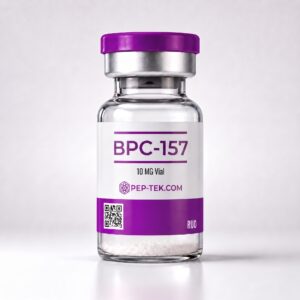
BPC-157 is a synthetic pentadecapeptide comprising 15 amino acids, derived from a partial sequence of body protection compound originally isolated from gastric juice. Although its primary research context has focused on gastrointestinal mucosal protection and musculoskeletal tissue repair, investigators have extended study of this compound to dermal wound healing models, given its apparent influence on angiogenesis and fibroblast migration.
Skin-Relevant Findings in Animal Models
In rodent wound-healing studies, BPC-157 administration has been associated with accelerated wound closure and increased collagen deposition at incision sites [Sikiric et al., 2018]. Mechanistic hypotheses center on the compound’s apparent ability to upregulate growth hormone receptor expression and to modulate nitric oxide synthase activity, which may support vascular ingrowth into healing tissue. Some researchers studying skin peptide research anti-aging compounds have drawn analogies between BPC-157’s tissue-remodeling observations and the cytoskeletal effects associated with actin-binding proteins such as Thymosin Beta-4, as reviewed in PepTek’s profile on TB-500 (Thymosin Beta-4): Research Profile and Cellular Mechanisms.
A comprehensive mechanistic review of this compound is available through PepTek’s article on BPC-157 Peptide: Research Profile and Mechanism of Action.
Collagen Peptides and Extracellular Matrix Research
Collagen Fragmentation and Signaling
Collagen constitutes approximately 70–80% of the dry weight of the dermis, and its progressive fragmentation and cross-linking deterioration are considered hallmarks of intrinsic and extrinsic skin aging. Researchers have investigated bioactive collagen peptides — short sequences generated through enzymatic hydrolysis of native collagen — as potential signaling molecules that may interact with fibroblast surface receptors to stimulate de novo collagen synthesis in a feedback-like manner.
Studies in human fibroblast cultures have indicated that specific collagen-derived dipeptides and tripeptides, particularly those containing proline-hydroxyproline (Pro-Hyp) sequences, may stimulate fibroblast proliferation and hyaluronic acid production [Ohara et al., 2010]. The hypothesis driving much of this research is that collagen peptide fragments function as matrikines — biologically active peptides released during matrix remodeling that signal a need for tissue repair.
Animal and In Vitro Study Observations
Animal model studies involving oral collagen peptide administration have reported measurable increases in dermal collagen density and skin hydration markers, though researchers note the importance of distinguishing between systemic and locally delivered peptide effects when interpreting these findings [Asserin et al., 2015]. Such studies underscore that route and bioavailability are critical experimental variables, and that results from animal models require careful contextualization before any broader conclusions can be drawn.
Shared Mechanisms Across Skin Research Peptides
Despite their structural diversity, compounds studied under the umbrella of skin peptide research anti-aging compounds share several mechanistic themes of interest to researchers:
- Extracellular matrix modulation: GHK-Cu, collagen peptides, and BPC-157 have each been associated in various study contexts with changes in collagen synthesis, matrix metalloproteinase activity, or glycosaminoglycan production.
- Fibroblast activity: Multiple skin research peptides appear to influence fibroblast proliferation, migration, or secretory behavior in cell culture models, positioning the dermal fibroblast as a key research target.
- Angiogenic and vascular signaling: Peptides such as BPC-157 have demonstrated apparent pro-angiogenic properties in wound models, which may be relevant to the study of nutrient delivery to aging dermal tissue.
- Antioxidant and redox pathways: Several compounds intersect with reactive oxygen species biology, complementing research into cellular antioxidant systems and metabolic cofactors. Investigators familiar with the cellular metabolism literature, including studies on NAD+: Coenzyme Research Profile and Cellular Metabolism Studies, will recognize the relevance of redox regulation in aging skin biology.
- Gene expression modulation: Emerging transcriptomic research suggests that certain skin peptides may exert broad regulatory effects on gene networks governing inflammation, apoptosis, and cellular differentiation.
The Current Research Landscape
The field of skin peptide research anti-aging compounds continues to expand rapidly, driven by advances in peptide synthesis technology, high-throughput screening platforms, and a deepening mechanistic understanding of skin aging biology. A notable trend is the shift from single-compound studies toward combinatorial research designs, in which peptides with complementary mechanisms are examined together in cell culture or animal models to characterize potential synergistic or antagonistic interactions.
Alongside established compounds such as GHK-Cu and collagen peptides, newer synthetic sequences continue to enter preclinical research pipelines. Researchers are also increasingly interested in delivery system optimization — investigating how peptide molecular weight, charge, and lipophilicity influence penetration across the epidermal barrier in ex vivo skin models. These questions are fundamentally relevant to the validity of in vitro findings and to how accurately animal model results may be extrapolated to human tissue biology.
It is also worth noting that the skin represents a uniquely accessible organ for topical peptide delivery research, enabling experimental designs that include direct measurement of tissue peptide concentrations following application — a methodological advantage that continues to attract researchers to this field.
Research Context
The compounds and mechanisms described in this article — including GHK-Cu, BPC-157, and collagen-derived peptides — are discussed exclusively within the context of laboratory and preclinical research. All findings referenced here originate from in vitro cell culture systems or animal model experiments and should not be interpreted as evidence of safety or efficacy in humans.
Research Use Disclaimer: All compounds described in this article are intended strictly for scientific research purposes and are not approved for human or animal consumption. PepTek supplies research-grade compounds exclusively for use by qualified researchers in controlled laboratory settings. Nothing in this article constitutes medical advice, therapeutic claims, or dosing guidance of any kind. Researchers should adhere to all applicable institutional, regional, and national regulations governing the use of research compounds.