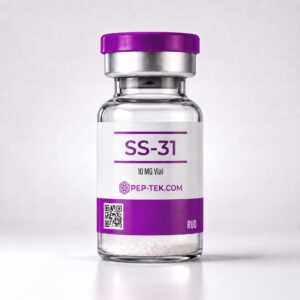
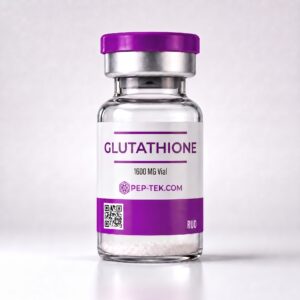
Available from PepTek
SS-31 and glutathione represent two distinct antioxidant strategies in research: mitochondria-targeted vs. cytosolic defense. This comparison examines their structural differences, mechanisms, and research applications.
In the expanding field of antioxidant research, understanding how different compounds interact with subcellular compartments is critical for designing precise experimental models. The comparison of SS-31 vs glutathione antioxidant mitochondria research has emerged as a particularly informative framework for investigating oxidative stress at both the organelle and systemic levels. While glutathione serves as the cell’s primary cytosolic redox buffer, SS-31 represents a next-generation, mitochondria-targeted peptide designed to intercept reactive oxygen species (ROS) at their primary site of production. This article examines the structural, mechanistic, and experimental distinctions between these two research compounds.
SS-31, also known as elamipretide or MTP-131, is a synthetic tetrapeptide with the sequence D-Arg-2′6′-Dmt-Lys-Phe-NH₂. Its structure features alternating aromatic and basic amino acid residues, a configuration that confers both a positive charge and aromatic electron-donating capacity. This unique architecture allows SS-31 to selectively concentrate within the inner mitochondrial membrane (IMM) by interacting with cardiolipin, a phospholipid exclusive to mitochondrial membranes. The Dmt (2′,6′-dimethyltyrosine) residue provides the primary electron-scavenging activity through its phenolic hydroxyl group [Szeto, 2014].
Glutathione is a linear tripeptide composed of glutamate, cysteine, and glycine (γ-Glu-Cys-Gly). Its antioxidant function is centered on the thiol (-SH) group of the cysteine residue, which donates electrons to neutralize ROS and free radicals. Glutathione exists in both reduced (GSH) and oxidized (GSSG) forms, and the GSH/GSSG ratio is a widely used marker of cellular redox status. It is synthesized endogenously and is found at millimolar concentrations in the cytosol, though mitochondria maintain a separate pool imported from the cytoplasm. Researchers studying glutathione’s broader roles in redox signaling can reference the detailed profile in Glutathione: Tripeptide Antioxidant Research and Redox Signaling.
The mechanistic hallmark of SS-31 is its high-affinity binding to cardiolipin within the IMM. This interaction stabilizes cardiolipin structure, which is essential for maintaining the electron transport chain (ETC) complexes—particularly Complex I and Complex III—in their functional conformations. Disorganized or oxidized cardiolipin is associated with increased electron leak, which drives superoxide (O₂·⁻) production. By anchoring to cardiolipin, SS-31 is positioned to intercept electrons before they can react with molecular oxygen to form superoxide [Birk et al., 2013].
Furthermore, SS-31 has been shown in animal model studies to reduce mitochondrial membrane potential dissipation, preserve ATP synthesis efficiency, and attenuate cytochrome c release—a key step in apoptotic signaling. In vitro studies suggest that SS-31 does not simply scavenge existing ROS but rather prevents their formation upstream by maintaining ETC integrity [Szeto & Schiller, 2011].
Glutathione’s primary mechanism operates through direct chemical neutralization of ROS and as a cofactor for glutathione peroxidase (GPx) enzymes, which catalyze the reduction of hydrogen peroxide (H₂O₂) and lipid hydroperoxides. In this reaction, two GSH molecules are oxidized to GSSG, which is subsequently regenerated by glutathione reductase (GR) using NADPH as a reducing agent. This cyclical system links glutathione activity directly to the pentose phosphate pathway and cellular energy metabolism.
Glutathione also plays a critical role in protein S-glutathionylation, a reversible post-translational modification that protects cysteine residues on proteins from irreversible oxidation and modulates enzyme activity as a redox signal. Unlike SS-31, glutathione’s primary antioxidant activity is concentrated in the cytosol and nucleus, with a secondary but distinct mitochondrial pool that cannot be directly replenished by cytosolic synthesis [Aquilano et al., 2014].
One of the most consequential differences in the SS-31 vs glutathione antioxidant mitochondria research landscape is subcellular targeting. The inner mitochondrial membrane, where SS-31 concentrates, is the primary site of superoxide production under conditions of metabolic stress, ischemia-reperfusion, or ETC dysfunction. Glutathione, even the mitochondrial pool, cannot access this membrane microenvironment as effectively as a lipophilic-cationic peptide like SS-31.
In contrast, glutathione is indispensable for cytosolic redox homeostasis, including the detoxification of electrophiles via glutathione S-transferases (GSTs) and the maintenance of protein thiol status. Research models examining conditions such as xenobiotic exposure, heavy metal toxicity, or broad cellular oxidative stress may favor glutathione-centered experimental designs. Models focused specifically on mitochondrial dysfunction, bioenergetic collapse, or cardiolipin peroxidation are more appropriately served by SS-31 as a research tool.
It is also worth noting that both compounds interact, indirectly, with the broader NAD⁺/NADH redox axis. Glutathione regeneration depends on NADPH derived partly from NAD⁺ metabolism. Researchers studying the intersection of these pathways may find value in reviewing the NAD+: Coenzyme Research Profile and Cellular Metabolism Studies for complementary mechanistic context.
Animal model studies of cardiac and renal ischemia-reperfusion have demonstrated that SS-31 pretreatment significantly reduces infarct size, preserves mitochondrial ultrastructure, and attenuates post-reperfusion ROS bursts. These effects are attributed to cardiolipin stabilization and ETC preservation rather than direct ROS scavenging in solution [Dai et al., 2014]. Glutathione supplementation in similar models has shown more variable outcomes, potentially due to limited membrane permeability and rapid oxidation in the ischemic microenvironment.
The progressive decline in mitochondrial function associated with aging has driven significant interest in SS-31 vs glutathione antioxidant mitochondria research for geroscience models. SS-31 has been studied in aged rodent models for its capacity to restore mitochondrial cristae morphology and improve state 3 respiration. Glutathione depletion is a well-documented feature of cellular aging, yet exogenous GSH supplementation in aged cell models faces bioavailability constraints that SS-31’s direct membrane targeting circumvents [Bhatt et al., 2020].
Both compounds have been examined in neuronal oxidative stress models relevant to conditions such as Parkinson’s and Alzheimer’s disease. Glutathione deficiency in dopaminergic neurons is a hallmark of Parkinson’s pathology, making it a primary target in cell culture research. SS-31 has shown neuroprotective effects in models of rotenone-induced Complex I inhibition, where its mitochondria-specific action provides mechanistic advantages. The SS-31 vs glutathione antioxidant mitochondria research comparison in neural contexts underscores that these compounds address different points in the oxidative cascade. Researchers investigating neuroprotective peptides may also find relevant mechanistic context in the Semax: ACTH-Derived Neuropeptide Research Profile, which covers another class of peptide with studied neuroprotective properties.
When researchers must choose between these compounds for in vitro or in vivo models, several criteria are relevant:
Researchers working with structurally active peptides in cellular repair contexts may also find the research profile of GHK-Cu: Copper Peptide Research Profile and Signaling Pathways relevant, as GHK-Cu intersects with antioxidant enzyme upregulation pathways studied in similar cellular models.
The comparison of SS-31 vs glutathione antioxidant mitochondria research represents an active and evolving area of inquiry in oxidative biology, bioenergetics, and aging science. Structural differences between a mitochondria-targeted synthetic tetrapeptide and an endogenous tripeptide translate directly into distinct mechanistic niches that serve different experimental purposes. Understanding these distinctions allows researchers to design more targeted studies and interpret results with greater precision.
Research Use Disclaimer: All information presented in this article is intended strictly for scientific research and educational purposes. SS-31 and glutathione, as discussed here, are research compounds supplied for use in controlled laboratory settings only. Neither compound is presented as suitable for human or animal consumption, and no claims regarding therapeutic efficacy, medical benefit, or clinical application are made or implied. Researchers should adhere to all applicable institutional and regulatory guidelines when working with these compounds.