Available from PepTek
BPC-157 and GHK-Cu are two structurally distinct peptides studied for tissue repair mechanisms. This comparison examines their signaling pathways, research applications, and how investigators select between them.
Among the most extensively investigated peptides in preclinical tissue repair research, BPC-157 and GHK-Cu occupy distinct yet occasionally overlapping areas of scientific inquiry. Understanding the structural, mechanistic, and contextual differences between these two compounds is essential for researchers designing experiments in regenerative biology, wound healing models, and extracellular matrix remodeling studies. This article explores the BPC-157 vs GHK-Cu tissue repair research landscape to help investigators understand how each compound has been characterized in published literature.
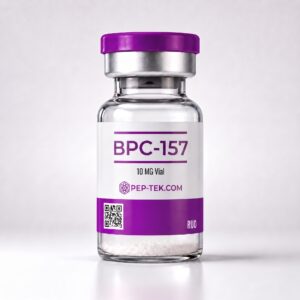
BPC-157 (Body Protection Compound-157) is a synthetic 15-amino acid peptide derived from a partial sequence of human gastric juice protein BPC. Its sequence is Gly-Glu-Pro-Pro-Pro-Gly-Lys-Pro-Ala-Asp-Asp-Ala-Gly-Leu-Val, and it is notable for its unusual proline-rich core, which researchers hypothesize contributes to its resistance to enzymatic degradation in physiological fluids. BPC-157 does not require a metal ion cofactor for its proposed activity; it operates as a free peptide. For a detailed structural and mechanistic breakdown, researchers may consult the BPC-157 Peptide: Research Profile and Mechanism of Action article on PepTek.
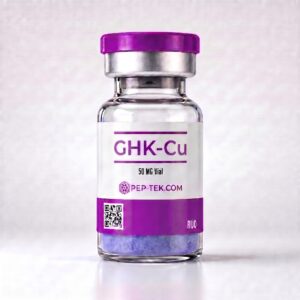
GHK-Cu is a naturally occurring tripeptide — Glycine-Histidine-Lysine — complexed with a copper(II) ion. The copper chelation is integral to its biological activity; the histidine residue coordinates copper binding, which in turn modulates the peptide’s interaction with cellular receptors and signaling cascades. Unlike BPC-157, GHK-Cu is endogenously present in human plasma, saliva, and urine, and plasma concentrations have been observed to decline with age in human studies [Pickart et al., 2015]. Researchers interested in GHK-Cu’s broader signaling profile can refer to the GHK-Cu: Copper Peptide Research Profile and Signaling Pathways overview published by PepTek.
In vitro and in vivo animal model studies have associated BPC-157 with several molecular interactions relevant to tissue repair. Researchers have observed that BPC-157 appears to upregulate vascular endothelial growth factor (VEGF) expression and stimulate angiogenesis in rodent wound and tendon injury models [Sikiric et al., 2018]. Additionally, BPC-157 has been studied for its interactions with the nitric oxide (NO) system — researchers have proposed that modulation of NO synthase activity may underlie its observed cytoprotective effects in gastric mucosal and musculotendinous tissue models. Studies in rat models have also suggested BPC-157 may promote fibroblast migration and proliferation, key events in wound closure [Chang et al., 2011].
Beyond musculoskeletal tissue, BPC-157 has been investigated for potential effects on the gut-brain axis, making it one of the more mechanistically diverse peptides in the BPC-157 vs GHK-Cu tissue repair research discussion.
GHK-Cu’s mechanisms are largely centered on gene expression modulation. Microarray analyses have identified that GHK-Cu may influence the expression of over 4,000 human genes, with notable upregulation of genes associated with collagen synthesis, anti-inflammatory pathways, and antioxidant defense [Pickart and Margolina, 2018]. Researchers have observed that GHK-Cu stimulates collagen, elastin, and glycosaminoglycan production in fibroblast cultures, contributing to extracellular matrix remodeling. The copper ion itself is implicated in activating lysyl oxidase, an enzyme critical for cross-linking collagen and elastin fibers.
GHK-Cu has also been studied for its capacity to modulate matrix metalloproteinases (MMPs), both stimulating MMPs that clear damaged tissue and potentially upregulating tissue inhibitors of metalloproteinases (TIMPs) to prevent excessive matrix degradation [Pickart et al., 2015]. This dual regulatory role in extracellular matrix turnover is a distinguishing feature in BPC-157 vs GHK-Cu tissue repair research comparisons. Researchers examining oxidative stress pathways alongside GHK-Cu may find complementary insights in PepTek’s article on Glutathione: Tripeptide Antioxidant Research and Redox Signaling, given the overlapping interest in antioxidant gene regulation.
BPC-157’s breadth across tissue types has made it a frequently selected compound in multi-tissue repair paradigms. Researchers studying musculoskeletal repair may also consider companion peptides such as TB-500; PepTek’s article on TB-500 (Thymosin Beta-4): Research Profile and Cellular Mechanisms provides a useful parallel reference for actin-sequestering mechanisms in wound healing research.
GHK-Cu has been particularly prominent in dermatological research models due to its well-characterized effects on skin fibroblasts, making it a common selection for collagen and extracellular matrix-focused studies [Gorouhi and Maibach, 2009].
From a formulation standpoint, BPC-157 is generally studied in aqueous solution and is noted for its relative stability across a broad pH range, a property researchers attribute to its proline-rich sequence. GHK-Cu, by contrast, requires careful attention to copper ion availability and can be subject to oxidation under certain storage conditions. Researchers working with GHK-Cu in cell culture systems must account for the potential cytotoxic effects of excess free copper ions when designing experimental concentrations.
In BPC-157 vs GHK-Cu tissue repair research, endpoint selectivity is a primary differentiator. Investigators focused on angiogenesis, VEGF pathway modulation, or gastrointestinal mucosal biology have more preclinical precedent with BPC-157. Researchers whose primary endpoints involve collagen quantification, MMP/TIMP balance, or broad transcriptomic profiling of wound-healing genes may find GHK-Cu’s literature more directly applicable.
A unique consideration in BPC-157 vs GHK-Cu tissue repair research is that GHK-Cu is an endogenous molecule with established age-related concentration changes, providing a biological baseline for comparative studies. BPC-157, as a wholly synthetic construct with no known endogenous equivalent, offers researchers the advantage of studying exogenous peptide effects without the confound of baseline physiological levels. This distinction influences how researchers design control conditions and interpret mechanistic data.
Researchers interested in how other signaling peptides affect cellular metabolism and gene regulation in adjacent research contexts may also find value in reviewing PepTek’s profile on NAD+: Coenzyme Research Profile and Cellular Metabolism Studies, as cellular energy status is known to influence tissue repair capacity in multiple model systems.
Both BPC-157 and GHK-Cu have generated substantial preclinical literature relevant to tissue repair biology. BPC-157 is distinguished by its multi-tissue applicability, VEGF and NO pathway interactions, and documented activity in musculoskeletal and gastrointestinal models. GHK-Cu is distinguished by its copper-dependent gene regulatory mechanisms, established role in extracellular matrix remodeling, and endogenous biological context. The optimal selection between compounds in the BPC-157 vs GHK-Cu tissue repair research framework depends on the specific biological question, the tissue type under investigation, and the molecular endpoints being measured. In some experimental designs, researchers have employed both compounds to examine potentially complementary or additive mechanisms within the same model system.
All information presented in this article is intended strictly for scientific research and educational purposes. BPC-157, GHK-Cu, and all compounds discussed herein are research chemicals supplied by PepTek for use in controlled laboratory settings only. Neither compound is approved by the FDA or any regulatory authority for human or veterinary therapeutic use. No content in this article constitutes medical advice, dosing guidance, or a recommendation for human or animal administration. Researchers should adhere to all applicable institutional, local, and national regulations when handling research compounds.