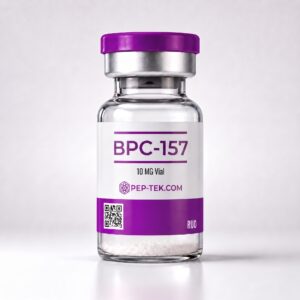
Available from PepTek
BPC-157 angiogenesis research studies reveal the peptide's capacity to modulate vascular endothelial growth factor pathways and stimulate new blood vessel formation in preclinical models.
Body Protection Compound-157 (BPC-157) is a synthetic pentadecapeptide derived from a protein found in gastric juice. Over the past two decades, a growing body of preclinical literature has examined its interactions with vascular biology, particularly its apparent capacity to influence angiogenic signaling cascades. BPC-157 angiogenesis research studies have emerged as a significant subset of the broader investigation into this compound’s mechanistic properties, with multiple peer-reviewed publications documenting its effects on endothelial cell behavior, growth factor expression, and neovascularization in animal models. This article summarizes the key published findings from this area of inquiry, with particular attention to the molecular mechanisms researchers have proposed to explain observed vascular phenomena.
For researchers interested in related peptide signaling pathways involved in tissue remodeling, the TB-500 (Thymosin Beta-4): Research Profile and Cellular Mechanisms article offers a complementary overview of another compound studied extensively in wound-healing and vascular contexts.
Researchers have identified several interconnected molecular pathways through which BPC-157 appears to exert pro-angiogenic effects in experimental settings. Chief among these is the upregulation of vascular endothelial growth factor (VEGF) and its associated receptor signaling. In vitro studies suggest that BPC-157 enhances VEGF expression in endothelial and fibroblast cell cultures, promoting conditions favorable to capillary sprouting and tube formation [Sikiric et al., 2018].
Additional mechanistic research has pointed toward BPC-157’s interactions with the nitric oxide (NO) system. Nitric oxide is a well-characterized vasodilatory and angiogenic mediator, and animal model studies indicate that BPC-157 may stimulate endothelial nitric oxide synthase (eNOS) activity, thereby augmenting local NO availability and supporting endothelial cell migration — a prerequisite for new vessel formation [Sikiric et al., 2014]. The compound’s apparent ability to operate across multiple angiogenic signaling nodes simultaneously has been a consistent theme in BPC-157 angiogenesis research studies.
A series of studies published by Sikiric and colleagues examined the relationship between BPC-157 administration and VEGF pathway activation in rodent models. In cutaneous wound models, animals treated with BPC-157 demonstrated histologically observable increases in microvessel density within granulation tissue compared to untreated controls [Sikiric et al., 2018]. Immunohistochemical analyses in these studies revealed elevated VEGF receptor-2 (VEGFR-2/KDR) expression in vascular endothelial cells proximate to wound margins, suggesting that BPC-157 may sensitize endothelial cells to VEGF signaling rather than — or in addition to — simply increasing ligand availability.
Researchers have also observed that BPC-157 appears to accelerate the formation of organized vascular networks rather than merely increasing the total count of nascent vessels, implying potential involvement in vessel maturation and stabilization pathways, possibly through interactions with angiopoietin-Tie2 signaling [Sikiric et al., 2014].
The eNOS-NO axis represents a second major mechanistic focus in BPC-157 angiogenesis research studies. Research published in the Journal of Physiology and Pharmacology documented that BPC-157 restored compromised NO production in endothelial cells subjected to ischemic or toxic insult, and that this restoration was associated with improved capillary perfusion in surrounding tissue in rat models [Sikiric et al., 2014]. Importantly, researchers noted that administration of eNOS inhibitors partially attenuated BPC-157’s observed pro-angiogenic effects, providing pharmacological evidence for NO pathway dependence.
This intersection of peptide signaling and redox-related vascular biology is not unique to BPC-157. Researchers studying other compounds have noted similar themes; for instance, the article on GHK-Cu: Copper Peptide Research Profile and Signaling Pathways describes how that copper-peptide complex also modulates VEGF and angiogenic gene expression through distinct but partially overlapping mechanisms.
One of the most frequently referenced studies in BPC-157 angiogenesis research studies is a 2018 publication by Sikiric and colleagues in Current Pharmaceutical Design. This comprehensive review and experimental compilation examined rodent models of cutaneous, tendon, and gastrointestinal wound healing, consistently finding that BPC-157-treated animals exhibited superior vascularization of healing tissue relative to controls [Sikiric et al., 2018]. Quantitative histomorphometry revealed statistically significant increases in microvessel density in BPC-157 cohorts across multiple tissue types. The authors proposed that BPC-157 functions as a “pleiotropic angiogenic agent” capable of engaging multiple pro-vascular pathways simultaneously, rather than acting through a single dominant mechanism.
An earlier and widely cited study by Staresinic et al. published in the Journal of Orthopaedic Research examined BPC-157 in a rat Achilles tendon transection model [Staresinic et al., 2003]. Histological analysis of healing tendons demonstrated markedly increased ingrowth of blood vessels into the repair zone in BPC-157-treated animals at multiple post-injury time points. Electron microscopy revealed the formation of structurally intact capillary networks within the organizing collagen matrix, a finding the authors attributed in part to BPC-157’s apparent capacity to recruit endothelial progenitor cells to the site of injury.
Cesarec and colleagues published findings in 2013 examining BPC-157 in a rat model of compromised colon anastomosis, a surgical scenario characterized by impaired local perfusion and elevated anastomotic failure risk [Cesarec et al., 2013]. Researchers observed that BPC-157-treated animals demonstrated significantly greater peri-anastomotic microvessel formation and improved tissue perfusion as assessed by laser Doppler flowmetry. The study is notable for demonstrating apparent pro-angiogenic effects under conditions of ischemic stress, suggesting the compound may have particular relevance for vascular rescue scenarios in preclinical research contexts.
Hrelec and colleagues employed a dorsal skin window chamber preparation in rats to conduct real-time intravital microscopy of angiogenic responses following BPC-157 application [Hrelec et al., 2009]. This model allowed researchers to observe dynamic vascular changes over time. BPC-157 angiogenesis research studies of this design are particularly valuable because they permit direct visualization rather than relying solely on post-sacrifice histology. Investigators documented accelerated capillary sprouting and increased functional vessel density within 72 hours of BPC-157 exposure, with the response magnitude correlating with the local concentration of compound applied.
Taken together, the published literature on BPC-157 angiogenesis research studies describes a compound that appears to engage angiogenic biology through at least three interrelated mechanisms: upregulation of VEGF and VEGFR-2 expression, potentiation of eNOS-derived nitric oxide signaling, and possible recruitment or activation of endothelial progenitor cells. Researchers have additionally proposed that BPC-157 may interact with the FAK-paxillin pathway, a cytoskeletal signaling network involved in endothelial cell adhesion and directional migration [Sikiric et al., 2018].
The compound’s broad spectrum of observed vascular effects has prompted comparisons with other research peptides studied in vascular biology contexts. Researchers exploring the broader landscape of peptide-mediated cellular signaling may find relevant parallels in the BPC-157 Peptide: Research Profile and Mechanism of Action article, which situates these angiogenic findings within the compound’s wider mechanistic profile. Additionally, the intersection of angiogenesis with oxidative stress biology — particularly the role of redox signaling in endothelial function — connects this research area to compounds like those discussed in the article on Glutathione: Tripeptide Antioxidant Research and Redox Signaling, where endothelial redox balance is similarly implicated in vascular homeostasis.
The studies summarized in this article represent findings from in vitro cell culture systems and animal models only. BPC-157 angiogenesis research studies have not established safety or efficacy in human subjects, and no regulatory agency has approved BPC-157 for any clinical application. All research involving this compound is conducted in strictly controlled preclinical laboratory environments.
Disclaimer: BPC-157 is available from PepTek exclusively as a research compound for use by qualified scientific investigators in laboratory settings. It is not intended for human or animal consumption, is not a dietary supplement, and is not a pharmaceutical product. Nothing in this article constitutes medical advice, dosing guidance, or therapeutic recommendation of any kind. Researchers working with this compound should comply fully with all applicable institutional and regulatory requirements governing research chemical use.