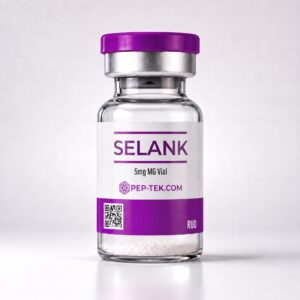
Selank: Synthetic Anxiolytic Peptide Research Overview
Selank is a synthetic heptapeptide of significant interest in neuropharmacological research. Developed in Russia by the Institute of Molecular Genetics of the Russian Academy of Sciences, this compound has been the subject of numerous preclinical and early clinical investigations exploring its effects on anxiety-related behavior, cognitive function, and neurochemical signaling. As selank anxiolytic peptide research continues to expand, it offers researchers a compelling model for studying peptide-based modulation of the central nervous system.
Research Use Disclaimer: All information presented in this article is intended strictly for scientific and educational purposes. Selank is a research compound available exclusively for in vitro and authorized laboratory research. It is not approved for human or animal consumption, and nothing herein constitutes medical advice or therapeutic guidance.
Chemical Identity and Structure
Selank is a synthetic analog of the endogenous immunomodulatory tetrapeptide tuftsin (Thr-Lys-Pro-Arg), extended with the sequence Glu-Glu-Gly to enhance stability and central nervous system bioavailability. Its full sequence is Thr-Lys-Pro-Arg-Pro-Gly-Pro, giving it a molecular weight of approximately 751.9 Da. The structural modification over tuftsin significantly improves resistance to enzymatic degradation, making Selank a more stable research tool for investigating peptidergic mechanisms in the brain.
Unlike small-molecule anxiolytic compounds, Selank belongs to a growing family of neuropeptides studied for their ability to interact with multiple neurotransmitter systems simultaneously. Researchers interested in similar multi-target peptide mechanisms may find it useful to compare Selank’s profile with that of other pleiotropic peptides, such as those reviewed in the BPC-157 Peptide: Research Profile and Mechanism of Action, which also demonstrates multi-system neurological and systemic signaling activity.
Research History and Development
Selank was developed during the 1980s and 1990s at the Institute of Molecular Genetics in Moscow, with much of the foundational research conducted in Russian-language literature before gaining broader international attention. Early research sought to build upon tuftsin’s known immunomodulatory effects, with investigators hypothesizing that a structurally stabilized analog might demonstrate enhanced central nervous system activity.
Preclinical studies in rodent models laid the groundwork for understanding selank’s behavioral effects, particularly in paradigms involving stress exposure, conflict behavior, and learned helplessness. These early experiments provided initial evidence that selank anxiolytic peptide research was warranted on a broader scale [Semenova et al., 2007].
Proposed Mechanism of Action
GABAergic Modulation
One of the primary areas of investigation in selank anxiolytic peptide research involves its interaction with the GABAergic system. Researchers have observed that Selank may potentiate GABA-A receptor activity, modulating inhibitory neurotransmission in a manner that differs mechanistically from classical benzodiazepine compounds. Unlike benzodiazepines, which bind directly to the benzodiazepine recognition site, preclinical evidence suggests Selank may influence GABA receptor function through indirect or allosteric pathways, though the precise molecular interaction is still under investigation [Semenova et al., 2007].
Serotonin and Monoamine System Interactions
In vitro and animal model studies indicate that Selank influences serotonergic neurotransmission, with researchers observing changes in serotonin metabolism and turnover in brain regions associated with emotional regulation. Studies in rodent models have reported alterations in the expression of serotonin transporter genes and monoamine oxidase activity following Selank administration, suggesting it may modulate the serotonin reuptake system indirectly [Narkevich et al., 2008].
BDNF and Neurotrophic Signaling
A particularly active area of selank anxiolytic peptide research involves its potential effects on brain-derived neurotrophic factor (BDNF). Animal model studies indicate that Selank administration is associated with upregulation of BDNF expression in hippocampal and prefrontal cortical tissue. BDNF plays a critical role in neuroplasticity, synaptic maintenance, and stress resilience, making this a key mechanistic pathway of interest for researchers studying anxiety-related neurobiological adaptations [Semenova et al., 2007].
The neurotrophic angle of Selank’s proposed mechanism draws parallels with other peptides studied for their regenerative and signaling properties. Researchers exploring peptide-mediated tissue and cellular signaling pathways may also be interested in the GHK-Cu: Copper Peptide Research Profile and Signaling Pathways, which demonstrates how small peptides can exert significant downstream effects on gene expression and tissue remodeling.
Enkephalinase Inhibition
Researchers have also proposed that Selank may act as a weak inhibitor of enkephalin-degrading enzymes, potentially prolonging the activity of endogenous opioid peptides in the central nervous system. This mechanism, if confirmed, would represent an additional pathway through which Selank modulates stress responses and anxiety-related behavior independently of classical receptor binding.
Studied Properties in Preclinical Research
Anxiolytic-Like Behavior
The most extensively documented area of selank anxiolytic peptide research involves behavioral observations in rodent anxiety models. Animal model studies using the elevated plus maze, open field test, and Vogel conflict test have consistently reported reduced anxiety-related behavior in subjects administered Selank, without the sedative or motor-impairing effects typically associated with classical anxiolytic agents. Researchers have observed that anxiolytic-like effects appear to be dose-sensitive and influenced by baseline anxiety levels in the test subjects [Semenova et al., 2007].
Cognitive and Nootropic Properties
Beyond its anxiolytic profile, selank anxiolytic peptide research has also explored potential nootropic effects. Animal model studies have reported improvements in memory acquisition, attention, and learning performance in rodent paradigms. Investigators have hypothesized that these effects may be linked to the observed increases in BDNF expression and serotonergic modulation, which are known to support synaptic plasticity and cognitive function.
Immune System Interactions
Reflecting its tuftsin-derived origins, Selank has been studied for immunomodulatory activity. In vitro studies and animal models suggest it may influence cytokine expression profiles, including interleukin-6 (IL-6) and tumor necrosis factor-alpha (TNF-α), though the physiological relevance of these findings remains under investigation [Kozlovskaya et al., 2009]. The intersection of immune and neurological activity positions Selank within a broader category of immunomodulatory neuropeptides that are attracting growing research interest.
Stress Response Attenuation
Studies in rodent models exposed to chronic mild stress protocols have indicated that Selank may attenuate hypothalamic-pituitary-adrenal (HPA) axis hyperactivity, as evidenced by reduced corticosterone elevations compared to control groups. These findings are considered preliminary and require further mechanistic investigation to establish the precise neuroendocrine pathways involved.
The study of neuropeptides that interact with stress-regulatory axes shares conceptual overlap with growth hormone secretagogue research. Investigators interested in peptide modulation of neuroendocrine systems may find relevant comparative context in the Ipamorelin: Selective GHRP Research Profile, which examines how synthetic peptides can modulate hormonal signaling pathways with high selectivity.
Safety and Tolerability Observations
Preclinical safety profiling of Selank has reported a relatively favorable tolerability profile in animal models at research-relevant doses. Rodent studies have not reported significant sedation, respiratory depression, or motor impairment at doses producing behavioral effects, which distinguishes it mechanistically from classical sedative-anxiolytic compounds. However, comprehensive toxicological characterization across multiple species and exposure durations remains an active area requiring further study [Kozlovskaya et al., 2009].
Current State of Research and Limitations
While selank anxiolytic peptide research has produced a meaningful body of preclinical data, several significant limitations merit acknowledgment. A substantial proportion of the published literature originates from Russian-language journals with limited peer review by the broader international scientific community. Independent replication of key findings by research groups outside the compound’s country of origin remains limited. Additionally, the translation of rodent behavioral models to human neuropsychiatric conditions is inherently uncertain and requires cautious interpretation.
Researchers should note that the mechanistic pathways proposed for Selank — GABAergic modulation, serotonergic interaction, BDNF upregulation — remain partially characterized, and the relative contribution of each pathway to observed behavioral effects has not been definitively established. Further in vitro receptor binding studies and well-controlled animal model experiments are needed to clarify the pharmacodynamic profile of this compound.
Research Context
Selank represents an intriguing subject for neuropharmacological research, offering a structurally distinct peptide scaffold with proposed multi-target activity across GABAergic, serotonergic, and neurotrophic signaling pathways. As a model compound, it contributes to the broader scientific effort to understand how synthetic neuropeptides interact with anxiety-related neural circuits in ways that may differ fundamentally from small-molecule pharmacological agents.
Researchers investigating the structural diversity of bioactive peptides may also find value in reviewing how other synthetic peptide analogs approach receptor specificity and systemic signaling, as explored in the Semaglutide: GLP-1 Receptor Agonist Research and Mechanism of Action profile, which illustrates how incremental structural modifications to peptide scaffolds can dramatically alter pharmacological activity.
Research Use Only Disclaimer: Selank is strictly a research compound intended for use in authorized laboratory and preclinical research settings only. It is not approved by any regulatory authority for human or animal administration, therapeutic use, or diagnostic purposes. All findings referenced in this article are derived from preclinical animal models and in vitro studies. PepTek supplies Selank exclusively for legitimate scientific research. No content in this article should be construed as medical advice, clinical guidance, or endorsement of any therapeutic application.