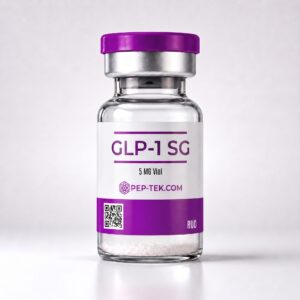
Available from PepTek
This research protocol overview examines semaglutide peptide research reconstitution protocol methodologies, covering in vitro experimental setups, working concentrations, and assay conditions used in published studies.
Semaglutide is a long-acting glucagon-like peptide-1 (GLP-1) receptor agonist that has become a widely studied compound in metabolic, cardiovascular, and neuroendocrine research. Its extended half-life — achieved through C-18 fatty diacid conjugation enabling albumin binding — makes it a particularly valuable tool peptide for in vitro and in vivo experimental models. Researchers interested in replicating published methodologies will benefit from a structured overview of the semaglutide peptide research reconstitution protocol approaches documented in peer-reviewed literature. This article summarizes the experimental setups, solvent systems, working concentrations, and assay frameworks most commonly reported.
For researchers seeking broader mechanistic background before designing experiments, the companion article Semaglutide: GLP-1 Receptor Agonist Research and Mechanism of Action provides foundational context on receptor binding dynamics and downstream signaling cascades.
Semaglutide (molecular formula C187H291N45O59, MW ≈ 4,113.58 Da) is a 31-amino-acid peptide analogue of human GLP-1(7–37). Its lipophilic fatty acid side chain at Lys26 confers both albumin-binding affinity and resistance to dipeptidyl peptidase-4 (DPP-4) degradation. These structural features directly influence reconstitution strategy in research settings.
In published in vitro research, the semaglutide peptide research reconstitution protocol most frequently employs one of the following solvent systems:
Across the published literature, researchers have employed a range of concentrations depending on the assay system and biological endpoint:
This broad working range reflects the diversity of experimental models. Researchers should validate concentrations in their specific cell system before committing to full experimental runs, particularly given the albumin-binding variable present in serum-supplemented media.
The most foundational in vitro application of the semaglutide peptide research reconstitution protocol involves quantifying receptor occupancy and second-messenger generation. Published studies have used HEK293 cells stably expressing recombinant human GLP-1R, measuring intracellular cAMP using HTRF (homogeneous time-resolved fluorescence) or ELISA-based assays. Cells are typically serum-starved for 2–4 hours prior to stimulation, then treated with semaglutide at defined concentrations for 15–30 minutes at 37°C [Lau et al., 2015].
Glucose-stimulated insulin secretion (GSIS) assays represent a cornerstone of semaglutide in vitro research. INS-1E or MIN6 beta-cell lines are pre-incubated in low-glucose KRBH buffer, then stimulated with high glucose (16.7 mM) in the presence or absence of semaglutide at concentrations ranging from 10 pM to 1 µM. Insulin secreted into the supernatant is quantified by radioimmunoassay or ELISA. Researchers have observed concentration-dependent potentiation of glucose-stimulated insulin release under these conditions [Knudsen et al., 2021].
Beyond receptor pharmacology, published research has examined semaglutide’s effects on cellular metabolism and survival pathways. MTT and WST-1 viability assays have been employed in neuronal cell lines to assess neuroprotective signaling, while Seahorse XF analyzer platforms have been used to measure mitochondrial respiration parameters in hepatocyte models. These metabolic readouts share conceptual overlap with research conducted on other compounds involved in cellular energy regulation, such as those reviewed in the NAD+: Coenzyme Research Profile and Cellular Metabolism Studies article, which covers complementary aspects of oxidative phosphorylation and metabolic flux in research contexts.
In vitro hepatocyte models (HepG2, primary mouse hepatocytes) have been used to investigate semaglutide’s effects on lipid accumulation and fatty acid oxidation signaling. Researchers have documented reductions in intracellular lipid droplet accumulation (visualized by Oil Red O staining) and modulation of AMPK and mTOR pathway markers in these systems [Coskun et al., 2018]. Given the intersection of lipid metabolism with redox biology, related work on antioxidant peptide signaling documented in Glutathione: Tripeptide Antioxidant Research and Redox Signaling may provide useful complementary methodology for researchers designing multi-endpoint metabolic assays.
A robust semaglutide peptide research reconstitution protocol requires attention to several quality control variables documented in the peer-reviewed literature:
Researchers working with dual or triple incretin receptor agonists may find it useful to compare experimental setups with those outlined for related compounds. The Tirzepatide: GLP-1/GIP Dual Agonist Research Profile covers parallel methodological considerations for a structurally distinct but functionally related research compound.
While this overview focuses on in vitro methodology, the published literature also documents murine and non-human primate model setups. Diet-induced obese (DIO) mouse models and db/db diabetic mice have been used extensively, with subcutaneous administration routes and weekly dosing intervals characteristic of the compound’s pharmacokinetic profile [Wilding et al., 2021]. These in vivo datasets provide important context for interpreting in vitro concentration-response relationships and translating findings across experimental systems.
The methodologies described in this article are drawn from published peer-reviewed research and are presented strictly for scientific and educational reference. The semaglutide peptide research reconstitution protocol information provided here reflects experimental setups documented in academic literature and is intended solely to support researchers in laboratory settings.
All semaglutide compounds available from PepTek are supplied exclusively for in vitro research and preclinical laboratory use. They are not intended for human or animal consumption, are not approved for therapeutic use, and must not be administered to humans or animals under any circumstances. Nothing in this article constitutes medical advice, dosing guidance, or a therapeutic recommendation. Researchers are responsible for compliance with all applicable institutional and regulatory requirements governing the use of research compounds in their jurisdiction.