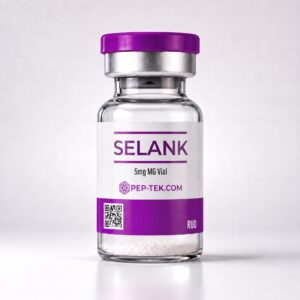
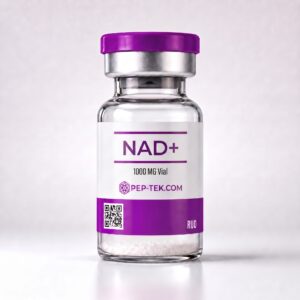
Available from PepTek
This research comparison examines Selank vs NAD+ neuroprotection research, exploring their distinct molecular structures, mechanisms of action, and how investigators select between them in neuroscience studies.
Within the expanding field of neuroprotection research, investigators frequently evaluate structurally and mechanistically distinct compounds to understand how different biological pathways contribute to neuronal survival, plasticity, and resilience. Among the compounds that have attracted significant scientific attention, Selank and nicotinamide adenine dinucleotide (NAD+) represent two fundamentally different classes of neuroprotective agents. Examining selank vs NAD+ neuroprotection research reveals how a synthetic heptapeptide and a critical coenzyme operate through divergent mechanisms yet may address overlapping vulnerabilities in neural tissue. This comparison is intended strictly for research purposes and is designed to assist investigators in understanding how these compounds are studied in preclinical and in vitro settings.
Selank (chemical designation: threonyl-lysyl-prolyl-arginyl-prolyl-glycyl-proline, or Thr-Lys-Pro-Arg-Pro-Gly-Pro) is a synthetic heptapeptide derived from the endogenous immunomodulatory peptide tuftsin, with an additional tripeptide sequence appended to improve metabolic stability. Its molecular weight is approximately 751.9 Da. The inclusion of two proline residues at positions 5 and 7 confers resistance to rapid enzymatic degradation, a key structural feature that distinguishes it from many endogenous neuropeptides. Researchers studying this compound can find a comprehensive structural breakdown in the Selank: Synthetic Anxiolytic Peptide Research Overview on PepTek’s research library.
NAD+ (nicotinamide adenine dinucleotide) is a non-peptidic coenzyme found ubiquitously across all living cells. Its molecular weight is 663.4 Da in free acid form. Structurally, NAD+ consists of two nucleotides — adenine and nicotinamide — joined by a phosphate bridge. Its oxidized form (NAD+) and reduced form (NADH) allow it to serve as an electron carrier in redox reactions. Critically for neuroprotection research, NAD+ is also a substrate for enzymes including sirtuins (SIRTs), poly(ADP-ribose) polymerases (PARPs), and CD38, all of which are implicated in DNA repair, mitochondrial biogenesis, and cellular stress responses. Researchers seeking a detailed coenzyme profile can reference the NAD+: Coenzyme Research Profile and Cellular Metabolism Studies article for further structural and metabolic context.
Research into Selank’s mechanism has identified several overlapping neurochemical pathways. Studies have demonstrated that Selank modulates the expression of brain-derived neurotrophic factor (BDNF), a neurotrophin essential for synaptic plasticity and neuronal survival [Semenova et al., 2010]. BDNF upregulation, as observed in animal model studies, is particularly relevant to research into stress-resilience and neurotrophic support. Selank has also been studied for its interaction with the GABAergic system, where investigators have reported modulation of GABA-A receptor subunit expression, potentially relevant to inhibitory tone regulation in the central nervous system.
Additionally, preclinical research has suggested that Selank influences enkephalin metabolism, reducing the breakdown of endogenous opioid peptides by inhibiting enkephalinase activity [Nezavibatko et al., 1997]. This effect on endogenous peptide signaling represents a mode of neuroprotection that is distinct from direct antioxidant or metabolic mechanisms. Selank’s research profile is also contextually related to other ACTH-derived neuropeptide research; investigators comparing neuromodulatory peptides frequently reference the Semax: ACTH-Derived Neuropeptide Research Profile as a structurally adjacent research model.
NAD+’s neuroprotective mechanisms operate at a fundamentally different biological level. As a sirtuin activator substrate, NAD+ enables SIRT1 and SIRT3 to deacetylate targets involved in mitochondrial biogenesis (via PGC-1α) and oxidative stress response. In vitro studies have demonstrated that NAD+ depletion accelerates neuronal death following oxidative insult, while NAD+ supplementation in cell culture models has been associated with improved mitochondrial membrane potential and reduced apoptotic signaling [Garten et al., 2015].
PARP-mediated NAD+ consumption following DNA strand breaks represents another mechanistic node of interest. Under conditions of genotoxic stress — relevant to models of neurodegeneration — excessive PARP activation rapidly depletes intracellular NAD+ reserves, triggering energy failure and cell death. Research in this domain positions NAD+ not merely as an energy carrier but as an active mediator of neuronal genomic integrity [Verdin, 2015]. The intersection of NAD+ biology with antioxidant research is significant; investigators studying redox neuroprotection may find comparative value in the Glutathione: Tripeptide Antioxidant Research and Redox Signaling profile, which addresses parallel oxidative stress mechanisms in neural tissue.
Investigators typically select Selank for research models that prioritize neurotrophic signaling, GABAergic modulation, or immunomodulatory endpoints in the central nervous system. Models examining stress-induced neurochemical changes, BDNF-dependent synaptic plasticity, or peptidergic regulation of inhibitory neurotransmission are well-suited to Selank as a research tool. Its metabolic stability relative to tuftsin-derived sequences also makes it suitable for in vivo animal model studies where rapid enzymatic degradation would confound results [Semenova et al., 2010].
NAD+ is the compound of choice when research questions center on mitochondrial bioenergetics, sirtuin-mediated gene regulation, PARP activity, or cellular responses to genotoxic or metabolic stress. In vitro studies examining age-related neuronal decline, oxidative phosphorylation efficiency, or NAD+-consuming enzyme activity require NAD+ as the central variable. Investigators designing selank vs NAD+ neuroprotection research paradigms should note that NAD+ research frequently intersects with precursor compound studies (e.g., NMN, NR) due to the blood-brain barrier permeability challenges associated with direct NAD+ delivery in in vivo models [Verdin, 2015].
Some research programs have explored whether peptidergic neuroprotective signaling and coenzyme-level metabolic support may address non-overlapping vulnerabilities in neural tissue. In such experimental designs, selank vs NAD+ neuroprotection research is reframed as a multi-pathway investigation rather than a competitive comparison. Researchers studying neuroprotective compounds with complementary mechanisms — similar to how ACTH-derived peptides and mitochondrial cofactors are each studied for their unique contributions — may structure experiments to isolate pathway contributions before designing combination models.
This article is intended exclusively for scientific research and educational purposes. All information presented herein pertains to preclinical, in vitro, and animal model research findings. Selank and NAD+ as discussed in this selank vs NAD+ neuroprotection research comparison are research compounds available through PepTek for laboratory investigation only. Neither compound is approved for human or animal consumption, and nothing in this article constitutes medical advice, dosing guidance, or therapeutic recommendation. Researchers are encouraged to review all applicable institutional and regulatory guidelines before initiating studies involving these compounds. PepTek supplies research-grade compounds solely for qualified scientific investigation in controlled laboratory environments.