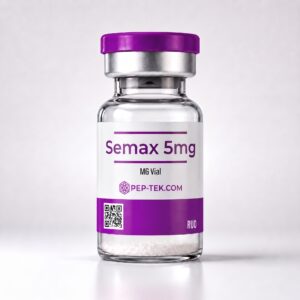
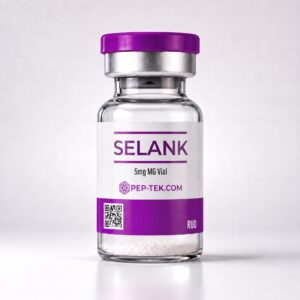
Available from PepTek
Nootropic peptides like Semax and Selank represent a growing area of neuroscience research, with studies examining their roles in BDNF modulation, anxiolytic signaling, and cognitive function in preclinical models.
Within the broader landscape of peptide science, a specialized class of compounds has attracted sustained interest from neuroscience researchers: nootropic peptides. These are short-chain amino acid sequences designed or derived to interact with central nervous system targets in ways that may influence cognition, memory consolidation, stress response, and neuroprotection. Nootropic peptide research — with Semax and Selank among the most studied examples — has expanded considerably over the past three decades, driven largely by preclinical work conducted in Russian and Eastern European academic institutions before gaining wider international attention.
Unlike small-molecule cognitive research compounds, peptides offer a degree of receptor selectivity and biological specificity that has made them attractive subjects for neuropharmacological investigation. Nootropic peptide research across Semax, Selank, and related compounds continues to reveal complex, multi-target mechanisms that interact with several overlapping neurochemical pathways.
The term “nootropic” was coined by Romanian psychologist and chemist Corneliu Giurgea in 1972 to describe compounds that enhance learning and memory without significant toxicity or sedation in animal models. Peptide-based nootropics represent a structural subclass defined by their amino acid composition, their relatively short sequence length (typically 3–10 residues), and their capacity to cross or influence the blood-brain barrier through various mechanisms including receptor-mediated transcytosis and enzymatic stability modifications.
Several structural features characterize compounds in this research category:
Semax (Met-Glu-His-Phe-Pro-Gly-Pro) is a heptapeptide analogue of the ACTH(4–10) fragment, developed at the Institute of Molecular Genetics of the Russian Academy of Sciences. Unlike the parent ACTH molecule, Semax lacks adrenocortical activity, making it a useful research tool for isolating central nervous system effects from peripheral hormonal activity. Detailed structural and mechanistic information is available in PepTek’s dedicated Semax: ACTH-Derived Neuropeptide Research Profile.
One of the most replicated findings in Semax research involves its apparent capacity to upregulate brain-derived neurotrophic factor (BDNF) expression. BDNF is a key regulator of synaptic plasticity, long-term potentiation, and neuronal survival. In rodent studies, researchers have observed significant increases in BDNF mRNA expression in the hippocampus and frontal cortex following Semax administration [Dolotov et al., 2006]. This finding has led investigators to hypothesize a mechanistic link between Semax exposure and the enhancement of synaptic consolidation processes that underlie learning and memory formation in animal models.
Additionally, in vitro studies suggest that Semax may influence dopaminergic transmission in the mesolimbic pathway, with animal model studies indicating alterations in enkephalin and dopamine receptor expression patterns in the striatum [Sebentsova et al., 2010].
Selank (Thr-Lys-Pro-Arg-Pro-Gly-Pro) is a synthetic heptapeptide analogue of the endogenous immunomodulatory tetrapeptide tuftsin (Thr-Lys-Pro-Arg), developed by the Institute of Molecular Genetics in collaboration with the V.V. Zakusov Institute of Pharmacology. The C-terminal Pro-Gly-Pro extension dramatically improves the compound’s stability against enzymatic degradation, a feature of significant interest to researchers studying CNS peptide delivery. For a comprehensive overview of Selank’s pharmacological profile, researchers can consult the PepTek article Selank: Synthetic Anxiolytic Peptide Research Overview.
Research into Selank’s mechanism has consistently pointed toward interactions with GABAergic signaling. Animal model studies indicate that Selank may potentiate GABA-A receptor activity through a benzodiazepine-like allosteric mechanism, without producing the dependency profile associated with classical benzodiazepines in rodent behavioral paradigms [Semenova et al., 2010]. Researchers have also observed serotonin system involvement, with studies reporting elevated serotonin metabolism in the brainstem and hippocampus following Selank exposure in stressed animal subjects.
Selank’s dual profile — touching both immune and neurological pathways — also intersects with interleukin-6 (IL-6) regulation. In vitro studies suggest Selank may modulate the expression of several cytokines, raising research questions about neuroimmune cross-talk under stress conditions [Uchakina et al., 2008].
While Semax and Selank possess distinct structural and receptor profiles, nootropic peptide research across these compounds — and the broader class — reveals several converging mechanistic themes:
Understanding the research context for Semax is aided by familiarity with the melanocortin peptide system more broadly. Because Semax derives from ACTH, which is itself a melanocortin peptide, researchers investigating melanocortin receptor pharmacology — such as those studying compounds profiled in PepTek’s Melanotan II (MT-2): Melanocortin Receptor Agonist Research Profile — may find comparative mechanistic insights relevant to understanding Semax’s CNS activity profile.
Cognitive function research increasingly intersects with cellular energy metabolism. Researchers studying nootropic mechanisms may find value in examining how compounds that influence NAD+-dependent pathways support neuronal energy homeostasis, a subject covered in PepTek’s article on NAD+: Coenzyme Research Profile and Cellular Metabolism Studies. The intersection of metabolic and cognitive research represents an emerging frontier in understanding how peptide-based tools might be used to probe neuronal function in experimental contexts.
Interest in nootropic peptide research has grown beyond the Russian academic tradition. European and North American research groups have begun investigating these compounds using contemporary molecular techniques including RNA sequencing, proteomics, and optogenetics-based behavioral models. The refinement of analytical methods has allowed researchers to characterize receptor binding kinetics and downstream signaling cascades with greater precision than was previously possible.
The compounds discussed in this article — including those central to nootropic peptide research such as Semax and Selank — are intended strictly for laboratory and preclinical research purposes. All findings referenced herein derive from in vitro cell studies, animal model experiments, or computational analyses. Nothing in this article constitutes a medical claim, therapeutic recommendation, or suggestion that any compound is appropriate for human or animal consumption.
PepTek supplies research-grade peptides exclusively to qualified researchers operating within appropriate institutional and regulatory frameworks. Researchers are responsible for compliance with all applicable local, national, and institutional regulations governing the use of research compounds. No compound described on this platform has been evaluated by the U.S. Food and Drug Administration for safety or efficacy in humans, and no such evaluation should be inferred from the scientific literature summarized here.