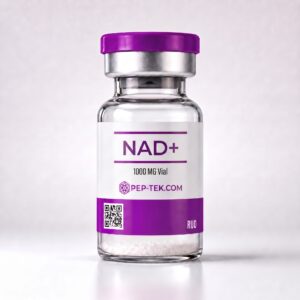
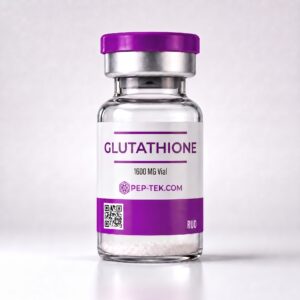
NAD+ vs Glutathione: Antioxidant Coenzyme Research Comparison
In the expanding field of cellular redox biology, the question of NAD+ vs glutathione antioxidant research has become increasingly relevant. Both molecules occupy central roles in maintaining oxidative balance within cells, yet they operate through fundamentally different biochemical mechanisms, originate from distinct biosynthetic pathways, and serve divergent functional purposes at the molecular level. For researchers designing experiments around oxidative stress, mitochondrial function, or cellular aging, understanding these differences is essential for selecting the most appropriate model compound.
Structural Overview
NAD+ (Nicotinamide Adenine Dinucleotide)
NAD+ is a dinucleotide coenzyme composed of two nucleotides joined through their phosphate groups: one containing adenine and one containing nicotinamide. Its molecular formula is C₂₁H₂₇N₇O₁₄P₂, with a molecular weight of approximately 663.4 g/mol. The nicotinamide ring is the biochemically active portion, capable of accepting a hydride ion (H⁻) to transition between its oxidized (NAD+) and reduced (NADH) forms. This redox cycling is central to its function as an electron carrier in metabolic pathways. Researchers interested in its full biochemical profile can consult the NAD+ coenzyme research profile and cellular metabolism studies available through PepTek’s research library.
Glutathione (GSH)
Glutathione is a tripeptide composed of three amino acids: glutamate, cysteine, and glycine, connected by peptide bonds. Its molecular formula is C₁₀H₁₇N₃O₆S, with a molecular weight of approximately 307.3 g/mol. The defining structural feature is the thiol (-SH) group on the cysteine residue, which is the primary site of antioxidant activity. Glutathione exists in reduced (GSH) and oxidized (GSSG) states, and the GSH:GSSG ratio is widely used as a biomarker of cellular redox status in research settings. For a detailed structural and functional breakdown, PepTek’s article on glutathione as a tripeptide antioxidant and its redox signaling roles provides a comprehensive overview.
Distinct Antioxidant Mechanisms
How NAD+ Manages Oxidative Stress
NAD+ does not function as a direct free radical scavenger in the conventional sense. Instead, its antioxidant contributions are largely indirect and enzymatic. As a substrate for sirtuins (SIRT1–SIRT7) and poly(ADP-ribose) polymerases (PARPs), NAD+ facilitates DNA repair processes and modulates the transcription of antioxidant defense genes. Research in the NAD+ vs glutathione antioxidant research landscape has demonstrated that NAD+ depletion correlates with impaired mitochondrial function and elevated reactive oxygen species (ROS) in cellular models [Verdin, 2015]. Additionally, NAD+ serves as an electron acceptor in the mitochondrial electron transport chain, directly influencing the redox state of the cell’s primary energy-generating organelle.
SIRT1 and SIRT3, both NAD+-dependent deacetylases, have been shown in animal model studies to upregulate superoxide dismutase 2 (SOD2) and catalase expression, two major enzymatic antioxidants [Someya et al., 2010]. This positions NAD+ as an upstream regulator of antioxidant gene networks rather than a frontline scavenger.
How Glutathione Neutralizes Oxidative Damage
Glutathione operates as both a direct and enzyme-mediated antioxidant. The thiol group of GSH directly neutralizes reactive oxygen species and reactive nitrogen species through non-enzymatic mechanisms. Enzymatically, glutathione peroxidase (GPx) uses GSH to reduce hydrogen peroxide and lipid hydroperoxides to water and alcohol, respectively, generating GSSG as a byproduct. Glutathione reductase then recycles GSSG back to GSH using NADPH as a cofactor — a critical link between the two molecules under study.
In vitro studies suggest that glutathione also participates in S-glutathionylation, a post-translational modification of protein cysteine residues that protects against irreversible oxidation and modulates protein function during oxidative stress [Mieyal et al., 2008]. This dual role as both a scavenger and a redox signaling molecule makes glutathione exceptionally versatile in research models.
Biosynthesis and Cellular Availability
NAD+ biosynthesis occurs via multiple pathways including the de novo synthesis from tryptophan, the Preiss-Handler pathway from nicotinic acid, and the salvage pathway from nicotinamide or nicotinamide riboside. Cellular NAD+ levels decline with age and oxidative stress, a phenomenon extensively studied in models of metabolic dysfunction [Yoshino et al., 2011].
Glutathione is synthesized intracellularly in a two-step ATP-dependent process: first, glutamate-cysteine ligase (GCL) combines glutamate and cysteine to form gamma-glutamylcysteine; then glutathione synthetase adds glycine to complete the tripeptide. Cysteine availability is typically the rate-limiting factor in glutathione synthesis, which has made cysteine precursors a subject of interest in oxidative stress research.
A key distinction in NAD+ vs glutathione antioxidant research is that while both molecules can be exogenously supplied in experimental settings, their cellular uptake and distribution differ markedly. NAD+ has limited direct membrane permeability, leading researchers to commonly use precursors such as NMN or NR in cell-based studies. Glutathione, similarly, is often supplemented via precursors due to cellular transport limitations, though reduced GSH can be studied in cell-free and some cellular assay formats.
Interdependence: Where the Two Pathways Converge
One of the most compelling aspects of NAD+ vs glutathione antioxidant research is the metabolic crosstalk between these two systems. NADPH, generated from NAD+ via the pentose phosphate pathway, is the essential cofactor for glutathione reductase, the enzyme responsible for recycling oxidized glutathione (GSSG) back to its active reduced form (GSH). Without adequate NAD+ metabolism to sustain NADPH production, glutathione recycling becomes impaired, leading to GSH depletion even when glutathione synthesis is unaffected [Kuehne et al., 2015].
This enzymatic dependency means that in research models, disruption of NAD+ homeostasis can secondarily compromise glutathione-mediated antioxidant defenses. Investigators studying mitochondrial oxidative stress, neuronal models, or metabolic aging frequently must account for both systems simultaneously rather than treating them as independent variables.
Choosing Between NAD+ and Glutathione in Research Design
When Researchers Prioritize NAD+
- Studies focused on mitochondrial bioenergetics, sirtuin signaling, or DNA damage repair pathways
- Models examining metabolic aging or age-related decline in oxidative defense capacity
- Investigations into transcriptional regulation of antioxidant enzymes via SIRT1/SIRT3 axes
- Research contexts where upstream regulation of the redox network is the primary variable of interest
When Researchers Prioritize Glutathione
- Studies requiring direct measurement of cellular thiol redox status using the GSH:GSSG ratio
- In vitro models targeting GPx or glutathione S-transferase (GST) activity
- Research into protein S-glutathionylation as a redox signaling mechanism
- Experiments involving xenobiotic detoxification, where GSH conjugation is the primary pathway of interest
In complex models where both energy metabolism and direct oxidative scavenging are relevant — such as hepatocyte cultures under metabolic stress — researchers have increasingly adopted parallel measurement of both NAD+/NADH ratios and GSH:GSSG ratios to capture a more complete picture of cellular redox dynamics.
Comparative Summary
| Property | NAD+ | Glutathione (GSH) |
|---|---|---|
| Molecular Type | Dinucleotide coenzyme | Tripeptide |
| Primary Antioxidant Mode | Indirect (sirtuin/PARP signaling, electron carrier) | Direct (thiol scavenging) and enzymatic (GPx) |
| Key Redox Pair | NAD+ / NADH | GSH / GSSG |
| Molecular Weight | ~663.4 g/mol | ~307.3 g/mol |
| Key Enzymes Involved | Sirtuins, PARPs, Complex I | GPx, GR, GST, GCL |
Research Context
The study of NAD+ vs glutathione antioxidant research continues to be a productive area within biochemistry, mitochondrial biology, and aging research. Both compounds represent valuable tools for researchers seeking to interrogate cellular redox homeostasis through distinct but interconnected biochemical lenses. Understanding which molecule — or combination of molecules — best suits a given experimental model is a fundamental consideration in rigorous research design.
Researchers exploring adjacent biochemical pathways may also find value in reviewing PepTek’s profile on GHK-Cu copper peptide signaling pathways, which intersects with redox biology through copper-mediated antioxidant enzyme activity.
Research Use Disclaimer: All information presented in this article is intended strictly for scientific research and educational purposes. NAD+ and glutathione as described herein are research compounds supplied for in vitro and laboratory use only. Nothing in this article constitutes medical advice, clinical guidance, or a suggestion of suitability for human or animal consumption. PepTek research compounds are not intended to diagnose, treat, cure, or prevent any disease or medical condition. Researchers should adhere to all applicable institutional and regulatory guidelines when handling these compounds.