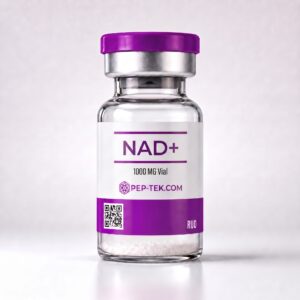
Research-Use Disclaimer: All information presented in this article is intended strictly for academic and scientific research purposes. The compounds and mechanisms discussed are not approved for human or veterinary use outside of regulated clinical or laboratory settings. Nothing herein constitutes medical advice, treatment guidance, or therapeutic recommendation.
Introduction: NAD+ as a Central Mediator of Genome Stability
Nicotinamide adenine dinucleotide (NAD+) is one of the most extensively studied coenzymes in cellular biochemistry, participating in hundreds of enzymatic reactions that govern energy metabolism, redox homeostasis, and signal transduction. Among its most consequential roles, NAD+ functions as the obligate substrate for poly(ADP-ribose) polymerase (PARP) enzymes — a family of nuclear proteins whose activation is tightly coupled to the detection and resolution of DNA strand breaks. The intersection of NAD+ availability and PARP-mediated signaling has become a major focus of genomic integrity research, and understanding this axis at the molecular level remains one of the most productive areas in contemporary biochemistry.
For a broader overview of NAD+ biochemistry and its roles in cellular metabolism beyond DNA repair, researchers may consult the PepTek profile on NAD+: Coenzyme Research Profile and Cellular Metabolism Studies, which details the coenzyme’s biosynthetic pathways and redox functions.
The PARP Enzyme Family: Structure and Function in Research Models
Overview of PARP Proteins
The PARP superfamily comprises 17 members in humans, with PARP1 and PARP2 accounting for the majority of cellular poly(ADP-ribosyl)ation (PARylation) activity. PARP1, a 113 kDa protein, contains a zinc-finger DNA-binding domain, an automodification domain, and a catalytic domain that transfers ADP-ribose units from NAD+ onto target proteins, forming branched poly(ADP-ribose) (PAR) chains [Luo and Bhatt, 2021]. These PAR chains serve as scaffolding signals that recruit DNA repair factors to sites of damage, effectively translating NAD+ PARP enzyme repair research mechanism insights into observable cellular responses in experimental systems.
Activation by DNA Strand Breaks
PARP1 activation is initiated within seconds of DNA strand break formation. Studies using single-molecule imaging have demonstrated that PARP1 scans chromatin and undergoes a conformational change upon encountering nicks or gaps in the DNA backbone [Zandarashvili et al., 2020]. This conformational shift allosterically activates the catalytic domain, triggering the rapid consumption of NAD+ and synthesis of PAR polymers. PARP2, while structurally distinct in its N-terminal domain, is activated by similar mechanisms and has been shown to participate cooperatively with PARP1 at sites of single-strand break (SSB) repair.
NAD+ Consumption and the Energetics of DNA Repair
Stoichiometry of NAD+ Utilization
Each PARylation cycle consumes one molecule of NAD+, releasing nicotinamide as a byproduct. Under conditions of extensive DNA damage — such as those induced experimentally by alkylating agents or ionizing radiation — PARP1 can consume sufficient NAD+ to substantially deplete intracellular pools within minutes. Research in cell-free systems and cultured cell models has shown that this depletion can reach 70–80% of available NAD+ under maximal PARP1 activation, with downstream consequences for glycolytic flux, mitochondrial function, and sirtuin activity [Bai and Cantó, 2012]. The NAD+ PARP enzyme repair research mechanism therefore operates within a finely balanced energetic context, where the demands of genome surveillance compete with the metabolic requirements of the cell.
Intersection with Sirtuin Signaling
Because sirtuins (SIRT1–7) also depend on NAD+ as a co-substrate, competition between PARP and sirtuin activities represents a significant regulatory node. In vitro studies have demonstrated that pharmacological inhibition of PARP activity in oxidatively stressed cell models results in increased NAD+ availability and elevated SIRT1-mediated deacetylation of downstream targets [Bai et al., 2011]. This dynamic is particularly relevant to researchers investigating metabolic-genomic crosstalk, and it connects to parallel antioxidant research areas — including work on redox buffering systems such as those discussed in the PepTek article on Glutathione: Tripeptide Antioxidant Research and Redox Signaling, which examines how cellular antioxidant capacity modulates oxidative DNA damage loads.
Molecular Steps in PARP-Mediated Base Excision and Strand Break Repair
Single-Strand Break Repair (SSBR)
Following PARP1 activation at an SSB, PAR chains facilitate the recruitment of XRCC1 (X-ray repair cross-complementing protein 1), which acts as a scaffold for downstream repair enzymes including DNA polymerase beta (Pol β) and DNA ligase III. XRCC1 contains a PAR-binding motif that mediates its rapid localization to damage sites, and this interaction has been quantitatively characterized using fluorescence recovery after photobleaching (FRAP) experiments in live cells [Caldecott, 2008]. Pol β then fills in the nucleotide gap, and ligase III seals the nick, restoring phosphodiester backbone continuity.
Double-Strand Break Repair and PARP’s Auxiliary Roles
While PARP1 is most directly implicated in SSBR and base excision repair (BER), accumulating evidence from animal model studies indicates roles in double-strand break (DSB) repair as well. PARP1 has been observed to compete with the Ku70/Ku80 heterodimer for DSB end binding, thereby influencing the pathway choice between non-homologous end joining (NHEJ) and homologous recombination (HR) [Hochegger et al., 2006]. This regulatory function adds further dimensionality to NAD+ PARP enzyme repair research mechanism studies, suggesting that NAD+ availability may indirectly shape the fidelity of DSB resolution in experimental models.
PAR Catabolism and Repair Termination
PARG, ARH3, and the PAR Cycle
PAR polymers are not permanent structures. Poly(ADP-ribose) glycohydrolase (PARG) and ADP-ribosylhydrolase 3 (ARH3) catalyze the rapid degradation of PAR chains following repair completion, regenerating free ADP-ribose monomers. This degradation is essential for disassembling the repair scaffold and allowing chromatin to return to its basal state. Disruption of PARG activity in model organisms has been shown to result in PAR accumulation, prolonged PARP1 retention at damage sites, and sensitization to genotoxic stress [Ke et al., 2019]. Recycling of the ADP-ribose released during PAR catabolism contributes, in part, to NAD+ resynthesis via the salvage pathway, closing the metabolic loop of the NAD+ PARP enzyme repair research mechanism.
Research History and Key Experimental Milestones
The enzymatic activity of PARP was first described in 1963 by Chambon, Weill, and Mandel, who identified a poly-nucleotide-synthesizing activity in hen erythrocyte nuclei dependent on NAD+ [Chambon et al., 1963]. Over subsequent decades, biochemical characterization identified the protein responsible, and genetic approaches in the 1990s produced PARP1-knockout mouse models that demonstrated markedly increased sensitivity to alkylating agents and ionizing radiation, firmly establishing the enzyme’s role in genome maintenance. The development of potent PARP inhibitors in the early 2000s further accelerated mechanistic research by providing tools to dissect the temporal dynamics of repair signaling in both cell culture and whole-organism models.
Research into compounds that modulate repair pathway activity has expanded considerably in parallel with NAD+ biology. Investigators studying growth factor and signaling peptides — such as those profiled in PepTek’s article on GHK-Cu: Copper Peptide Research Profile and Signaling Pathways — have noted potential points of convergence with DNA repair pathway regulation, underscoring the integrative nature of cellular stress responses.
Current Research Directions
NAD+ Supplementation and PARP Activity in Preclinical Models
A growing body of preclinical research has examined whether modulating cellular NAD+ levels influences PARP-dependent repair efficiency. Animal model studies using NAD+ precursors such as nicotinamide riboside (NR) and nicotinamide mononucleotide (NMN) have reported increased PARP1 activity and improved resolution of experimentally induced DNA lesions in aged rodent tissues, suggesting that NAD+ bioavailability may be rate-limiting for repair in certain cellular contexts [Fang et al., 2016]. These findings continue to inform preclinical experimental design, though translation to validated interventions remains an active area of investigation requiring rigorous further study.
Trapping Mechanisms and PARP Research Tools
Contemporary mechanistic research has also explored the phenomenon of PARP trapping, whereby certain inhibitory compounds prevent PARP1 dissociation from DNA after PAR chain removal, creating cytotoxic protein-DNA complexes. Quantitative proteomics and single-molecule studies have been instrumental in defining the structural determinants of trapping, providing a model system for understanding the consequences of sustained NAD+ PARP enzyme repair research mechanism disruption at the molecular level.
Research Context
The molecular relationship between NAD+ and PARP-mediated DNA repair represents one of the most thoroughly characterized axes in genome biology, with implications spanning aging research, metabolic biochemistry, and the study of genotoxic stress responses. The body of evidence reviewed here — drawn from in vitro biochemical studies, cell culture models, and preclinical animal experiments — reflects decades of rigorous investigation into how cells detect and resolve DNA damage using NAD+ as a central currency.
All compounds, mechanisms, and findings described in this article are presented exclusively for informational and academic research purposes. NAD+, PARP inhibitors, and related research tools discussed herein are not approved for human therapeutic use in the contexts described, and nothing in this profile should be interpreted as medical advice, dosing guidance, or clinical recommendation of any kind. Researchers working with these compounds should adhere to all applicable institutional, regulatory, and biosafety guidelines.