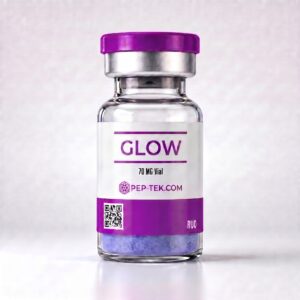
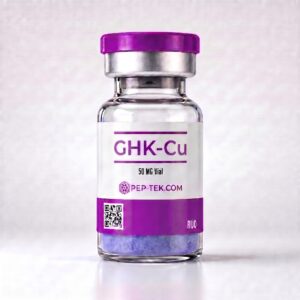
Available from PepTek
The GLOW peptide blend combines synergistic skin-targeted compounds studied for collagen signaling, antioxidant activity, and dermal remodeling in preclinical research contexts.
The GLOW peptide blend represents a multi-compound research formulation designed to investigate synergistic interactions between peptides and cofactors with documented roles in dermal biology. As interest in GLOW peptide blend research skin mechanisms continues to grow within the scientific community, researchers are increasingly examining how combinations of bioactive peptides may influence collagen biosynthesis, oxidative stress pathways, melanin regulation, and extracellular matrix remodeling at the cellular level. This profile summarizes the available preclinical evidence for each core component and the rationale for their combined study.
The GLOW blend typically incorporates several well-characterized research compounds, each targeting distinct but overlapping pathways in skin cell biology. The most commonly studied formulation includes GHK-Cu (copper tripeptide), Glutathione, Epithalon (Epitalon), and Melanotan II, with some variants incorporating NAD+ as a metabolic cofactor. The scientific rationale for combining these compounds lies in their complementary mechanisms: while some components are studied for their roles in collagen gene expression and fibroblast activation, others are examined for antioxidant defense, pigmentation signaling, or telomere-associated processes.
GHK-Cu (glycyl-L-histidyl-L-lysine copper complex) is among the most extensively researched peptides in dermal biology. Preclinical studies have demonstrated that GHK-Cu upregulates genes associated with collagen synthesis, matrix metalloproteinase regulation, and antioxidant enzyme activity. Pickart and Margolina (2018) reported that GHK-Cu activates over 4,000 human genes involved in tissue remodeling and anti-inflammatory signaling [Pickart & Margolina, 2018]. In fibroblast culture models, GHK-Cu has been observed to promote collagen I, collagen III, and elastin production while simultaneously modulating TGF-β signaling pathways. Researchers interested in the molecular mechanisms of this compound can review the detailed GHK-Cu: Copper Peptide Research Profile and Signaling Pathways for a comprehensive breakdown of its studied effects.
Glutathione (γ-glutamyl-cysteinyl-glycine) is the body’s most abundant endogenous antioxidant tripeptide and plays a central role in redox homeostasis within skin cells. In the context of GLOW peptide blend research skin studies, Glutathione is examined for its capacity to neutralize reactive oxygen species (ROS), support melanin pathway modulation through tyrosinase inhibition, and maintain the redox environment required for optimal fibroblast function. In vitro studies suggest that Glutathione influences the conversion of eumelanin to phaeomelanin, a biochemical shift of significant interest in pigmentation research [Sonthalia et al., 2016]. Researchers exploring this compound’s broader biochemical role may find the PepTek article on Glutathione: Tripeptide Antioxidant Research and Redox Signaling an informative companion resource.
Epithalon (Ala-Glu-Asp-Gly) is a synthetic tetrapeptide derived from the pineal peptide Epithalamin, first described by Russian researcher Vladimir Khavinson. Preclinical studies, predominantly conducted in cell culture and rodent models, have investigated Epithalon’s putative role in telomerase activation, DNA repair facilitation, and regulation of melatonin synthesis. Khavinson et al. (2003) reported that Epithalon stimulated telomerase activity in human somatic cells in vitro, extending replicative lifespan of cultured fetal fibroblasts [Khavinson et al., 2003]. Within the context of skin biology, researchers are interested in Epithalon’s potential influence on cellular senescence pathways, as senescent fibroblasts are known to exhibit altered collagen production and increased pro-inflammatory cytokine secretion. It should be noted that this research remains largely at the in vitro and animal model stage, and significant additional study is required before broader mechanistic conclusions can be drawn.
Melanotan II (MT-2) is a cyclic heptapeptide analogue of alpha-melanocyte-stimulating hormone (α-MSH) that acts as a potent agonist at melanocortin receptors, particularly MC1R. In the context of GLOW peptide blend research skin formulations, MT-2 is included based on its studied capacity to activate eumelanin synthesis pathways in melanocytes. Animal model studies have demonstrated that MC1R activation by MT-2 increases intracellular cyclic AMP (cAMP), subsequently activating tyrosinase and upregulating melanin biosynthesis [Hadley & Dorr, 2006]. Researchers seeking a detailed mechanistic profile of this compound are directed to the PepTek article on Melanotan II (MT-2): Melanocortin Receptor Agonist Research Profile.
Nicotinamide adenine dinucleotide (NAD+) is increasingly incorporated into skin-targeted research blends given its established role as a cofactor in cellular energy metabolism, DNA repair, and sirtuin-mediated gene regulation. Declining NAD+ levels have been correlated with reduced mitochondrial efficiency and impaired DNA damage response in aging cell models. In dermal fibroblast studies, NAD+ repletion has been observed to restore mitochondrial membrane potential and support poly(ADP-ribose) polymerase (PARP) activity, a key enzyme in single-strand DNA break repair [Massudi et al., 2012]. Researchers investigating NAD+’s broader metabolic role can explore the NAD+: Coenzyme Research Profile and Cellular Metabolism Studies for additional context on its signaling mechanisms.
A core premise of GLOW peptide blend research skin investigations is that the combined activity of these compounds may produce effects not fully predictable from studying each component in isolation. For example, the antioxidant environment maintained by Glutathione may protect GHK-Cu’s copper complex from oxidative degradation in cell culture systems, potentially preserving its receptor-binding capacity. Similarly, NAD+-dependent sirtuin activation may synergize with Epithalon’s proposed telomerase-stimulating effects at the level of chromatin remodeling. While these hypotheses are scientifically plausible based on known individual mechanisms, direct evidence for synergistic interactions within a combined GLOW blend formulation remains limited in the published literature. Controlled in vitro co-treatment studies and validated multi-compound models represent significant opportunities for future research.
It is important for researchers to contextualize the available evidence appropriately. Much of the published data supporting individual GLOW blend components derives from in vitro cell culture studies or rodent and small animal models. Translation of these findings to more complex biological systems is not guaranteed, and mechanistic observations in isolated cell populations do not necessarily reflect outcomes in multicellular tissue architectures. Furthermore, combination peptide blend studies specifically examining the GLOW formulation as a unified entity are sparse in peer-reviewed literature. Researchers investigating this area are encouraged to design rigorous, controlled experimental protocols and to interpret existing data conservatively. The growing body of research on multi-peptide synergy in dermal contexts—paralleling interest in blended formulations such as those reviewed in the CJC-1295 + Ipamorelin Blend: Research Overview of Synergistic Mechanisms—provides a useful methodological framework for approaching combination studies.
The study of GLOW peptide blend research skin mechanisms represents an active and evolving area of preclinical investigation. Each compound in the formulation has an independently documented research history involving collagen signaling, redox biology, melanocortin pathway activation, telomere regulation, or cellular energy metabolism. However, the evidence base remains predominantly preclinical, and significant gaps exist in the literature regarding combined formulation effects, optimal research concentrations, and long-term cellular outcomes.
Research Use Disclaimer: All compounds described in this profile are intended strictly for in vitro and preclinical research purposes. None of the compounds discussed herein are approved for human or animal consumption, administration, or therapeutic use. This article does not constitute medical advice, dosing guidance, or clinical recommendations of any kind. All research involving these compounds should be conducted by qualified scientific personnel in accordance with applicable institutional and regulatory standards. PepTek supplies these compounds exclusively for laboratory research use.