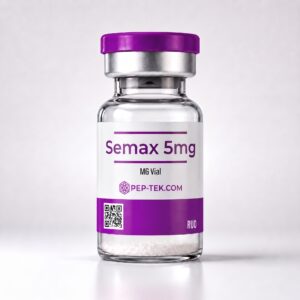
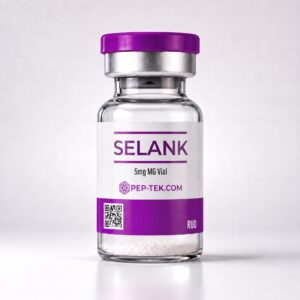
Available from PepTek
An overview of cognitive research peptides including Semax and Selank, examining shared neuroprotective mechanisms, BDNF modulation, and the evolving landscape of cognitive enhancement peptide research nootropics.
The study of peptide-based compounds with potential neuromodulatory properties represents one of the most active frontiers in preclinical neuroscience. Researchers investigating cognitive enhancement peptide research nootropics have increasingly focused on short-chain synthetic peptides derived from endogenous neuropeptides — molecules that appear to interact with a range of receptor systems, neurotrophic signaling cascades, and inflammatory pathways within the central nervous system. This overview examines the compound class as a whole, with particular attention to two of the most studied synthetic cognitive peptides: Semax and Selank.
Cognitive research peptides are synthetic or semi-synthetic oligopeptides designed to mimic, enhance, or modulate the activity of endogenous neuropeptides. Unlike small-molecule nootropic compounds, peptides offer a degree of structural specificity that allows researchers to investigate discrete receptor interactions and signaling pathways. Many compounds in this category are derived from well-characterized parent molecules — adrenocorticotropic hormone (ACTH), tuftsin, and various neurotrophic factors — and have been structurally modified to improve stability and central nervous system (CNS) penetration in research models.
Key characteristics shared across this compound class include:
Research into cognitive enhancement peptide research nootropics of this class has been most extensively conducted in Eastern European scientific literature, particularly from Russian and Ukrainian institutions, though interest from Western research groups has grown substantially over the past decade.
Semax is a heptapeptide (Met-Glu-His-Phe-Pro-Gly-Pro) derived from the ACTH(4–10) fragment. Unlike the parent hormone, Semax lacks direct adrenocortical activity, which has made it a useful tool in research contexts where isolated CNS effects are of interest. For an in-depth structural and mechanistic profile, researchers may consult the PepTek article on Semax: ACTH-Derived Neuropeptide Research Profile.
A substantial body of preclinical research has documented Semax’s apparent capacity to upregulate BDNF and its high-affinity receptor TrkB in rodent models. Shadrina et al. [Shadrina et al., 2010] reported significant increases in BDNF mRNA expression in the rat hippocampus and frontal cortex following Semax administration, findings that have been replicated and extended by subsequent groups. BDNF upregulation is of considerable research interest given the neurotrophin’s established roles in synaptic plasticity, neuronal survival, and learning-related memory consolidation [Cunha et al., 2010].
Additionally, animal model studies indicate Semax may modulate melanocortin receptor subtypes, particularly MC4R, which are distributed throughout regions associated with cognitive function including the hippocampus, amygdala, and prefrontal cortex. This receptor overlap with melanocortin biology is one reason researchers cross-reference Semax studies with work on melanocortin agonists such as those reviewed in the Melanotan II (MT-2): Melanocortin Receptor Agonist Research Profile.
Selank is a synthetic heptapeptide (Thr-Lys-Pro-Arg-Pro-Gly-Pro) based on the immunomodulatory tetrapeptide tuftsin, with a Pro-Gly-Pro C-terminal extension added to enhance metabolic stability. In the domain of cognitive enhancement peptide research nootropics, Selank occupies a unique position because its observed effects appear to span both anxiolytic and procognitive dimensions in preclinical models. The full compound profile is detailed in the PepTek research article on Selank: Synthetic Anxiolytic Peptide Research Overview.
In vitro studies and rodent behavioral models suggest Selank interacts with the GABAergic system in a manner that does not produce the sedative or amnestic effects associated with classical benzodiazepine research compounds. Semenova et al. [Semenova et al., 2010] demonstrated that Selank produced anxiolytic-like behavioral effects in elevated plus maze and open field tests in rats, alongside measurable changes in serotonin metabolism in limbic structures. This dual neurochemical profile — modulating both inhibitory tone and monoamine availability — has made Selank a compound of sustained interest for researchers studying anxiety-cognition interactions.
Both Semax and Selank have been examined in the context of neuroprotection under ischemic or oxidative stress conditions. Animal model studies indicate that Semax may reduce infarct volume and attenuate inflammatory cytokine expression following experimental stroke induction [Miasoedov et al., 1999]. The intersection of peptide-based neuroprotection and redox biology is an area where multiple compound classes converge; researchers working in this space may find relevant mechanistic context in the PepTek article on Glutathione: Tripeptide Antioxidant Research and Redox Signaling, which covers the role of endogenous antioxidant peptides in neural tissue homeostasis.
Emerging research in the field of cognitive enhancement peptide research nootropics increasingly recognizes the importance of neuroenergetic context — the metabolic milieu in which peptide-receptor interactions occur. Mitochondrial function, NAD⁺ availability, and ATP synthesis efficiency all modulate the downstream effects of neurotrophic signaling. Researchers examining cognitive peptides alongside metabolic coenzymes may reference the PepTek profile on NAD+: Coenzyme Research Profile and Cellular Metabolism Studies, which details how NAD⁺-dependent pathways intersect with neuronal resilience and synaptic function.
Within the scientific literature, cognitive peptides are typically classified under one or more of the following functional categories: nootropic agents, neuroprotective peptides, neurotrophin modulators, or anxiolytic peptides. The term “nootropic,” first coined by Giurgea in 1972 to describe compounds that enhance learning and memory without significant side effects or toxicity in animal models, has been applied to both Semax and Selank in the preclinical literature. It is important to note that this classification is strictly operational within research contexts and carries no regulatory or clinical designation.
Preclinical studies on cognitive peptides employ a range of validated behavioral paradigms including the Morris water maze, novel object recognition, radial arm maze, and fear conditioning protocols. Molecular endpoints typically include BDNF, TrkB, NGF, and inflammatory cytokine quantification via ELISA, qPCR, and immunohistochemistry. Researchers designing studies in this area should account for the relatively short plasma half-lives of unmodified peptides and the route-dependent variability in CNS bioavailability observed across rodent model studies [Kolomin et al., 2013].
The growing interest in cognitive enhancement peptide research nootropics has also prompted comparative studies examining how synthetic peptides interact with endogenous systems under varying physiological states, including aging models, neuroinflammation-induced cognitive impairment, and chronic stress paradigms. These research directions reflect the field’s maturation from single-compound characterization toward systems-level investigation.
The compounds described in this overview — including Semax, Selank, and related cognitive research peptides — are synthetic research compounds supplied exclusively for in vitro and preclinical in vivo research purposes. All mechanistic descriptions, observed effects, and experimental findings referenced herein are drawn from published preclinical literature and do not constitute clinical evidence of efficacy or safety in humans.
Disclaimer: All PepTek research compounds, including those discussed in this article, are intended strictly for laboratory research use by qualified scientific investigators. These compounds are not approved for human or animal consumption, are not dietary supplements, and are not intended to diagnose, treat, cure, or prevent any disease or medical condition. No content in this article should be interpreted as medical advice, dosing guidance, or a recommendation for human administration. Researchers are responsible for complying with all applicable regulations governing the procurement and use of research peptides in their jurisdiction.