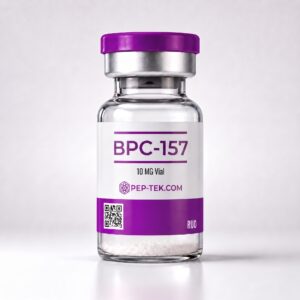
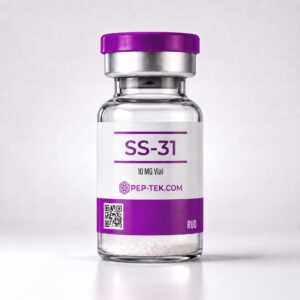
Available from PepTek
BPC-157 and SS-31 represent two distinct cytoprotective peptides studied for their unique mechanisms in cellular defense research. This comparison explores their structural differences, signaling pathways, and research applications.
Within the expanding field of cytoprotective peptide research, few comparisons are as scientifically instructive as BPC-157 vs SS-31 cytoprotection research. These two peptides operate through fundamentally different mechanisms yet converge on overlapping outcomes in cellular protection models. BPC-157, a synthetic pentadecapeptide derived from a gastric protein, and SS-31 (also known as Elamipretide or MTP-131), a mitochondria-targeting tetrapeptide, each represent distinct strategies researchers employ to interrogate cytoprotective biology. Understanding their structural and mechanistic differences is essential for designing rigorous in vitro and animal model studies.
BPC-157 (Body Protection Compound-157) is a 15-amino acid synthetic peptide with the sequence Gly-Glu-Pro-Pro-Pro-Gly-Lys-Pro-Ala-Asp-Asp-Ala-Gly-Leu-Val. It is derived from a partial sequence of the human gastric juice protein BPC and is notable for its high stability in aqueous environments and resistance to enzymatic degradation. Researchers have noted that its proline-rich core contributes to conformational rigidity, which may underlie its reported interactions with growth factor signaling pathways. For a detailed structural and mechanistic overview, the BPC-157 Peptide: Research Profile and Mechanism of Action article provides a comprehensive reference.
SS-31 is a cell-permeable, aromatic-cationic tetrapeptide with the sequence D-Arg-Dmt-Lys-Phe-NH2, where Dmt represents 2′,6′-dimethyltyrosine. Its alternating aromatic and cationic residues enable selective concentration at the inner mitochondrial membrane, with research indicating a roughly 1,000-fold accumulation relative to cytosolic concentrations [Szeto, 2014]. This architectural specificity makes SS-31 a preferred tool in research models focused on mitochondrial membrane dynamics and oxidative phosphorylation integrity.
BPC-157 has been associated in animal model studies with the modulation of several growth factor systems, most notably vascular endothelial growth factor (VEGF) and epidermal growth factor receptor (EGFR) pathways. Researchers have observed that BPC-157 appears to upregulate VEGF expression and promote angiogenesis in rodent models of tissue injury [Sikiric et al., 2018]. Beyond vascular biology, studies have linked BPC-157 to the modulation of nitric oxide (NO) synthesis, FAK-paxillin signaling, and the JAK-2/STAT-3 pathway — all of which intersect with cellular survival and tissue homeostasis. In gastrointestinal research, in vivo models have consistently demonstrated BPC-157’s capacity to accelerate mucosal healing and attenuate inflammatory cascades.
The breadth of BPC-157’s apparent receptor interactions stands in contrast to SS-31’s highly targeted mechanism, making it a more appropriate compound for research questions that span vascular, inflammatory, and connective tissue biology simultaneously. Researchers comparing BPC-157 vs SS-31 cytoprotection research models should account for this mechanistic breadth when designing outcome measures.
SS-31’s primary mechanism of action in research models centers on its high-affinity binding to cardiolipin, an anionic phospholipid uniquely concentrated in the inner mitochondrial membrane. Cardiolipin plays a critical structural role in organizing respiratory chain supercomplexes, and its peroxidation is recognized as an early event in mitochondrial dysfunction and apoptosis. By binding cardiolipin, SS-31 has been shown in vitro to inhibit cardiolipin peroxidation catalyzed by the cytochrome c/cardiolipin complex, thereby reducing mitochondrial reactive oxygen species (ROS) production and preserving electron transport chain efficiency [Birk et al., 2013].
This mechanism positions SS-31 as a highly specific probe for mitochondrial research, particularly in models of ischemia-reperfusion injury, heart failure, and neurodegenerative disease. Its selectivity contrasts sharply with BPC-157’s broader receptor engagement profile. Research into mitochondrial redox biology often benefits from examining SS-31 alongside other antioxidant compounds; the PepTek article on Glutathione: Tripeptide Antioxidant Research and Redox Signaling provides useful context on endogenous redox systems that interact with mitochondrial pathways.
In tissue repair research, BPC-157 has demonstrated a more favorable profile than SS-31 for angiogenic and fibroblast-related endpoints. Animal model studies using excisional wound and tendon injury paradigms have reported accelerated neovascularization and collagen reorganization in BPC-157-treated subjects [Gwyer et al., 2019]. SS-31, by contrast, has not been a primary compound in wound healing models, given its mechanism does not directly engage angiogenic growth factor pathways. Researchers investigating cytoskeletal dynamics and tissue remodeling may also find value in reviewing TB-500 (Thymosin Beta-4): Research Profile and Cellular Mechanisms as a structurally and mechanistically distinct comparator in repair biology.
In ischemia-reperfusion (I/R) injury research, the mechanistic advantage shifts substantially toward SS-31. Because mitochondrial ROS burst and cardiolipin peroxidation are central pathological events during reperfusion, SS-31’s targeted mitochondrial accumulation enables researchers to interrogate these specific events with high precision. Studies in rodent cardiac I/R models have shown that SS-31 pretreatment is associated with preserved ATP synthesis rates, reduced cytochrome c release, and attenuated cardiomyocyte apoptosis [Kloner et al., 2012]. BPC-157 has also been studied in I/R contexts, primarily through its NO-modulating and anti-inflammatory effects, but it lacks the direct mitochondrial membrane targeting that defines SS-31’s research utility in these models.
The intersection of mitochondrial biology and cellular energy metabolism is also explored in the PepTek reference article on NAD+: Coenzyme Research Profile and Cellular Metabolism Studies, which covers another key axis of mitochondrial research relevant to cytoprotection studies.
Both peptides have been investigated in central nervous system research contexts, though through divergent pathways. BPC-157 has been examined in rodent models of traumatic brain injury and dopaminergic neurotoxicity, with researchers observing modulation of serotonergic and dopaminergic systems. SS-31 has been applied in models of neurodegeneration where mitochondrial dysfunction is a primary driver, including Parkinson’s and Alzheimer’s disease paradigms, where its cardiolipin-stabilizing effects are hypothesized to delay mitochondrial-mediated apoptosis in neurons. In BPC-157 vs SS-31 cytoprotection research focused on CNS biology, the choice of compound should reflect whether the research question centers on neuroinflammatory signaling (favoring BPC-157) or mitochondrial integrity (favoring SS-31).
The decision between these compounds in a research context is fundamentally a question of mechanistic specificity versus breadth. Researchers seeking to dissect a single, well-defined cytoprotective axis — specifically mitochondrial membrane stabilization and ROS suppression — will find SS-31 the more appropriate tool. Its defined pharmacophore and mitochondrial selectivity reduce mechanistic ambiguity in experimental interpretation.
Conversely, researchers modeling complex tissue injury scenarios that involve angiogenic insufficiency, inflammatory dysregulation, and multi-tissue damage may find BPC-157’s broader signaling footprint more informative. The compound’s stability and its activity across multiple receptor systems make it well-suited for exploratory in vivo research where the upstream target is not yet fully characterized.
Some research programs investigating BPC-157 vs SS-31 cytoprotection research questions have employed both compounds in parallel arms, using SS-31 as a mitochondrial-specific positive control and BPC-157 as a broader cytoprotective reference, thereby triangulating mechanism across experimental conditions [Sikiric et al., 2018].
The comparison of BPC-157 vs SS-31 cytoprotection research reflects the growing sophistication of peptide-based research tool development. BPC-157 offers a multi-pathway cytoprotective profile with documented activity in angiogenesis, inflammation, and tissue repair models, while SS-31 provides exceptional mechanistic precision in mitochondrial biology research. Neither compound should be considered interchangeable; their selection must be guided by the specific biological questions under investigation.
Research Use Disclaimer: All information presented in this article is intended strictly for scientific research and educational purposes. BPC-157, SS-31, and all compounds referenced herein are research chemicals supplied exclusively for in vitro and properly approved animal model research. They are not approved for human or animal consumption, are not drugs, and are not intended to diagnose, treat, cure, or prevent any disease or medical condition. Researchers must comply with all applicable institutional, local, and federal regulations governing the use of research compounds. PepTek provides these compounds solely for legitimate scientific inquiry.