IGF-1 LR3 PI3K/Akt/mTOR Signaling Research: Pathway Mechanism Overview
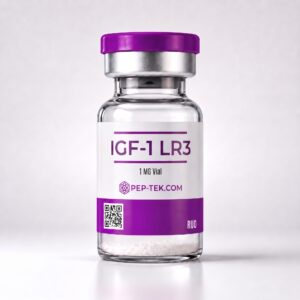
Insulin-like growth factor-1 Long R3 (IGF-1 LR3) is a synthetic analogue of endogenous IGF-1, engineered with an arginine substitution at position 3 and an extended 13-amino acid N-terminal sequence. These modifications substantially reduce its binding affinity for IGF-binding proteins (IGFBPs), prolonging its bioavailability and receptor engagement in experimental systems. Research into IGF-1 LR3 PI3K Akt mTOR signaling research has grown substantially over the past two decades, offering valuable mechanistic insights into how this analogue engages intracellular growth regulatory pathways in cell culture and animal model contexts.
This article is intended strictly for research and educational purposes. IGF-1 LR3 is a research compound not approved for human or veterinary use. All findings described herein are derived from preclinical and in vitro studies.
Structural Characteristics and Receptor Binding
Native IGF-1 is a 70-amino acid polypeptide with structural homology to insulin, mediating cellular growth, differentiation, and survival via the IGF-1 receptor (IGF-1R). IGF-1 LR3 retains the core IGF-1 sequence but incorporates an N-terminal extension and the Arg³ substitution, collectively diminishing IGFBP-3 affinity by approximately 1000-fold compared to native IGF-1 [Tomas et al., 1993]. This characteristic has made IGF-1 LR3 a preferred research tool in studies investigating direct receptor-level signaling without the confounding variable of binding protein sequestration.
Upon binding to IGF-1R — a receptor tyrosine kinase expressed broadly across mammalian tissues — IGF-1 LR3 induces receptor dimerization and autophosphorylation of key tyrosine residues (Tyr1135, Tyr1136). This initiates a cascade of intracellular phosphorylation events fundamental to the PI3K/Akt/mTOR axis.
The PI3K/Akt/mTOR Signaling Axis: A Research Overview
Step 1: PI3K Activation and PIP3 Generation
Phosphorylation of IGF-1R creates docking sites for insulin receptor substrate proteins (IRS-1, IRS-2), which in turn recruit and activate Class I phosphoinositide 3-kinase (PI3K). PI3K phosphorylates phosphatidylinositol-4,5-bisphosphate (PIP2) to generate phosphatidylinositol-3,4,5-trisphosphate (PIP3) at the inner leaflet of the plasma membrane. This lipid second messenger recruits Akt (also known as Protein Kinase B) to the membrane via its pleckstrin homology (PH) domain [Cantley, 2002].
Step 2: Akt Phosphorylation and Its Downstream Consequences
Membrane-recruited Akt is phosphorylated at Thr308 by PDK1 and at Ser473 by the mTORC2 complex, achieving full catalytic activation. Activated Akt then phosphorylates a broad array of substrates. In the context of IGF-1 LR3 PI3K Akt mTOR signaling research, researchers have observed that Akt activation regulates cell survival through phosphorylation of pro-apoptotic proteins (Bad, Caspase-9), cell cycle progression through p21 and p27 inhibition, and metabolic reprogramming through GLUT4 translocation and glycogen synthase kinase-3 (GSK-3) inhibition [Manning and Cantley, 2007].
Step 3: mTOR Complex 1 Activation and Anabolic Signaling
A pivotal downstream target of Akt is the tuberous sclerosis complex (TSC1/TSC2), which normally restrains mTOR Complex 1 (mTORC1) activity. Akt-mediated phosphorylation of TSC2 at Thr1462 relieves this inhibition, allowing the small GTPase Rheb to activate mTORC1. Once active, mTORC1 phosphorylates two canonical substrates: S6 kinase 1 (S6K1) and eIF4E-binding protein 1 (4E-BP1). Phosphorylation of these proteins promotes ribosomal biogenesis and cap-dependent mRNA translation — fundamental processes underlying cell growth and protein synthesis observed in preclinical models [Laplante and Sabatini, 2012].
In vitro studies examining IGF-1 LR3 PI3K Akt mTOR signaling research have confirmed robust phosphorylation of S6K1 and 4E-BP1 in myoblast and fibroblast cell lines following IGF-1 LR3 stimulation, effects that are abrogated by PI3K inhibitors such as LY294002, confirming pathway specificity.
MAPK/ERK Pathway: A Parallel Research Target
Beyond the PI3K/Akt/mTOR axis, IGF-1R activation by IGF-1 LR3 also recruits Grb2/SOS adaptor complexes, activating the Ras-Raf-MEK-ERK mitogen-activated protein kinase (MAPK) cascade. While mTOR-mediated signaling primarily governs protein synthesis and cell size, the ERK pathway has been studied in the context of cell proliferation and transcriptional regulation. Research models suggest that both pathways operate concurrently and may exhibit crosstalk, particularly at the level of mTOR complex regulation [Roux and Blenis, 2004]. This dual signaling profile makes IGF-1 LR3 a useful research tool for dissecting how growth factor cascades intersect in metabolic and growth biology.
Research Findings in Cell Culture and Animal Models
Skeletal Muscle and Myogenic Research
IGF-1 LR3 has been widely studied in skeletal muscle cell lines (C2C12 myoblasts) and rodent models of muscle biology. Animal model studies indicate that IGF-1 LR3 treatment results in increased phosphorylation of Akt and mTORC1 substrates, with observed increases in protein synthesis rates as measured by puromycin incorporation assays. These findings align with mechanistic expectations given the compound’s receptor engagement profile [Foulstone et al., 2003]. Researchers have also studied its interaction with satellite cell activation markers, though results in complex in vivo systems remain subject to ongoing investigation.
Cellular Proliferation and Survival Studies
In vitro studies suggest that IGF-1 LR3 promotes cell survival under nutrient-restricted conditions through Akt-mediated suppression of pro-apoptotic signaling. This has been explored in cancer biology research contexts, where the PI3K/Akt/mTOR pathway is frequently dysregulated. Understanding how IGF-1 LR3 engages these pathways provides a useful model for studying growth factor receptor signaling in disease models, though no therapeutic conclusions can be drawn from preclinical data alone.
Researchers interested in complementary growth factor cascades may also find value in reviewing research on GHK-Cu copper peptide signaling pathways, which engage distinct but overlapping cellular remodeling mechanisms in preclinical contexts.
Metabolic Signaling Intersections
The PI3K/Akt/mTOR axis activated by IGF-1 LR3 does not operate in isolation from broader metabolic networks. Akt-driven suppression of GSK-3 and activation of GLUT4 vesicle trafficking have been studied in adipocyte and hepatocyte models. Research exploring cellular energy metabolism more broadly — including NAD⁺-dependent pathways — provides useful complementary context. For background on how energy sensing intersects with anabolic signaling, researchers may reference NAD⁺ coenzyme research and cellular metabolism studies.
Additionally, studies on growth hormone secretagogues such as those profiled in CJC-1295 and Ipamorelin synergistic mechanism research are relevant for contextualizing how upstream GH axis stimulation can indirectly modulate IGF-1R signaling in animal models, given that endogenous IGF-1 production is GH-dependent.
Negative Feedback and Pathway Regulation
A critical aspect of IGF-1 LR3 PI3K Akt mTOR signaling research is understanding negative feedback mechanisms. Activated S6K1 phosphorylates IRS-1 on serine residues, attenuating upstream PI3K recruitment — a well-characterized feedback loop that limits sustained mTORC1 activity. Additionally, the phosphatase PTEN dephosphorylates PIP3 back to PIP2, counterbalancing PI3K activity. Researchers studying IGF-1 LR3 in PTEN-null cell lines have reported exaggerated and prolonged Akt and mTOR phosphorylation, underscoring the importance of tumor suppressor context in interpreting pathway data [Cantley, 2002].
Researchers interested in how antioxidant systems interact with growth factor signaling may find the profile on glutathione tripeptide antioxidant and redox signaling research relevant, as reactive oxygen species are known modulators of PI3K/Akt activity in cell culture models.
Research Utility and Experimental Considerations
IGF-1 LR3’s extended half-life relative to native IGF-1 — attributable to reduced IGFBP binding — makes it particularly useful for sustained receptor stimulation paradigms in cell culture, where researchers aim to maintain consistent PI3K/Akt/mTOR activation over multi-hour experimental windows. Its well-characterized receptor binding profile and commercially available phosphospecific antibody panels for Akt (Thr308, Ser473), S6K1 (Thr389), and 4E-BP1 (Thr37/46) make pathway quantification tractable in most laboratory settings.
Researchers should account for potential IGF-2R engagement, cell-type-specific IRS expression profiles, and the presence or absence of feedback regulatory proteins (PTEN, SOCS proteins) when designing experiments with IGF-1 LR3. The interpretation of IGF-1 LR3 PI3K Akt mTOR signaling research findings requires careful attention to these confounding variables to ensure reproducible and meaningful data.
Research Context
IGF-1 LR3 represents a well-characterized research tool for investigating the PI3K/Akt/mTOR signaling axis in preclinical experimental systems. The mechanistic insights derived from studies employing this analogue contribute to the broader scientific understanding of growth factor receptor biology, anabolic signaling, and cellular homeostasis.
Disclaimer: All information presented in this article is intended exclusively for scientific research and educational purposes. IGF-1 LR3 is a research compound supplied by PepTek for in vitro and preclinical laboratory use only. It is not approved by the FDA or any regulatory authority for human or animal therapeutic use. No information herein constitutes medical advice, dosing guidance, or a recommendation for human or veterinary administration. Researchers should comply with all applicable institutional and regulatory guidelines governing the use of research compounds.