Available from PepTek
An overview of antioxidant peptide research compounds NAD glutathione and their roles in redox biology, cellular signaling, and oxidative stress modulation in preclinical research settings.
Oxidative stress sits at the intersection of virtually every major area of cellular biology research. As scientific understanding of reactive oxygen species (ROS), electron transport dynamics, and redox signaling has matured over the past several decades, a distinct class of research compounds has emerged to help investigators probe these mechanisms with greater precision. Antioxidant peptide research compounds — including NAD+, glutathione, and structurally related molecules — represent some of the most actively studied tools in modern biochemistry and cell biology laboratories. This overview examines the shared mechanistic frameworks, key compound profiles, and the evolving research landscape surrounding this compound class.
The term “antioxidant research compound” encompasses a broad range of molecules that researchers employ to study, modulate, or measure oxidative balance within biological systems. These compounds share a fundamental characteristic: they interact with ROS, reactive nitrogen species (RNS), or the enzymatic and non-enzymatic systems that regulate redox homeostasis. In experimental contexts, they serve as investigative tools rather than therapeutic agents — enabling researchers to perturb redox pathways, observe downstream consequences, and build mechanistic models applicable to disease research.
Key categories within this compound class include:
Understanding antioxidant peptide research compounds NAD glutathione and their mechanistic roles requires a foundational grasp of redox chemistry and the biological systems these molecules interact with.
For many years, ROS were characterized primarily as damaging byproducts of aerobic metabolism. Contemporary research has substantially revised this view. Studies now indicate that controlled ROS production functions as a legitimate intracellular signaling mechanism, influencing transcription factor activation, protein phosphorylation cascades, and gene expression programs [Sies et al., 2017]. The challenge for researchers is distinguishing between physiological redox signaling and pathological oxidative damage — a distinction that antioxidant research compounds help investigators explore in controlled experimental settings.
Superoxide (O₂•⁻), hydrogen peroxide (H₂O₂), and hydroxyl radicals (•OH) are among the most studied ROS in laboratory models. Each interacts differently with antioxidant defense systems, and each is measurable through distinct assay platforms — making compound selection a critical methodological decision in redox research design.
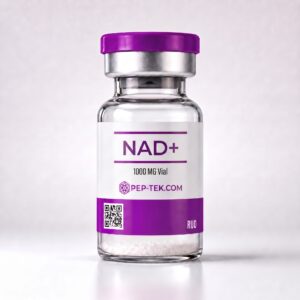
Nicotinamide adenine dinucleotide exists in oxidized (NAD+) and reduced (NADH) forms, toggling between states as it accepts and donates electrons in metabolic reactions. This redox cycling places NAD+ at the core of energy metabolism, mitochondrial function, and — increasingly — cellular aging research. Investigators have used NAD+ as a research compound to study its role as a substrate for sirtuins (SIRT1–SIRT7) and poly(ADP-ribose) polymerases (PARPs), both of which are implicated in DNA repair signaling and stress response pathways [Rajman et al., 2018].
For a detailed mechanistic profile of this compound’s role in cellular metabolism studies, researchers may consult the PepTek article on NAD+: Coenzyme Research Profile and Cellular Metabolism Studies, which covers the enzymatic relationships and in vitro findings in depth.
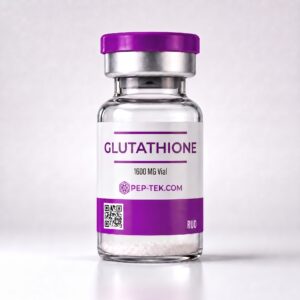
Glutathione (GSH) is the dominant non-enzymatic antioxidant in mammalian cells, present at millimolar concentrations in the cytoplasm, mitochondria, and nucleus. It exists in dynamic equilibrium with its oxidized disulfide form (GSSG), and the GSH/GSSG ratio is widely used by researchers as a quantitative marker of intracellular redox status. Glutathione peroxidases (GPx) catalyze the reduction of hydrogen peroxide and lipid hydroperoxides using GSH as a cofactor, while glutathione reductase regenerates GSH from GSSG using NADPH [Allocati et al., 2009].
The research utility of glutathione extends well beyond its antioxidant activity. Studies have implicated GSH in xenobiotic detoxification, protein thiol regulation through S-glutathionylation, and modulation of apoptotic pathways. As one of the central antioxidant peptide research compounds NAD glutathione axis investigators rely upon, GSH enables researchers to interrogate redox-dependent biological processes at multiple levels of cellular organization. The PepTek research article on Glutathione: Tripeptide Antioxidant Research and Redox Signaling provides an in-depth examination of these mechanisms.
Beyond the classical small-molecule antioxidants, researchers have increasingly examined peptide-based compounds for their capacity to influence redox homeostasis through receptor-mediated or transcriptional mechanisms. GHK-Cu (glycyl-L-histidyl-L-lysine copper complex) is a prominent example. Preclinical studies have reported that GHK-Cu modulates the expression of antioxidant enzymes including superoxide dismutase and catalase, and influences the Nrf2/Keap1 pathway — a master regulatory axis for antioxidant gene transcription [Pickart & Margolina, 2018].
The intersection of peptide chemistry and redox biology has expanded the antioxidant peptide research compounds NAD glutathione landscape considerably, offering investigators structurally diverse tools with distinct mechanistic entry points. Researchers interested in copper peptide signaling will find comprehensive mechanistic data in the PepTek profile of GHK-Cu: Copper Peptide Research Profile and Signaling Pathways.
Mitochondria are the primary site of ROS generation in most mammalian cell types, and they are accordingly a major focus of antioxidant compound research. NAD+ availability directly influences mitochondrial electron transport chain efficiency; GSH plays a dedicated role in mitochondrial antioxidant defense via a distinct mitochondrial GSH pool. Researchers studying neurodegeneration, metabolic disease models, and aging utilize antioxidant research compounds to selectively deplete or restore redox balance within isolated mitochondria or intact cell systems.
The Nrf2 (nuclear factor erythroid 2-related factor 2) transcription factor governs the expression of a battery of cytoprotective and antioxidant genes, including heme oxygenase-1 (HO-1), NAD(P)H quinone oxidoreductase 1 (NQO1), and glutamate-cysteine ligase (GCL) — the rate-limiting enzyme in GSH biosynthesis. In vitro studies using antioxidant peptide research compounds have been instrumental in delineating the activation thresholds, post-translational modifications, and downstream transcriptional outputs of this pathway [Tonelli et al., 2018].
The redox theory of aging posits that cumulative oxidative damage to macromolecules — DNA, proteins, and lipids — contributes to age-related functional decline. NAD+ levels are observed to decline with age in multiple tissue types in animal models, and GSH pools similarly contract. Research using antioxidant peptide research compounds NAD glutathione repletion strategies has generated substantial data in model organisms regarding the functional consequences of restoring youthful redox environments, particularly in neuronal and cardiac tissue models [Rajman et al., 2018].
Oxidative stress and inflammatory signaling are deeply intertwined. NF-κB activation — a central mediator of inflammatory gene expression — is redox-sensitive, and GSH depletion potentiates its activity in cell culture models. Conversely, NAD+-dependent sirtuin activity can deacetylate and suppress NF-κB subunits, providing a mechanistic link between metabolic redox state and inflammatory signaling output. These crosstalk mechanisms are actively studied using the antioxidant research compounds described in this overview.
The compounds described in this article — including NAD+, glutathione, GHK-Cu, and related antioxidant peptide research compounds — are supplied by PepTek exclusively for in vitro laboratory research and preclinical scientific investigation. All findings referenced herein derive from cell-based studies, animal models, or biochemical assay systems. None of the compounds discussed are approved for human or veterinary use, and nothing in this article should be interpreted as medical guidance, dosing instruction, or therapeutic recommendation.
Researchers working in redox biology, aging science, mitochondrial physiology, or inflammation modeling will find this compound class valuable for probing fundamental mechanisms. PepTek is committed to providing high-purity research compounds supported by accurate, literature-grounded scientific content to facilitate rigorous laboratory investigation.
All PepTek compounds are for research use only. Not for human or animal consumption.