Available from PepTek
GHRPs and GHRH analogues form a well-studied class of growth hormone secretagogues explored in preclinical and in vitro research for their roles in GH axis modulation and metabolic signaling.
The study of growth hormone (GH) regulation has produced one of the most pharmacologically rich peptide research landscapes in modern endocrinology. Two principal compound classes—Growth Hormone-Releasing Peptides (GHRPs) and Growth Hormone-Releasing Hormone (GHRH) analogues—have become central tools in preclinical research aimed at understanding the GH/IGF-1 axis. This GHRP GHRH peptide research category overview examines the shared and distinct mechanisms of these compound classes, the breadth of published investigation, and the key individual agents researchers have studied most extensively.
Growth hormone secretion from the anterior pituitary is governed by a tightly regulated interplay between two primary hypothalamic signals: GHRH, which stimulates GH release, and somatostatin, which inhibits it. Superimposed on this axis is the ghrelin system—an endogenous orexigenic peptide that acts via the growth hormone secretagogue receptor type 1a (GHS-R1a) to provide a third, independent stimulatory pathway [Kojima et al., 1999].
GHRPs are synthetic peptides designed to mimic or exploit the ghrelin/GHS-R1a pathway, while GHRH analogues are structural derivatives of native GHRH(1-44) engineered for extended bioactivity or enhanced receptor affinity. Together, these two compound classes have made it possible for researchers to dissect the relative contributions of each GH-stimulatory pathway in controlled experimental settings.
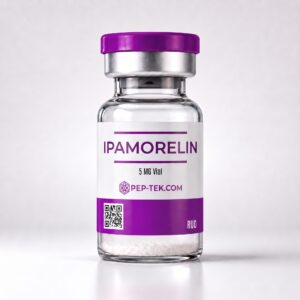
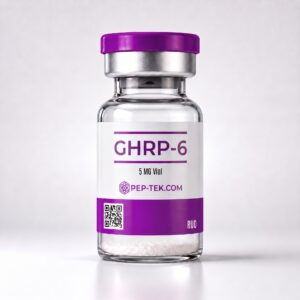
GHRPs, including compounds such as GHRP-2, GHRP-6, hexarelin, and ipamorelin, bind to and activate GHS-R1a with varying degrees of selectivity and potency. This receptor is a Gq-coupled GPCR whose activation ultimately results in intracellular calcium mobilization and downstream signaling cascades that prompt somatotroph cells to release stored GH [Howard et al., 1996]. In vitro and animal model studies have established that different GHRPs elicit qualitatively similar but quantitatively distinct GH pulse patterns, making them useful comparative tools in secretagogue research.
Researchers investigating selective secretagogue profiles have found ipamorelin to be of particular interest due to its high GHS-R1a selectivity and observed minimal co-stimulation of cortisol or prolactin in animal models—a pharmacological characteristic that distinguishes it from earlier-generation GHRPs [Raun et al., 1998].
GHRH analogues operate through an entirely separate receptor, the GHRH-R (a Gs-coupled GPCR), stimulating adenylyl cyclase and cyclic AMP accumulation in somatotrophs. Native GHRH(1-44) has a very short plasma half-life due to rapid cleavage by dipeptidyl peptidase IV (DPP-IV) and other proteases. Research-grade GHRH analogues have been engineered to resist this degradation, extending the duration of receptor engagement in experimental models.
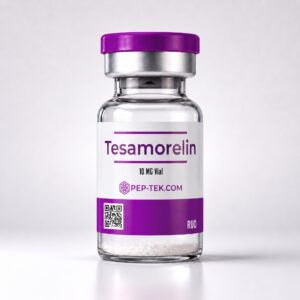
Among the most studied GHRH analogues in the research literature is tesamorelin, a stabilized form of GHRH(1-44) that has been extensively profiled for its GH-stimulating properties in both in vitro and animal model contexts. Researchers interested in the mechanistic distinctions between native GHRH and its synthetic derivatives can find a detailed examination in the Tesamorelin: GHRH Analogue Research Profile and Studied Effects article available in PepTek’s research library.
A significant area of GHRP GHRH peptide research concerns the synergistic amplification of GH secretion when both compound classes are applied together in experimental systems. Because GHRPs and GHRH analogues act on separate receptors and through distinct intracellular pathways, their co-administration in animal models produces GH release that substantially exceeds that observed with either compound alone [Bowers et al., 1990]. This supra-additive effect is believed to result from convergent signaling at the somatotroph level, as well as GHRP-mediated suppression of endogenous somatostatin tone.
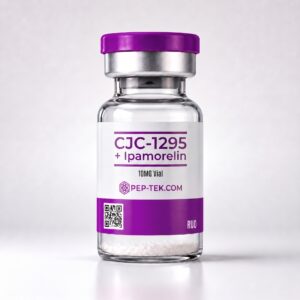
This principle underpins research into blended compound formulations. The CJC-1295 + Ipamorelin Blend: Research Overview of Synergistic Mechanisms provides a detailed analysis of how a modified GHRH analogue and a selective GHRP interact in controlled research settings, illustrating the mechanistic rationale behind combined secretagogue study designs.
In animal model research, elevated GH secretion driven by GHRPs or GHRH analogues is consistently associated with increased hepatic IGF-1 production. IGF-1 is an anabolic growth factor with broad effects on cellular proliferation, protein synthesis, lipolysis, and glucose homeostasis, making the GH/IGF-1 axis a productive research target across multiple physiological domains [Frago et al., 2002].
Preclinical studies have examined GHRP and GHRH analogue effects in the context of muscle tissue modeling, adipose metabolism, bone density assessment, and wound-healing paradigms. Researchers noting the metabolic dimensions of these pathways may also find value in reviewing adjacent research areas. For instance, the cellular energy landscape that frames GH axis research intersects meaningfully with coenzyme-level metabolism documented in the NAD+: Coenzyme Research Profile and Cellular Metabolism Studies, where mitochondrial bioenergetics and anabolic signaling converge.
A notable dimension of the broader GHRP GHRH peptide research category is the accumulating preclinical evidence that certain GHRPs—particularly hexarelin and GHRP-2—appear to exert direct, GH-independent effects on cardiac and other peripheral tissues via non-GHS-R1a receptor interactions. In vitro studies have demonstrated GHRP binding to the CD36 scavenger receptor in cardiac cells, with observed effects on oxidative stress response and cell survival signaling pathways. These findings have stimulated interest in GHRP compounds beyond their pituitary-secretagogue role, expanding the GHRP GHRH peptide research landscape considerably.
The GHRP GHRH peptide research category overview sits within a much larger universe of synthetic peptide research. While GHRPs and GHRH analogues operate specifically within the neuroendocrine GH axis, other peptide classes investigated at PepTek target entirely distinct receptor systems. Melanocortin receptor research, for example, is well represented by Melanotan II (MT-2): Melanocortin Receptor Agonist Research Profile, illustrating how structurally related GPCR-targeting peptides can mediate radically different downstream physiological effects in animal research models.
The cross-disciplinary relevance of growth factor signaling also connects GHRP research to tissue-modeling peptide studies. Researchers working in cellular repair and extracellular matrix remodeling contexts may find mechanistic parallels between IGF-1 pathway activation and the cytoskeletal signaling documented in studies of compounds such as those reviewed in the TB-500 (Thymosin Beta-4): Research Profile and Cellular Mechanisms article.
The compounds discussed in this GHRP GHRH peptide research category overview represent a rich and continuously evolving area of preclinical investigation. Published research has characterized their receptor pharmacology, signaling cascades, and systemic effects in cell culture and animal model systems with considerable rigor. Ongoing research continues to refine understanding of GHS-R1a structure-activity relationships, GHRH-R activation kinetics, and the downstream metabolic consequences of pulsatile GH secretion in experimental organisms.
Research Use Disclaimer: All compounds described in this article are intended strictly for laboratory and preclinical research purposes. GHRPs, GHRH analogues, and all related secretagogue peptides available through PepTek are not intended for human or animal consumption, are not approved for therapeutic use, and are not to be used as drugs, supplements, or any form of medical treatment. Nothing in this article constitutes medical advice, dosing guidance, or a therapeutic recommendation. Researchers should comply with all applicable institutional, regulatory, and legal requirements governing the use of research compounds.